http://4.bp.blogspot.com/_14vrv7ni7HM/TLYyK0PS85I/AAAAAAAABU8/h4xBT0R8kQU/s1600/20101013225550_D0064009.jpg

Mostrando postagens com marcador CARD . ALFONS STICKLER. Mostrar todas as postagens

sexta-feira, 3 de agosto de 2012

THE ROLE OF THE CELEBRANT IN MEDIATOR DEI By His Eminence Alfons Cardinal Stickler S.D.B.


THE ROLE OF THE CELEBRANT IN MEDIATOR DEI
B
y His Eminence Alfons Cardinal Stickler S.D.B.
Speech delivered to the annual meeting of Una Voce International, Rome, 16 November 1997. (The following text is reproduced from Una Voce New York, The Saint Gregory VII Chapter of Una Voce America, Bulletin Vol 1, No. 2: http://www.geocities.com/athens/parthenon/1370/apr98ny.htm). It is not without reason that the subject of my address today, before those who cherish the old Ritus Romanus, should be taken from the encyclical, MEDIATOR DEI (MD). This is not only because during the current month we celebrate the 50th anniversary of its publication, but above all because of its fundamental importance for the recent history of the liturgy. On 3rd May 1996, in his allocution to the members of the Plenary Assembly of the Congregation for the Cult and the Sacraments, the reigning Pope has expressly pointed out that Vatican II has drawn much on the experience and the deliberations of Pius XII, and that the liturgical reform was the fruit of a lengthy period of consideration that reached as far back as St. Pius X, and had received a unique promotion with the promulgation of MD, the 50th anniversary of which was to be celebrated this year. It has justly been said that the liturgical constitution Sacrosanctum Concilium (SC), of Vatican II can only be understood in the light of MD, that the relation between the two is like that between the moon and the sun--that MD is theocentric whereas SC points in the anthropocentric direction, somewhat like "Glory be to God in the Highest" and "Peace to men on Earth." It is another question to what extent MD is really the standard for the Ordo Novus which was composed by the committee, Concilium. It is significant that among the sources quoted by SC, MD does not appear even once, and that of the other magisterial sources only the Council of Trent is mentioned by name.

From the many topics that could serve as themes of lectures on MD, I have, at Una Voce's suggestion, chosen that of the role of the celebrant in MD. This choice carries with it a double limitation: first, only the official minister of the public liturgical cult of the Catholic Church and, secondly, only his part in the celebration of the Eucharistic Sacrifice can be taken into consideration.

In the encyclical Pius XII directly and immediately deals with the role of the celebrant in two instances only: first in the third chapter of Part I, where the position of the priest in the liturgy is treated in general, and then in Part II, the subject of which is the eucharistic cult. The role of the priest and of those who participate in the Sacrifice of the Mass is here described and elucidated.

The Role of the Priest as Such in the Liturgical Cult Here the Pope begins with the nature and structure of the Church as it was immutably fixed by her Founder. Since this Church exists as a visible society in the world, it follows that she needs a visible hierarchy entrusted with her government in visible life and also with her direction in her supernatural and invisible reality. Christ established this fact and made it evident by creating a special sacrament on which this ministry should be founded, and by which it should be recognized by all.

This sacrament, which in essence is conferred by the laying-on of hands and the recitation of prayer by the holder of the highest office, namely the bishop, gives, by way of an indelible character ("seal") imprinted on the soul, the authority to carry out this ministry in three grades: the diaconate, the presbyterate, and the episcopate. Thus, Christ Himself has established a hierarchical order for His Church, in which, it is true, all the faithful are members of the same mystical body of Christ, and where all participate in all the gifts by which they can obtain participation in the beatitude of the Deity, but in which not all have the same plenary powers.

On the basis, therefore, of the essential structure of the Church and her communion, Pius XII explains the necessary position and function of the ministers ordained by Christ and, for the sake of the community, endowed by Him with special powers. Further on he declares that it necessarily follows that the divine cult this community owes to the Creator, Redeemer, and Sanctifier of all mankind also depends on these ministers, because the faith, in its purity and sureness has also been entrusted to them.

In this first part of MD, in which the Pope explains the nature, origin, and unfolding of the liturgy, he also demonstrates the essential position of the priest in the public cult of the Church in the light of Catholic faith. The eucharistic cult itself forms the subject of the second part of MD, the center and core of all the cult, since the permanent renewal of the redeeming sacrifice on the Cross is the most important means for the individual faithful to partake in the Redemption. It is in the eucharistic cult that the fruit of this Sacrifice, offered only once by blood, is bestowed upon him.

Based on the decisions and dogmatic decrees of the Council of Trent, Pius XII also explains the essence of the Eucharistic Sacrifice. The role of the priest as celebrant necessarily comes into focus here. Indeed, his oblation is not a mere memorial of the passion and death of Jesus Christ the Redeemer, but a real sacrificial action in which Christ Himself does what he did on the Cross though in an unbloodly manner. Now He performs it through the office of the priest, who represents Him, having received the power to act in this manner through his ordination. Thus, priest, oblation, and object of the sacrifice are the same.

The Pope establishes this truth in a few phrases: "It is the same Priest, Jesus Christ, Whose holy person is represented by His competent minister: having by his ordination to the priesthood been made similar to the High Priest, he possesses the full power to act in the power and in the place of the person of Christ Himself. By this priestly act he so to speak lends Christ his tongue and hand." In two annotations Pius XII expressly bases this view on St. Thomas and St. Chrysostomus.

Finally, however he says explicitly that despite this totally sufficient ministry of the priest who represents Christ, it is also necessary that the faithful cooperate by participating in the Sacrifice of the Mass. The necessity of this cooperation is made comprehensible to one who is aware of the Mass's function of bestowing the fruits of the Redemption on the individual believer. Because of the importance of this tenet, the Pope devotes the second chapter to the subject of participation by the faithful in the
Eucharistic Sacrifice.


Here, in order to elucidate the relationship of this twofold participation, namely that of the priest and that of the faithful, the role of the latter is treated extensively in the interest of conveying a clear understanding of their participation as compared to that of the priest.

The faithful, according to the exhortation of the Apostle Paul, "should be of the same mind as Christ Jesus." They should strive to achieve the state of soul that existed in the Soul of the Divine Redeemer when He was making the sacrifice of His own Self. They must, therefore, together with Him and through Him, offer up that Sacrifice, and together with Him offer up themselves.

MD then deals in detail with this participation and states in the first place that it is a true participation, but one without priestly power. Yet despite that, it is said to be an intimate participation, since the faithful offer it together with the priest as he offers it for them, and since they offer up themselves as an oblation through the cleansing of their souls and the mirroring in themselves of the image of Christ.

It is significant that at this point Pius XII specifically deals with erroneous concepts that falsify and narrow the role of the priest on the basis of the general priesthood of the faithful--a priesthood they have received through their baptism and confirmation. Here are his own words:

There are such who nowadays come close to heresies which have already been condemned (these anthemata were pronounced by the Council of Trent, Session 23, cap. 4), inasmuch as they teach that in the New Testament there be only that priesthood which embraces those who are baptized; and that the commandment by which Jesus Christ at the Last Supper ordered the Apostles to do what He had done Himself concerned directly the whole Church and the faith. Only from there, and subsequently, had the hierarchical priesthood developed and come into existence. Thus, they proclaim that the people posess true priestly powers, and that the priest on the contrary acts only by way of a mandate received from the community. Therefore, they see in the Eucharistic Sacrifice a true "celebrating-together/' (concelebration) and think it better for the priests to concelebrate together with the people present than to offer the Sacrifice "privately" in the absence of the people. Here the Pope recalls what he had said before about the whole hierarchical structure of the Church, and he expressly repeats: "The priest acts in place of the people because he represents the person of our Lord Jesus insofar as He is the Head of all the members and because He sacrifices Himself for them. The priest goes to the altar of God as servant of Christ, lower than Christ but higher than the people (reference to declaration by St. Robert Bellarmine). The people, however, who in no way represent the person of the Divine Redeemer, or are mediators between themselves and God, can in no way enjoy priestly rights."

If we look for proof of our initial claim that SC can only be understood in the light of MD, it is to be found at this point where the role of the priest as celebrant of the Sacrifice of the Mass is examined. What can still be said of the Council [Vatican II] is unfortunately not true for the Concilium, which was commissioned to carry out the reform desired by the Council.

Thus it becomes evident, on the basis of what has just been said, that the famous definition of the Mass in the first version of the Novus Ordo Missae , which represented the general priesthood of all the faithful as a sacramental power was indeed inspired by those heresies that had been stigmatized in MD. This definition was reported to the Pope by Cardinals Ottaviani and Bacci as reeking of heresy, and the edition had to be recycled as pulp in order to escape the suspicion of the heresy that merely grants the priest the role as presider in the celebration of the Sacrifice of the Mass. But in the light of the Council of Trent's teaching on the Eucharistic Sacrifice, its substance, and the manner of the faithful's participation in it--all of which was accepted in principle by SC, how much more of this reform would have to be recycled as pulp so as to fashion something similar to what SC proposed! It must be admitted, however, that this Constitution served as a pretext to the Concilium owing to the one-sided accentuation and promotion it received, which remained on the surface, thus obscuring, in part, its inner meaning.

(Translation into English: H. Ruckriegel)
http://maternalheart.org/library/stickler_on_md.htm
sábado, 2 de junho de 2012

The 2012 Chartres Pilgrimage .Alfons Cardinal Stickler on the Disaster of the Post-Conciliar Church . El Novus Ordo Missae y las innovaciones litúrgicas sin fin por el Cardenal Alfons M. Stickler


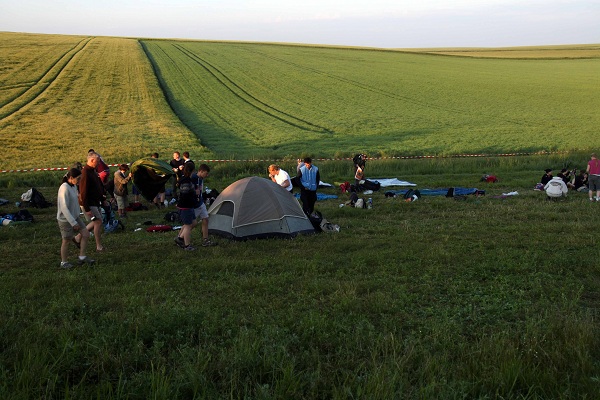
Early Monday.
The Third Day of the Pilgrimage – Pentecost Monday.

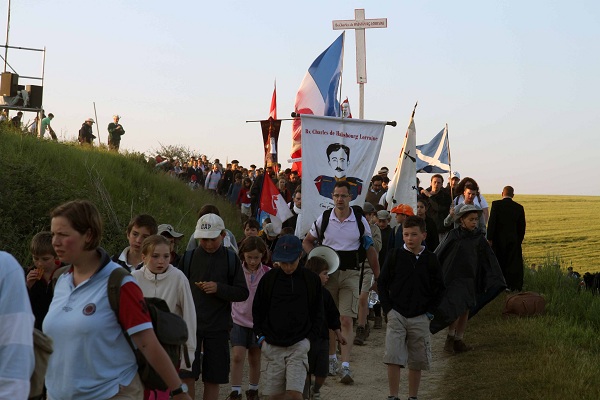
The chapter of Blessed Karl of Hapsburg -Lorraine (nice of the French – he was on the other side in the Great War).

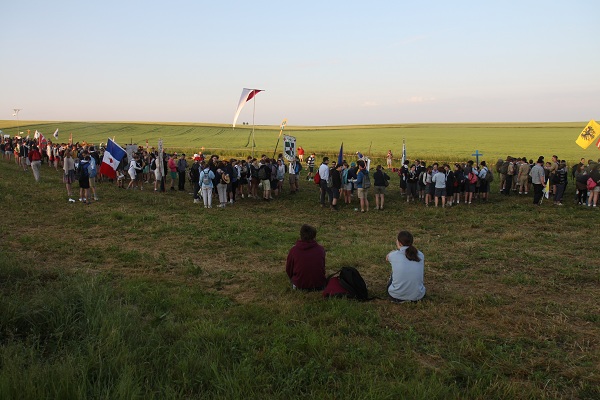
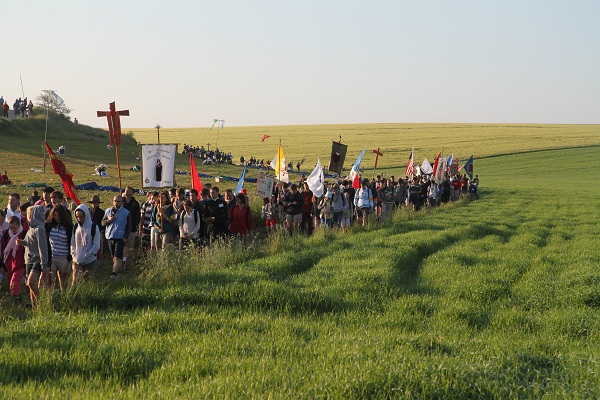
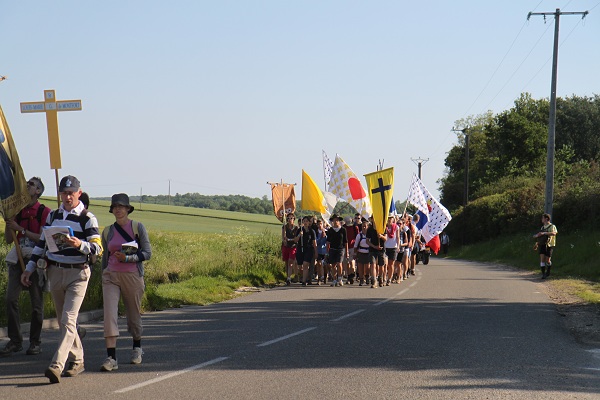
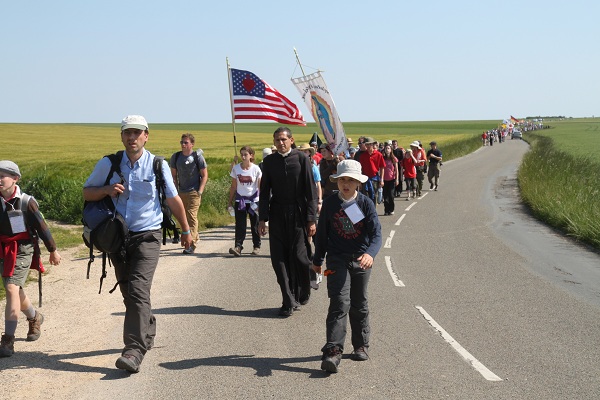
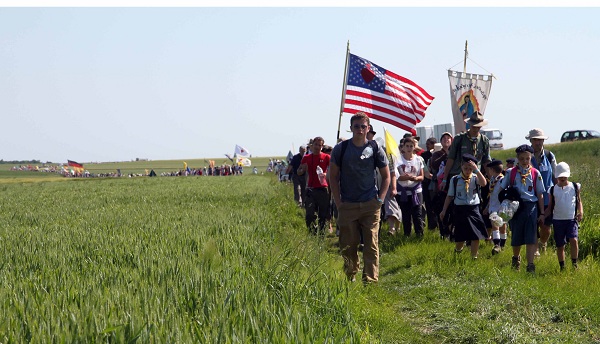
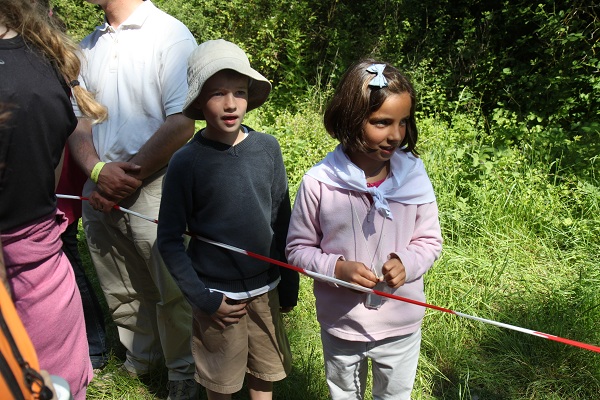
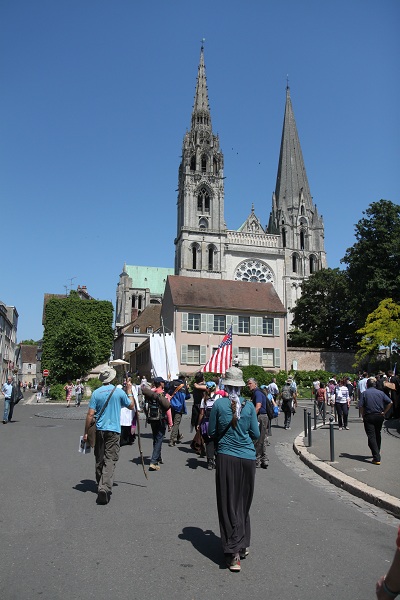
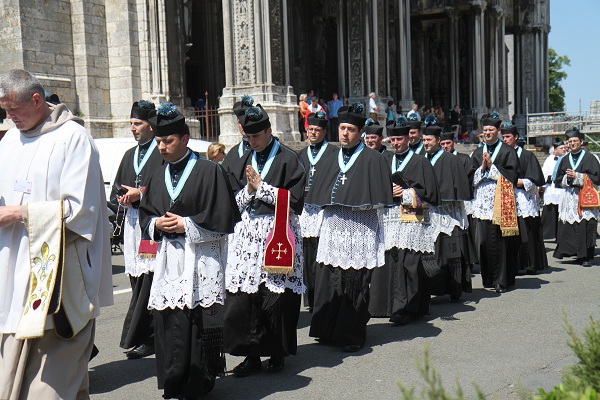
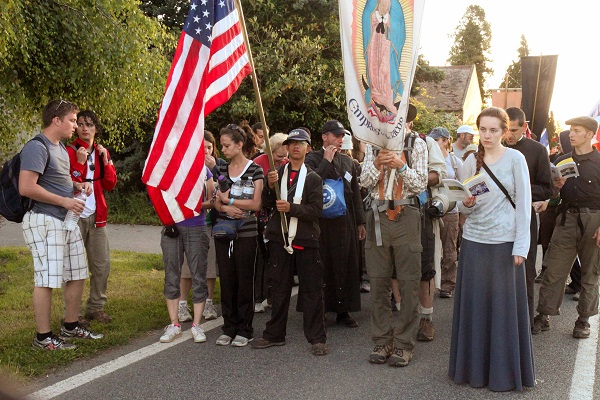
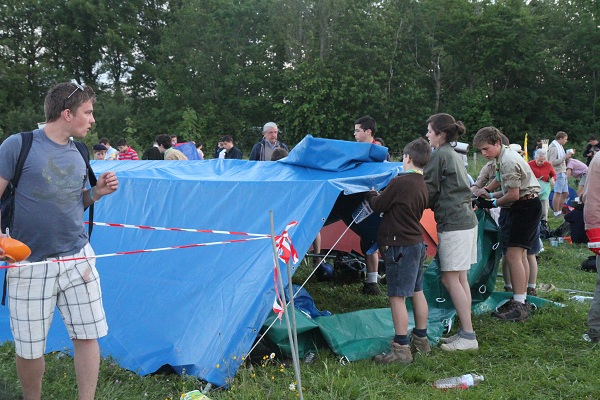
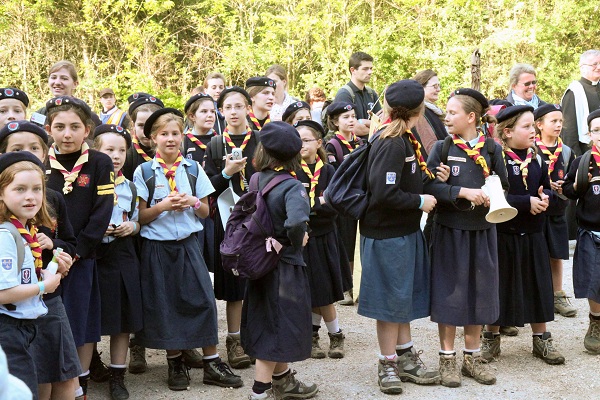
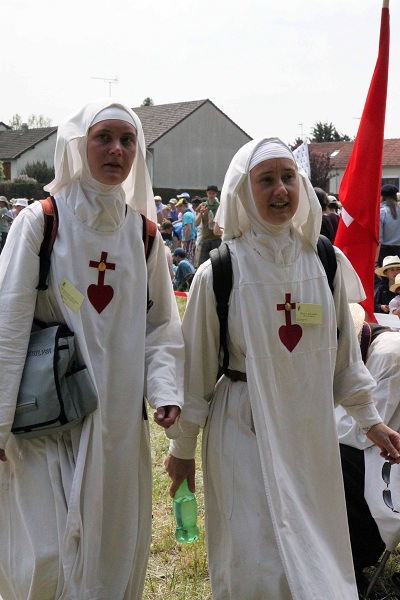
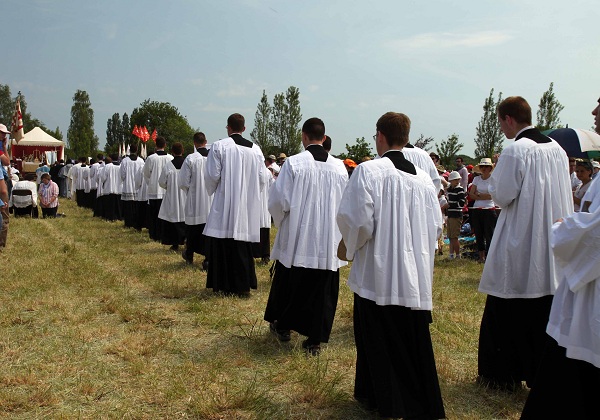
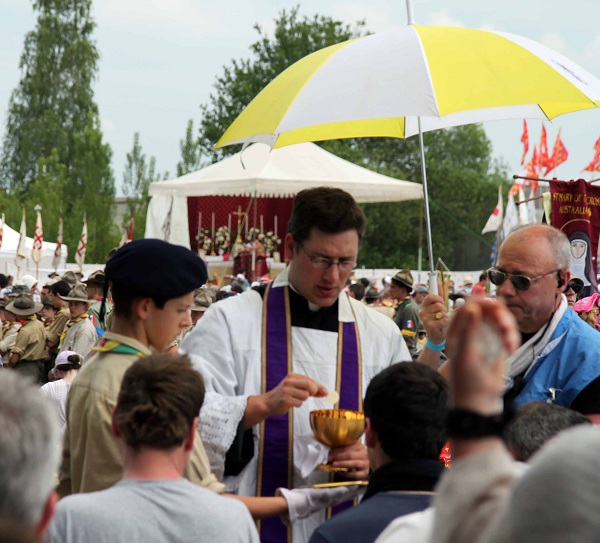
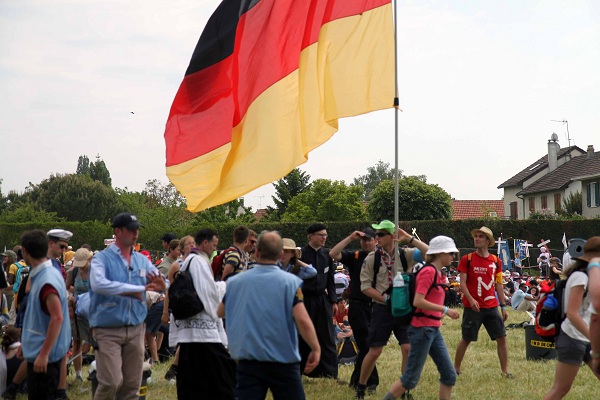
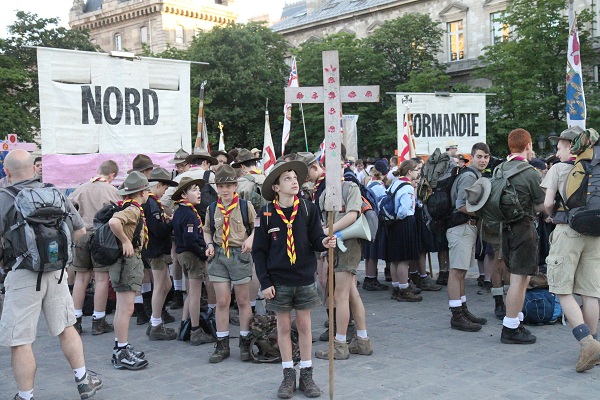
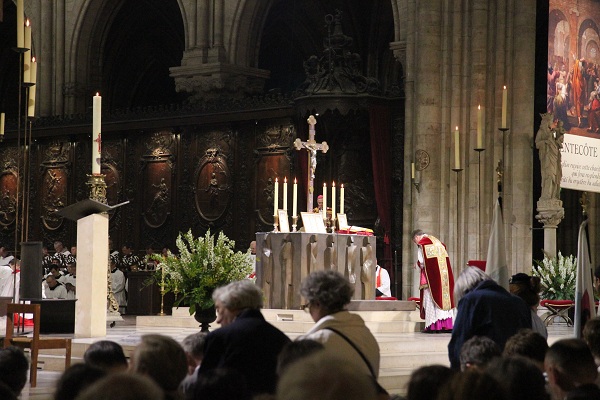
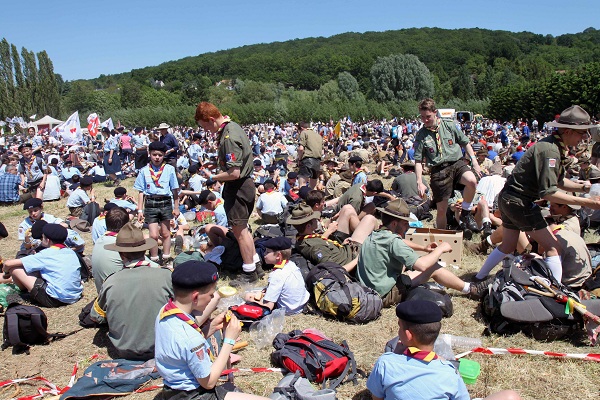
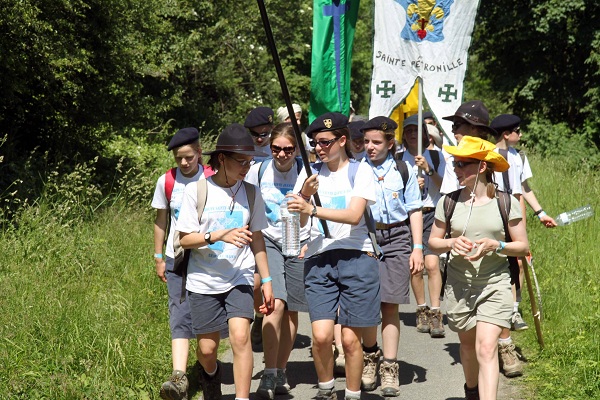
The pilgrims assemble. On the third day many families have joined the march. It is claimed that the overall number of pilgims swelled to 10,000-15,000 on this day.


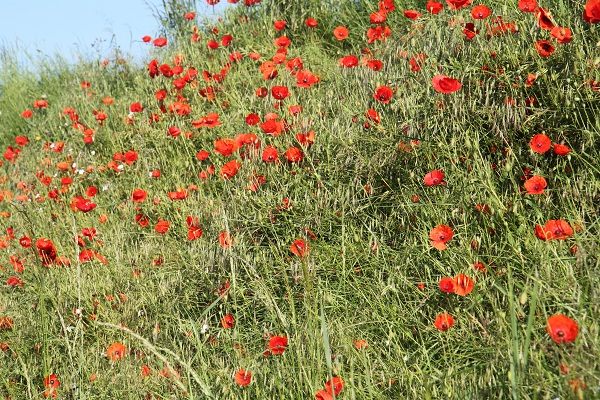
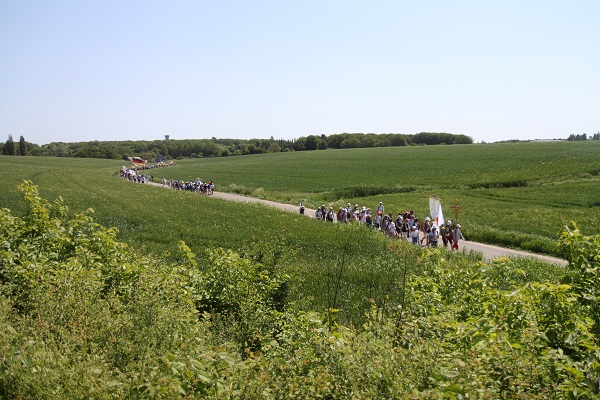
The pigrimage route crosses fields filled with flowers.


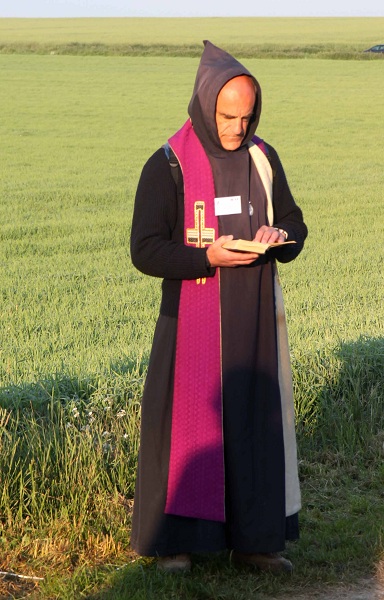
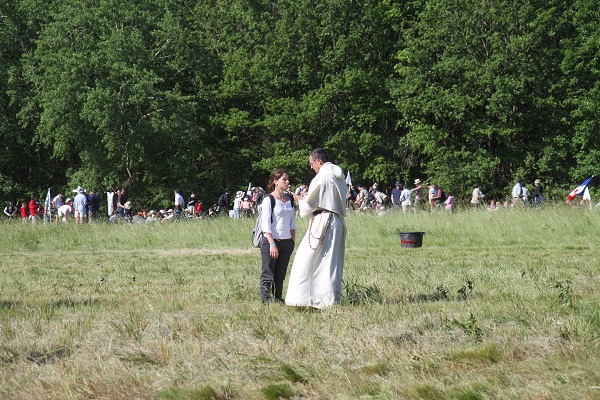
Confession in the fields during a pause in the pilgrimage.


The pilgrims are often greeted by appreciative spectators on the last day.

Because of the open and gently rolling terrain crossed on Monday a pilgrim can finally get an idea of the sheer number of participants.
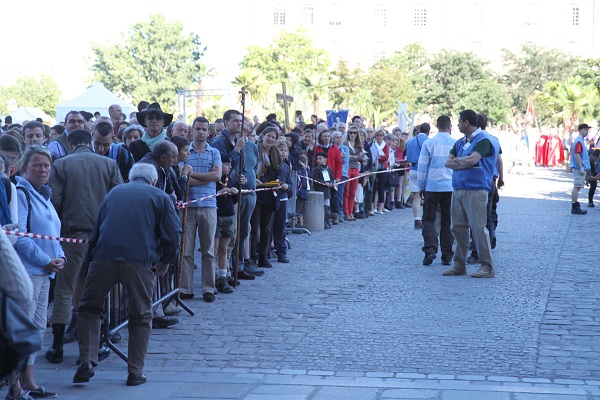
It is the third day of marching in the heat and the last leg of the pilgrimage begins to take a toll.

Chartres!

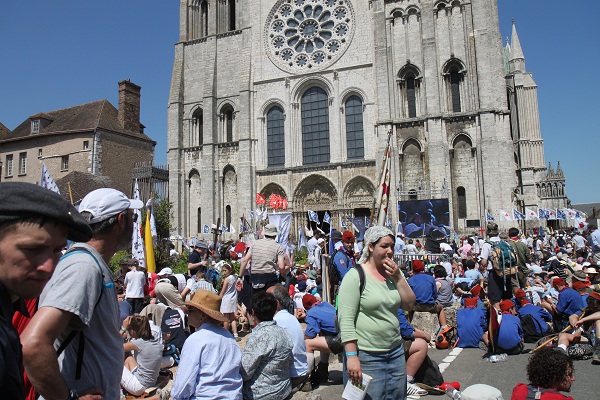
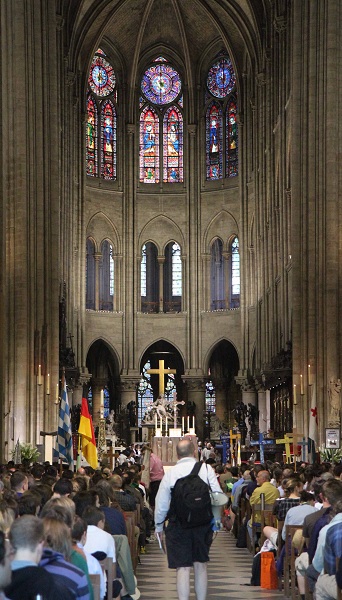
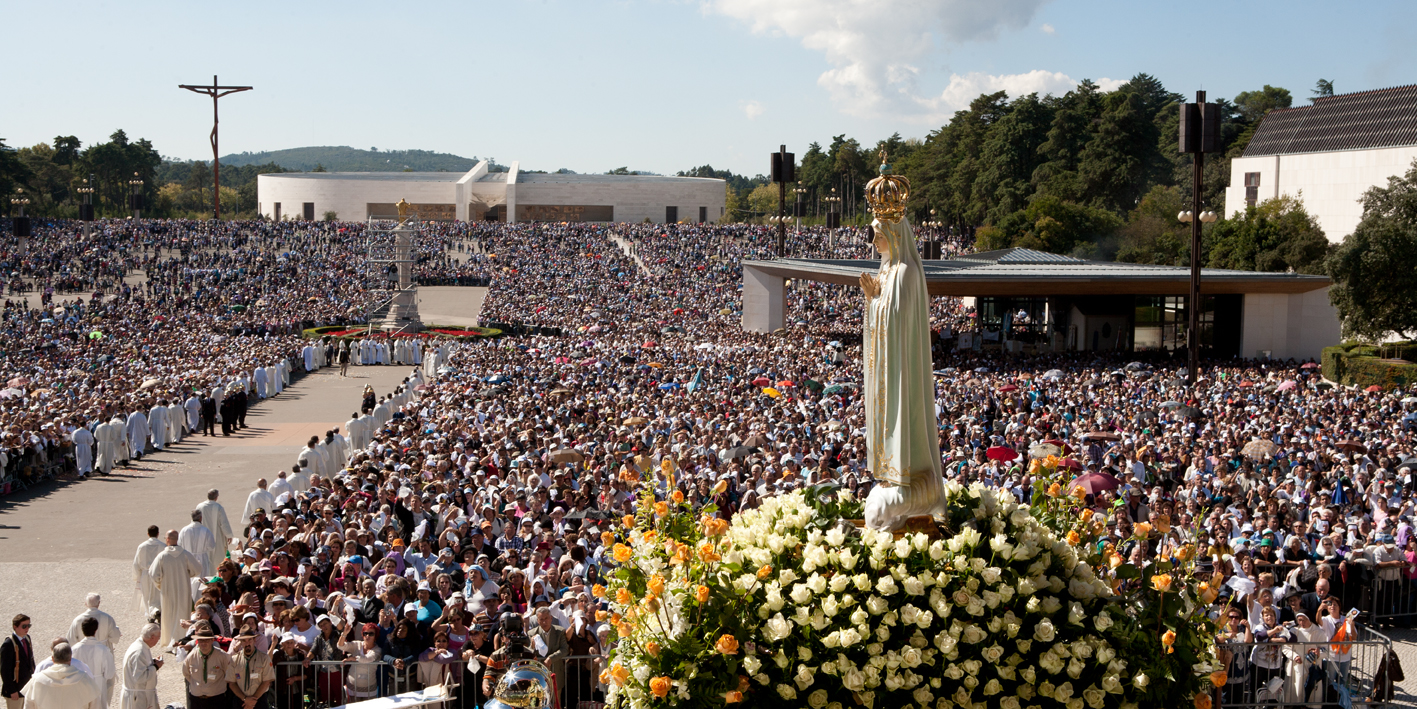
Misfortune for the Americans – just as in 2010 they must sit outside in the blazing sun. ( There is a rotation of chapters who enter the cathedral each year since the cathedral cannot accomodate all the pilgrims.)

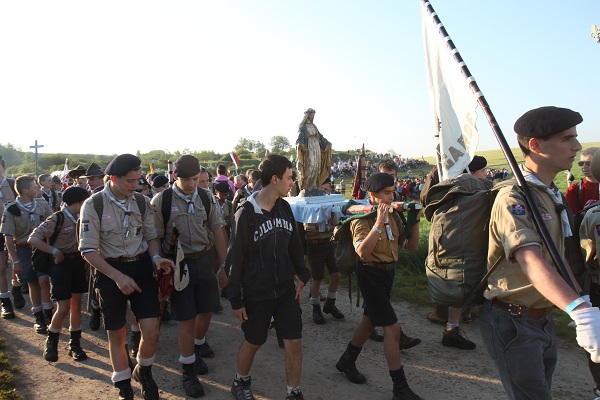
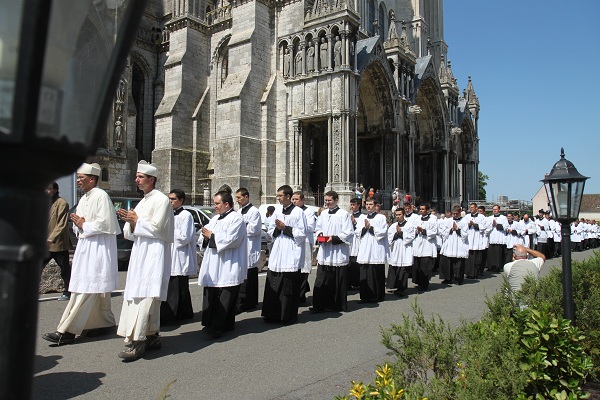
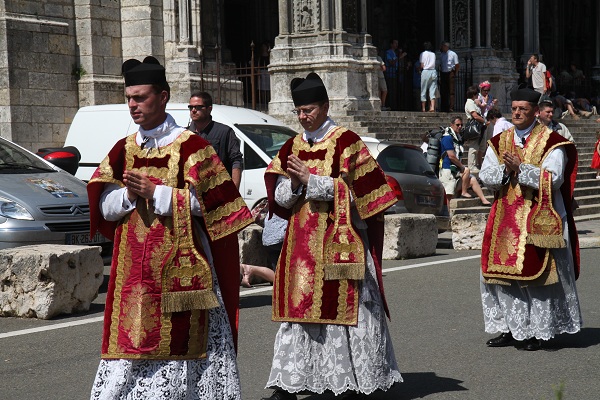
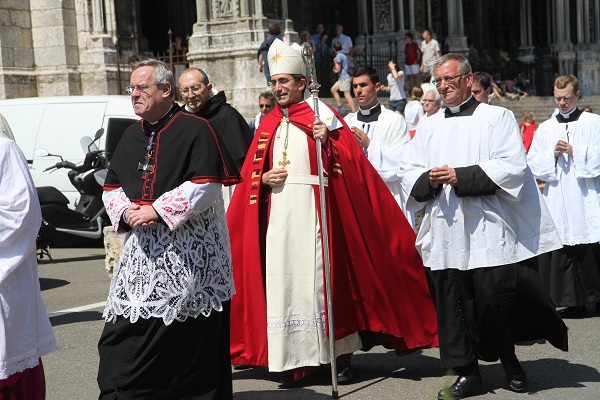
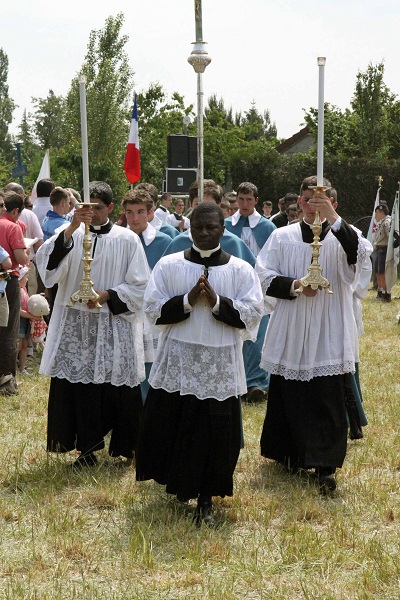
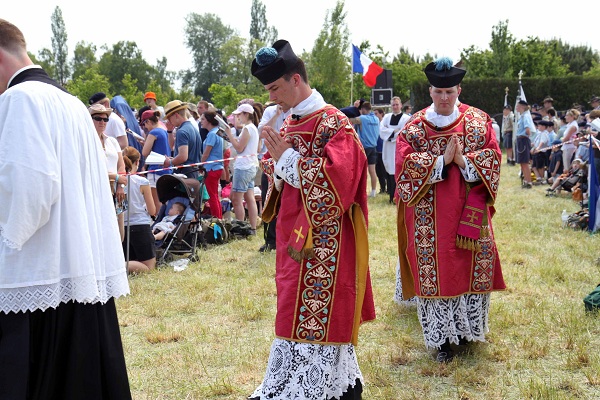
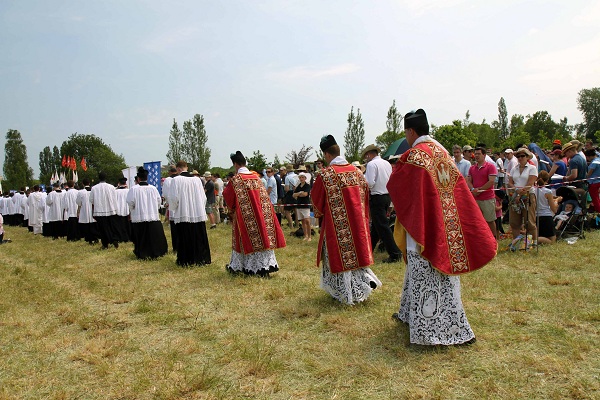
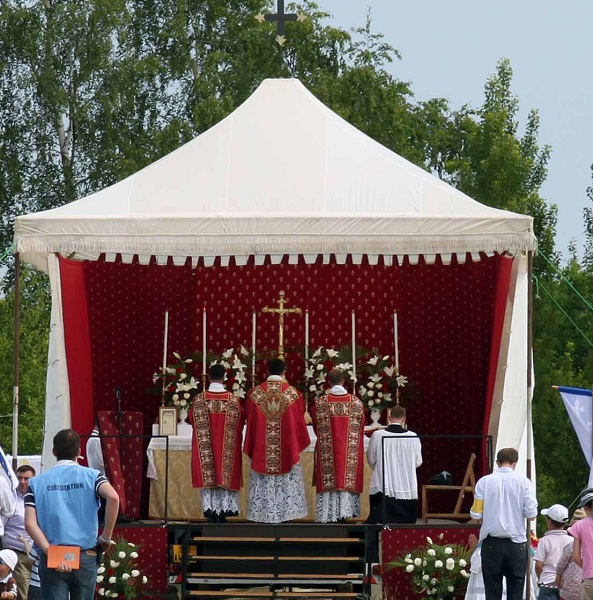
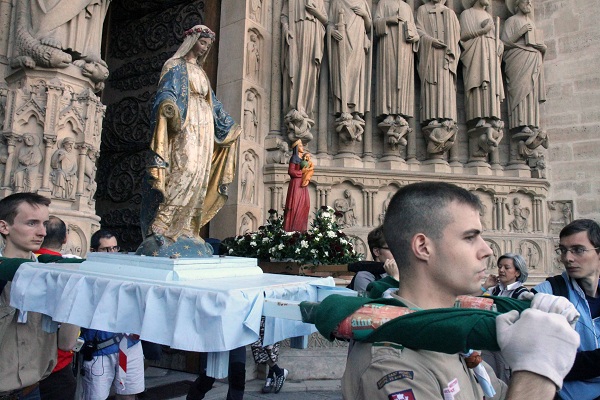
The procession to the Mass.

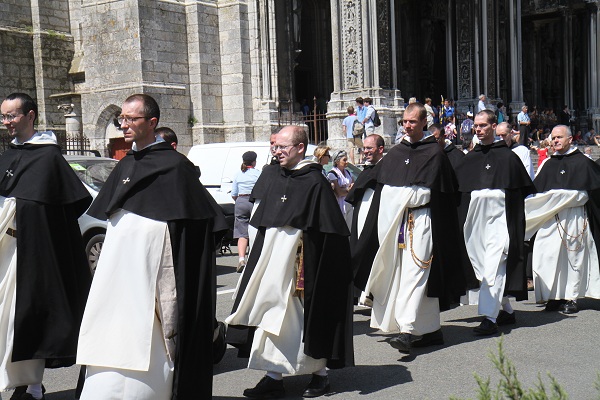
Dominicans

The Institute of Christ the King


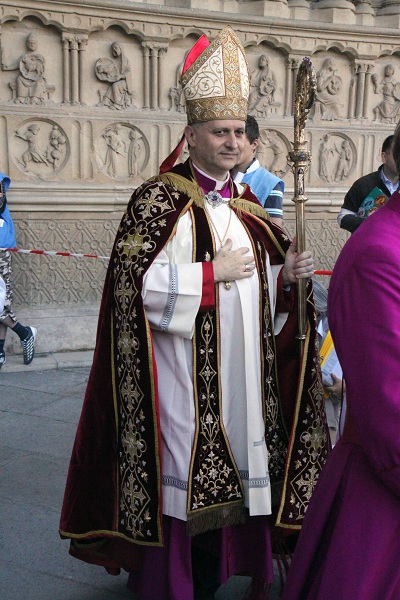
His Excellency.


"You can understand my astonishment when I found that the final edition of the new Roman Missal in many ways did not correspond to the Conciliar texts that I knew so well, and that it contained much that broadened, changed or even was directly contrary to the Council's provisions."
*****
Alfons Maria Cardinal Stickler,S.D.B. (1910-2007) was not a fan of the Novus Ordo. He was in a position to know. He served as a peritus on three Conciliar commissions: the Commission for the Clergy, the Commission for Seminaries and Universities, and the Commission on the Liturgy. Here are some of his thoughts on what the Liturgy is supposed to be for Catholics, but has not been because of the deformations of the post-Conciliar Church.

"When we consider that the Orthodox churches, despite their separation from the rock of the Church, through the symbolic expression and theological progress that continuously found entrance into their liturgy, have preserved the correct beliefs and the sacraments, every Roman Catholic liturgical reform should rather increase the symbolic richness of its form of worship than (sometimes even drastically) decrease it."
*****
"The Church and the liturgy grow and develop together, but always in such a way that the earthly is organized around the heavenly. The Mass comes from Christ; it was adopted by the apostles and their successors as well as by the Fathers of the Church; it developed organically, with the conscious retention of its substance. The liturgy developed along with the Faith that is contained within it; thus we can say, with Pope Celestine I, in his writings to the Gallican bishops in the year 422: Legem credendi lex statuit supplicandi: The liturgy contains, and in proper and comprehensible ways, brings the Faith to expression. In this sense the constancy of the liturgy participates in the constancy of the Faith itself; indeed it contributes to its protection. Never has there been, therefore, in any of the Christian-Catholic rites, a break, a radically new creation-with the exception of the post-Conciliar reform. But the Council again and again demanded for the reform a strict adherence to tradition. All reforms, beginning with Gregory I through the Middle Ages, during the entry into the Church of the most disparate peoples with their various customs, have observed this ground rule. This is, incidentally, a characteristic of all religions, including non-revealed ones, which proves that an attachment to tradition is standard in any religious worship, and is therefore natural."
*****
"It is not surprising, therefore, that every heretical offshoot from the Catholic Church featured a liturgical revolution, as is most clearly recognized in the case of the Protestants and the Anglicans; while the reforms effected by the popes, and particularly stimulated by the Council of Trent and carried out by Pope Pius V, through those of Pius X, Pius XII and John XXIII, were no revolutions, but merely insignificant corrections, alignments and enrichments."
*****
"There are several clear examples of what the post-Conciliar reform actually produced, above all in its core, the radically new Ordo Missae. The new introduction to the Mass grants a significant place to many variants and, through further concessions to the imagination of the celebrants with their communities, is leading to a practically unlimited multiplicity."
*****
"The essential center, the sacrificial action itself, suffered a perceptible shift toward Communion, in that the entire Sacrifice of the Mass was changed into a Eucharistic meal, whereby in the consciousness of believers the integrating component of Communion replaced the essential component of the transforming act of sacrifice. Cardinal Ratzinger has expressly determined also, with reference to the most modern dogmatic and exegetical investigations, that it is theologically false to compare the meal with the Eucharist-which practically always occurs in the new liturgy. With that, the groundwork is laid for another essential change: in place of the sacrifice offered by an anointed priest as alter Christus comes the communal meal of the convened faithful under the presiding priest. The intervention of Cardinals Ottaviani and Bacci persuaded the Pope to overturn the definition [in the original General Instruction that accompanied the new Missal-Translator's note] that confirmed this change in the Sacrifice of the Mass; it was 'pulped down' by order of Paul VI. The correction of the definition resulted, however, in no change to the Ordo Missae itself."
*****
'The Eucharist is not only the unique mystery of our faith; it is also an everlasting one, of which we should always remain conscious. Our everyday Eucharistic life requires a medium that fully embraces this mystery-above all in the modern age, in which the autonomy and self-glorification of modern man resist every concept that goes beyond human knowledge, that reminds him of his limitations. Every theological concept becomes a problem for him, and the liturgy especially as a support of the Faith turns into a permanent object of demystification, that is, of humanizing to the point of making it absolutely understandable. For this reason, the banishing of mysterium fidei from the Eucharistic formula becomes a powerful symbol of demythologization, a symbol of the humanizing of the center of divine worship, of holy Mass."
*****
"In my research for the Council decree about the Latin language, I became aware of the concurring opinion of the entire tradition: up to Pope John XXIII, a clearly unfriendly attitude had been taken toward all preceding efforts to the contrary. Consider in particular the cases of the statement of the Council of Trent, sanctioned by anathema, against Luther and Protestantism; of Pius VI against Bishop Ricci and the Synod of Pistoia; and of Pius XI, who deemed the Church's language of worship as 'non vulgaris.' Yet this tradition is not at all a question only of ritual, although that is the aspect always emphasized; rather, it is important because the Latin language acts as a reverent curtain against profanation (instead of the iconostasis of the Easterners, behind which the anaphora takes place; NOTE: the FSSP Fathers have also reminded us of this use of Latin as a verbal "iconostasis") and because of the danger that through the vulgar language the whole action of the liturgy might be profaned, which in fact often happens today."
*****
There's much more here. If you value the traditional Latin Mass and scholarship on it, read anything Cardinal Stickler has written.
fonte:http://gregorianrite2007.blogspot.com/

Cardinal Alfons Stickler:Legitimacy from Tradition Now we have another legitimacy which is coming from the internal sensibility for this rite. You know that worship and worshipping in every region is attached closely to tradition. No worship is easily changed in any religion. All are attached closely to tradition. This is true in a special manner also for our Rite, our Roman Latin Rite. Its changing after the Council was said to be a question of natural development; but, for every Rite, thinking should be only organical, adopted slowly in order to give no impression of changing, of cutting tradition. Unfortunately many people had this impression after the so- called "reform" established by the Commission, which was instituted by Pope Paul VI after the Council. Many things were changed which really cut the hearts of many of the Faithful - I would say sometimes the best of the Faithful.


https://blogger.googleusercontent.com/img/b/R29vZ2xl/AVvXsEjKl3lMm2XEnlsGJKPyODEa3JEFD9SvqhpaxF1yI5iluisU54f1g8nOCudkHNenu0Acd99FADYzcKX4wcV3xzQuWTEzfr2Lc1k8dfgbYobyjW6PKq8CSXH6y72BZVA6Uj6z4GBj-5JR7Qw/s400/stickler.jpg

Address by H.E. Cardinal Alfons Stickler


on June 20, 1992 at the Annual General Meeting
of the Latin Mass Society

Your Movement has Legitimacy in the Church I have accepted, with great pleasure, the invitation of your Chairman and Secretary to come to your Meeting. Now after reaching my 80's I am free from my ordinary work in the Curia so I can more easily accept such invitations and I do it with great pleasure when I can be helpful to so many of the faithful who today have many difficulties. I will communicate with you some ideas which I have found in many countries. I have been to Italy, France, Austria, Switzerland. I have been last February also in the United States for the opening of the Institute of Dietrich von Hildebrand, with a great High Mass in St. Agnes Church. I was told that the church was never so full since Fulton Sheen preached his Lenten sermons there. From everywhere people were coming so I could realise that in the United States also, the movement and the consideration for the old Mass are very effective.
The first idea I will communicate with you is that you can be sure that your movement has full legitimacy in the Church. Some have said that we are not legitimate. This is not true because, if you remember article 4 of the Liturgical Constitution, the Council Fathers explicitly said all the venerable rites have to be preserved. Some people say this is valid for all the other rites, with the exception of the Roman Latin rite. This is not so. Because article 4 says: all the rites legitimately recognised. This was not only established for the rites existing at that time, during the Council, but also for the rites that should be approved afterwards. Now the Old Latin rite was really recognised after the changing of the former Latin Roman rite because, as you know, exception was given immediately for old priests and, in England, you had fortunately your great Cardinal Heenan, who obtained the Indult for England and Wales in 1971. Then, we had the Motu Proprio, the Indult of the Pope, and later on Ecclesia Dei which was clearly confirmed by the Pope; for example, when he spoke to the Abbot of Le Barroux in 1990, who had asked explicitly for this rite. Consequently, a new authority was given to the old Rite on the base of the liturgical Constitution of the Council itself. This recognition is coming from the Holy See, from the Pope, under the conditions given at the moment of the new approbation, which institutes a real legitimation of the Old Rite (and is available now). So, if you fulfil the conditions for the continuation of the Old Rite, it is legitimate for you. This is the external legitimacy of your movement.
Legitimacy from Tradition
Now we have another legitimacy which is coming from the internal sensibility for this rite. You know that worship and worshipping in every region is attached closely to tradition. No worship is easily changed in any religion. All are attached closely to tradition. This is true in a special manner also for our Rite, our Roman Latin Rite. Its changing after the Council was said to be a question of natural development; but, for every Rite, thinking should be only organical, adopted slowly in order to give no impression of changing, of cutting tradition. Unfortunately many people had this impression after the so- called "reform" established by the Commission, which was instituted by Pope Paul VI after the Council. Many things were changed which really cut the hearts of many of the Faithful - I would say sometimes the best of the Faithful. This is also a reason to continue the tradition in the external forms of the Rite we professed before. This is the proof of the old saying "Lex orandi - Lex credendi". Unfortunately too many things have confused the common faithful in our Church. This is one of the reasons why they no longer have the security of an unchanging rite. "Lex orandi - Lex credendi." If the Law of worshipping is changed so profoundly, our faith has lost the help we had in our worship.
No Polemics
Now the next idea I want to express is that we have to avoid, always in our life and in our discussions, in our general behaviour in our association, every kind of polemics, because there is always a danger of hurting others. If there are polemics, they will say "Ah, you are a sect with no more reasoning". So we have to profess our attachment to the Old Rite calmly, reasoning with them but without polemics.
We have to explain also to ourselves the reasons for following the Old Latin Rite and we have many reasons for it. The first I have mentioned already; it is the absolute tradition of Liturgy in every religion to have no change with the past because we have to preserve that rite as the expression of our Faith. You know that the Oriental Church saved the common truth, that is the Catholic Truth, by preserving the rite. They preserved all the Sacraments because they were attached so strongly to the rite which they would never changed. The other heretics - Protestants and so on - have changed the Faith because they have changed the Rite.
The Catholic Church a Communio
The Vatican Council says explicitly that we have "a communio" in the Catholic Church, the Pope with the Bishops and with the priests in all parts of the world. We are particular churches but we are all in one Catholic Church. If we have the same faith, even with the different rites, but not in all our fundamental teaching, then we have not the complete Communion. For example, the Oriental Church is a Church not in complete communion because there is not preserved the dogma and truth in the Primacy of the Pope. They have not the whole truth, but most of it they have preserved. All the other churches are not called "churches" in the full sense but religious communities. This means that they have not the complete substance of our Faith. So the Catholic Church in the case of the Rites, who did not absolutely preserve the truths of the Catholic and Latin Rites has not with them this unity. This is very important in order to confirm our sensibilities for the Old Rite which is really that of the "Lex Credendi" expressed by the "Lex Orandi".
The Modernity of the Church
We have to consider still another idea. Modern Catholics say "Now we have to cut away all the old things. We must be modern." But this modernity is not the modernity of the Church because we have to preserve the whole substance which is our heritage from past generations. So if many of the Bishops ask us "Why do you follow the Old Rite?" We can answer very easily: "The new rite was introduced after the Council as a matter of pastoral care. This means that the Faithful should be animated more and more by the new form of rites to be better in Catholic truth and life. But many good people in the world who still believe in the truths of the Catholic Church are not satisfied about the innovations introduced into the Mass. Can you say then that the pastoral purpose has been fulfilled?" I think, through my experience, that there is more and more dissatisfaction becoming stronger always in all the categories of age, social positions, even in many young people.
Further we are told that the truth about the Mass, about the centre of the liturgy has not really changed. But we can ask; have we the same sense, the same reverence we had before - and perhaps still have - when we assist at the Old Roman Rite? Or have we a loss of reverence, of awe of our biggest mystery, our faith in the Holy Mass? In the sacrifice? It was admitted officially when, two years ago, on the Silver Jubilee of the changing of the Rite, authorities in Rome admitted that there was a great loss of awe in the Mass - the most important rite of our worship.
This is the experience of all who travel around everywhere. We have lost what really is at the heart of our worshipping in the Holy Sacrifice. Many times we get the impression that it is man being worshipped but not God. We have a Communion meal, but not a Sacrifice. I think that this has proved one of the most important changes in the general attitude to the Holy Sacrifice of the Mass. When I studied Theology I was told that the centre of the Mass is the Consecration, the Communion is quite necessary for the priest but supposes the sacrificial act already done. Today, at the centre is the meal. What we have to do when confronted with the situation as members of the Association, you represent here. Firstly we have to tell our Bishops and our parish priests that we are not satisfied with the new rite; that we have good reasons for being attached to the Old Mass. We should explain all the reasons why it should be available for those who ask for it. We must also explain that the Holy Father has granted the privilege contained in the Motu Proprio; Ecclesia Dei and that he wanted to take care of the sensibilities of those attached to the Old Latin Mass.
Loyalty Always to the Holy See
Our fidelity to the Old Rite must always conform to the decisions of the Holy See, with all the conditions satisfied which the Holy See has laid down for this purpose. We should persist in our fidelity to this heritage, which is a heritage of truth and because we can be sure that also today, the old Latin Mass is completely valid and "Lex Orandi" reflects the "Lex Credendi". If we are faithful in "Oratione", we can be certain to remain also attached to the truth in "Credendo", in full devotion to our heritage of Faith.

fonte:http://www.latin-mass-society.org/sticklms.htm