http://4.bp.blogspot.com/_14vrv7ni7HM/TLYyK0PS85I/AAAAAAAABU8/h4xBT0R8kQU/s1600/20101013225550_D0064009.jpg

quarta-feira, 5 de julho de 2017

Welcoming Practice

These teachings come from Cynthia Bourgeault’s book The Heart of Centering Prayer: Christian Nonduality in Theory and Practice (see p. 90-2) and Christopher Page‘s notes from a variety of Cynthia’s teachings.
  

INTRODUCTION

The Welcoming Practice takes the core of Centering Prayer out into daily life; that is, the witnessing component which is one of the most transformative of the Christian spiritual practices. According to Cynthia Bourgeault, it is important to identify this as a practice and not a prayer, maintaining the emphasis on the action of letting go as opposed to passive acquiescence to external circumstances.
The practice was developed by Mary Mrozowski in the early 1980s, drawing on her work with biofeedback training, Jean Pierre de Caussade’s Abandonment to Divine Providence, and her integration of Thomas Keating’s teachings on the “false-self system”. It is intended to cultivate surrender to our deeper Self in times when attachment is tempting: difficult feelings and situations, feelings of inflation (eg. smugness, pride, vainglory), and even the “highs” (eg. “I don’t want this to end!”).

STEP 1: FOCUS OR SINK IN – FEEL THE FEELING

When the first indications of an emotion or physical upset arise, focus on the sensation in the body. Where in the body is the emotion felt? Feel it without judgment. Don’t think about why the emotion is there or what it means, don’t tell stories – just feel it.
When we can stop and observe the emotion without repressing or justifying it, we can more easily dissipate the energy in it. There is no need to do anything – just notice.

STEP 2: WELCOME – THE TURNING POINT

Whatever the sensation is, welcome it by saying internally, “Welcome, pain” or “Welcome, frustration”. It is the sensation that was felt in the first step that is being welcomed, not the situation that brought it on. By doing this, an inner hospitality and unconditional presence is developed. In Cynthia’s words, “’You’ as pure consciousness have trumped ‘you’ as the victim of any story or situation…connected to sensation but separated from story, the inner shift can be extremely powerful”.
By welcoming the sensation, we are thanking our body for alerting us to a provoking situation. Our attitude toward strong emotions that arise from these situations is transformed with practice.

STEP 3: LETTING GO – FREEDOM TO CHOOSE

The letting go step incorporates the attitude of “let it be”. Surrender requires us to leave behind our wants, needs, and demands on the spiritual journey, giving up the adversarial or grasping position and making space to experience our union with God as the primary importance.
Don’t rush to let go – stay with the physical sensation, alternating between observing and welcoming. Let go of the need to fix anything, to attach stories to the feeling, and wait until the emotional spike has passed. Do not attach to a happy ending. The dissipation of the emotion will make space for heart-centred awareness, creating the inner freedom needed for conscious action, freeing us from the mercy of patterned reactions and victimhood.

STEP 4: SUMMARY – CYNTHIA SAYS IT BEST

“’By the power of the Divine Indwelling active within me, I unconditionally embrace this moment, no matter its physical or psychological content’. And by this same indwelling strength, once inner wholeness is restored, I then choose how to deal with the outer situation, be it by acceptance or by spirited resistance. If the latter course is chosen, the actions taken – reflecting that higher coherence of witnessing presence – will have a greater effectiveness, bearing the right force and appropriate timing that Buddhist teaching classically designates as ‘skillful means’”.
terça-feira, 4 de julho de 2017

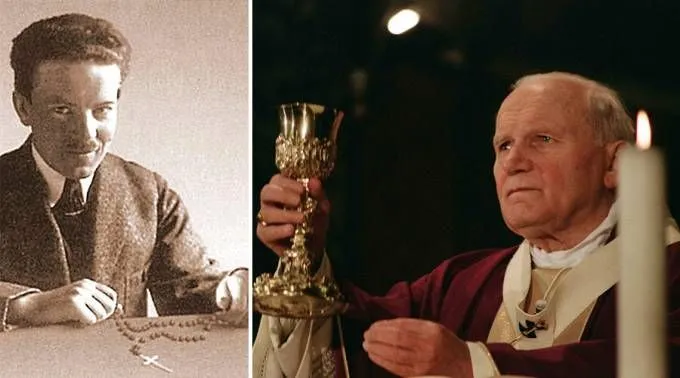
Conheça Jan Tyranowski, o mentor de São João Paulo II no caminho à santidade


Jan Tyranowski e São João Paulo II / Domínio Público e L'Osservatore Romano

domingo, 2 de julho de 2017

ORDENAÇÕES EM ECÔNE – 2017

Publicado em 02/07/2017

Além das daquelas que já postamos, publicamos agora outras belíssimas fotos das ordenações de 12 padres e elevação de 6 diáconos ocorridas no Seminário Internacional da FSSPX, em Ecône, dia 29 de junho de 2017.
PROCISSÃO DE ENTRADA
PROSTRAÇÃO DOS ORDENANDOS
IMPOSIÇÃO DAS MÃOS
O SACRAMENTO DA ORDEM
AS PRIMEIRAS BÊNÇÃOS
“Senhor, dai-nos sacerdotes,
Senhor, dai-nos santos sacerdotes,
Senhor, dai-nos muitos santos sacerdotes,
Senhor, dai-nos muitas santas vocações religiosas,
Senhor, dai-nos famílias católicas, 
São Pio X, rogai por nós”

sexta-feira, 30 de junho de 2017

My Testimony of meeting and speaking with Jesus Christ


The Lord has lead me to make this video and share it with you all. Glory to God. In February 2014 I had a powerful and amazing visitation from Jesus Christ that changed my life and outlook profoundly. He is so real, so lovely, so patient, so kind, so ready to listen to you. So ready to comfort you. Do you want to know Him? He can take your cares and burdens and give you life. This isn't a joke. This is the truth. God is real and He loves you. I'm no more special than you or anyone else. There are so many people who have had similar experiences. I'm telling you this out of sincerity and love my brothers and sisters. None of us are perfect so please, let's be kind to one another. Peace be with you all. Praise God.

A PERSONAL RELATIONSHIP WITH JESUS CHRIST


A PERSONAL RELATIONSHIP
 
WITH JESUS CHRIST
Kathy Bernard - Publisher


"I no longer call you slaves, because a master doesn’t confide in his slaves.
Now you are my friends, since I have told you everything the Father told me."
John 15:15:

     
One of the most exasperating questions Catholics encounter in talking with people of other Christian faiths is, "Do you have a personal relationship with Jesus Christ?" 
This appears to be one of those "gotcha" questions because many of us are totally unprepared to answer this query coming at us.   Well meaning, they stand smiling, waiting for a response.  Sadly, some Catholics find this uncomfortable because they are unsure of the words "personal relationship" truly means."
One could simply say,  "When I gave my life to the Lord in faith, He reached out and touched me in the depths of my soul.  It is a living  gift, a personal relationship like none I will ever experience, for it is constant, priceless, and everlasting.  It is an in-dwelling that comes when I accepted Him as Savior.  I believe in Him, recognize and know He is there within me, helping me to stay on His path to eternal life.  He is my everything."  
Father James Farfaglia explains a personal relationship with Christ this way:  "Christianity is not about a what, but about a Whom.  Ultimately, Christianity is about relationship and of course, the greatest relationship of all.  It is about a relationship with the best friend anyone could ever have; Jesus Christ.  He does not tell us about the way, He is the way"  Father James Farfaglia is the founding pastor of Saint Helena of the True Cross of Jesus Catholic Church. He is presently the new pastor of Our Lady of Guadalupe Catholic Church.  Both parishes are located in Corpus Christi, Texas.  Originally from Ridgefield, CT, he has founded and developed apostolates for the Catholic Church in Spain, Italy, Mexico, Canada and throughout the United States.  See a wonderful video with Father Edward L. Beck C.P. speaking on our relationship with Jesus Christ which appears on Father Farfaglia's site.  Please visit:  Called to Relationship: The Happy Priest on Jesus the Good Shepherd - Living F
Pope John Paul II, (Commissioning Families, Neo-Catechumenal Way. 1991), in talking about a relationship with Christ tells us, "The task which awaits you—the new evangelization—demands that you present, with fresh enthusiasm and new methods, the eternal and unchanging content of the heritage of the Christian faith.  As you well know it is not a matter of merely passing on a doctrine, but rather of a personal and profound meeting with the Savior."  He also relates:  "Sometimes (even) Catholics have lost or never had the chance to experience Christ personally: not Christ as a mere ‘paradigm’ or ‘value’, but as the living Lord, ‘the way, and the truth, and the life". —L’Osservatore Romano (English Edition of the Vatican Newspaper), March 24, 1993, p.3.
Some skeptics, however, might ask how is it possible to have a relationship with Jesus Christ if they cannot see Him, or ever met Him?  Others may ask, "Have you ever heard Him speak to you?  They cannot know that He abides in all who believe in Him and He will remain forever with each of us if we remain in absolute faith. 
How is this done?  The special relationship comes with our acceptance of Jesus in our lives as Savior.  He tells us In John 15:15 - 17:  "I no longer call you slaves, because a master doesn’t confide in his slaves. Now you are My friends, since I have told you everything the Father told Me.  You didn’t choose Me. I chose you. I appointed you to go and produce lasting fruit, so that the Father will give you whatever you ask for, using My name. This is my command: Love each other. "   Ephesians 2:19-20 reads:  "Now therefore ye are no more strangers and foreigners, but fellow citizens with the saints, and of the household of God; And are built upon the foundation of the apostles and prophets, Jesus Christ himself being the chief corner stone."  It is the Holy Spirit abiding in us and our acceptance that brings us into a personal relationship with Jesus Christ.    
On Sep 3, 2008  (Zenit.org)  Pope Benedict XVI,  reflecting on the 12th century St. Bernard of Clairvaux during a speech to a general audience, he highlighted his own personal relationship with Christ.  Then he related that "the Abbot of Clairvaux  did not tire of repeating that only one name counts, that of Jesus the Nazarene.  The Abbot tells,  "All food of the soul is dry", he professed, "unless it is moistened with this oil; insipid, unless it is seasoned with this salt. What you write has no savour for me unless I have read Jesus in it . And he concludes: 'When you discuss or speak, nothing has flavor for me, if I have not heard resound the name of Jesus.'  The Pope said Bernard's concept of true knowledge of God consists in a 'personal, profound experience of Jesus Christ and of His love.'  (In Canticum Sermones XV, 6: PL 183, 847)
Continuing, Pope Benedict states, "in a more than decisive way, the abbot of Clairvaux configures the theologian to the contemplative and the mystic.  'Only Jesus' --insists Bernard in face of the complex dialectical reasoning of his time -- 'only Jesus is 'honey to the mouth, song to the ear, joy to the heart.'  "Ideas like this one, noted the Pontiff, won the saint his traditional title: "Doctor Mellifluus"; his praise of Jesus Christ, in fact, 'runs like honey'."  
"And this, dear brothers and sisters," the Pope declares, "is true for every Christian: Faith is above all a personal, intimate encounter with Jesus, and to experience his closeness, his friendship, his love; only in this way does one learn to know him ever more, and to love and follow him ever more. May this happen to each one of us."  - Pope Encourages Relationship With Christ
Yet again, speaking to the pilgrims gathered at the Paul VI Hall at Vatican City, Sep 3, 2008 , Pope Benedict turned his attention to the conversion of St. Paul, which he said shows us that Christianity is not “a new philosophy or a new form of morality,” but an encounter with the person of Christ, an event that ignites a personal relationship with Him. For us," the Pope tells, "....Christianity is not a new philosophy or a new form of morality.  We are only Christians if we encounter Christ, even if He does not reveal Himself to us as clearly and irresistibly as He did to Paul in making him the Apostle of the Gentiles.  We can also encounter Christ in reading Holy Scripture, in prayer, and in the liturgical life of the Church - touch Christ's heart and feel that Christ touches ours.  And it is only in this personal relationship with Christ, in this meeting with the Risen One, that we are truly Christian. Christianity is a Personal Encounter  

St. Bernard of Clairvaux was born in 1090 in Fontaines, France and died in 1153.   Conversion, for St. Bernard of Clairvaux meant not simply renouncing the world—it ushered believers into a deeply personal friendship with Jesus.   Bernard allowed no lukewarm or halfhearted faith in the Cistercian movement, which he helped to spearhead during his lifetime. He wanted to ensure that anyone joining a Cistercian community was soundly converted and passionately pursuing Jesus. Similar to missionary movements and campus ministries of our time, the Cistercians constituted a cadre of radical servants of Christ in the twelfth century.
Our relationship with Jesus is very personal.  Let no one tell you otherwise. Yet it holds no jealousy nor possessiveness.  A true believer wants all to have this relationship; they crave for all to have it because Jesus commanded us to spread His Precious Word.... to bring His word to all who will listen and know that He is real and alive, and one day He will return to take all who believe and follow His teachings to meet God, our Heavenly Father.  

Jesus Christ sees you, hears you, speaks with you, and walks with you.  The true Christian experiences this.  He is there to bless those who want to share in His love.  And so, with our faith, we share this very personal relationship with the only One Who can opens the gates of heaven for us, and Who will welcome us into His Father's kingdom.  No human person nor entity can do that.  Only He is the One Who paid for our human sin with His blood that entitles us to eternal life.  Many precious followers may die for His Truth but none other than Christ Jesus, the Son of the Living God, can give us salvation and entry into heaven.

This relationship with Jesus is real.  Before His death on the cross, in the intimacy of the Upper Room where He imparted to His dear friends His last words before His Passion and Resurrection, He said: "If you love Me, keep my commandments"(John 14: 15).  And as affirmation, He tells us in Matthew 26:26-28,  "As they were eating, Jesus took some bread and blessed it.  Then He broke it in pieces and gave it to the disciples, saying, “Take this and eat it, for this is My Body.  And He took a cup of wine and gave thanks to God for it.  He gave it to them and said, “Each of you drink from it,  for this is My Blood, which confirms the covenant  between God and His people.  It is poured out as a sacrifice to forgive the sins of many."   He tells us, "I am the vine; you are the branches. He who abides in Me, and I in him, bears much fruit, for apart from Me you can do nothing." - John 15:5 
And so, as our faith strengthens, so does our relationship with Jesus Christ, and we must strive to let that relationship be a circle encompassing Jesus Christ and His Church not only through obedience to Him but accepting worthily the body and the blood of Jesus Christ.

 
"My sheep listen to my voice; I know them, and they
follow me."  - John 10:27
