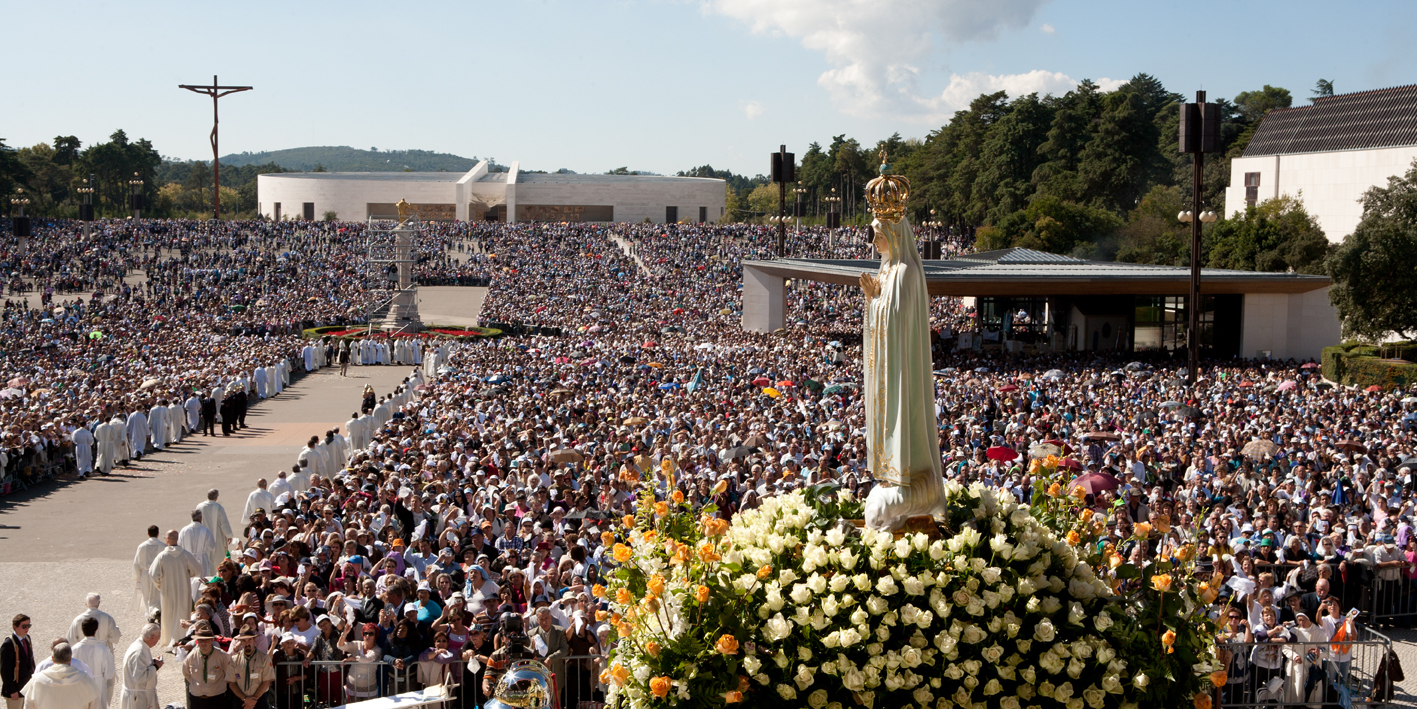
http://4.bp.blogspot.com/_14vrv7ni7HM/TLYyK0PS85I/AAAAAAAABU8/h4xBT0R8kQU/s1600/20101013225550_D0064009.jpg

Mostrando postagens com marcador Descobrir Beleza Missa Gregoriana. Mostrar todas as postagens

sábado, 22 de outubro de 2011

A POBREZA E BELEZA NA SANTA MISSA


A Missa é o coração da cristandade, afinal é nesta celebração que meditamos sobre todo o amor de Deus aos homens. No altar os fiéis contemplam a mística da Verdade e conhecem os mais belos dogmas da Igreja. A sua realidade sacrificial nos obrigar a refletir e mergulhar na grandeza imensurável de Cristo.
As normas litúrgicas e o missal refletem, apenas, o entendimento acerca do sentido sobrenatural da Santa Missa. Quando nós compreendemos a profundidade da celebração eucarística, todas as regras emitidas pela Igreja são entendidas como consequência. O centro da Liturgia é o Cristo, um Deus feito homem e que pelos homens morreu para salvá-los. Como Sacrifício, a Missa traduz a entrega de Jesus, o Seu amor infinito, de um Deus humilhado. Não é motivo de perplexidade pensar que o Senhor Todo-Poderoso Se fez nascer numa manjedoura, Se diminuiu ao conviver com pecadores e excluídos e, além disso, Se entregou num perfeito holocausto?
A Santa Missa exprime essa perfeita doação de Deus. Quando os adornos e a beleza, que só servem como caminho e não como fim, se tornam centro da celebração, a Liturgia se distancia drasticamente da sua sobrenaturalidade. A sobriedade, sacralidade e solenidade da Missa traduzem, apenas, o sentido místico da celebração. Por si só a ornamentação é vazia, inócua e ineficiente, mas quando é usada como via pode ser um caminho pedagógico muito saudável, explanando os mistérios e expondo a riqueza do cristianismo.
Como a Igreja cresceu na Europa? Através da beleza das imagens, dos vitrais, das catedrais, mas acima de tudo da Santa Missa. Os povos pagãos se sentiam atraídos por uma força silenciosa que os vivificava. Quando Clóvis, Rei dos Francos, foi se batizar na Catedral de Reims, na França, perguntou a São Remígio, depois de contemplar a riqueza e beleza daquele templo, que parecia resplandecer uma fagulha do esplendor da morada celeste: “Padre, isso já é o céu?” Outro fato histórico interessante é o ocorrido quando da primeira Missa celebrada no Brasil, por Frei Henrique de Coimbra, em Porto Seguro. Os curiosos indígenas se aproximavam do altar e contemplavam aqueles estranhos homens se humilhando em frente a uma Cruz. Quando um segundo grupo de índios se aproximou do local o seu líder questionou o que era aquilo, o chefe do primeiro bando, prontamente, apontou para o céu e apontou para a terra, expondo com perfeição o caráter horizontal da Missa; a ligação do homem com Deus.
Beato Antônio Chevrier, fundador do Instituto do Prado, já dizia no seu grande livro “O Verdadeiro Discípulo” que “quando se constrói uma casa, começa-se sempre pelas paredes grossas e, seguidamente, vai-se ao mais fino e aos ornamentos.” O Apóstolo dos Mendigos se referia ao ensino do catecismo, mas essa sua brilhante explanação vale também para a Liturgia. O que seria a Missa se não estivesse fundamentada sobre Cristo? O centro da celebração é Nosso Senhor, o Deus entregue em Sacrifício. São Leonardo de Porto-Maurício, um dos maiores pregadores da cristandade, afirmava que a todas as Missas celebradas na Igreja tinham a mesma validade, mas diferiam nos efeitos causados na assembléia, e por quê? Quantas vezes vamos a uma celebração e mesmo como todo o esforço não conseguimos nos ligar ao mistério do altar? Quantas vezes saímos até mesmo cansados da Liturgia? Tais efeitos são consequências de uma celebração carregada, normativa, Missas meramente burocratizadas e que se perderam entre a desobediência ao missal e o desrespeito ao espírito litúrgico católico.
Qual fiel não agiria com toda reverência e piedade sabendo que no altar se faz presente Deus com Seu corpo, sangue, alma e divindade? Qual de nós não se prostraria no chão ao contemplar o Senhor? Quem não se desmancharia em lágrimas se fosse visitado por Cristo em pessoa? Mas a Eucaristia é isso em concreto! Deus, não satisfeito em Se entregar em Sacrifício, ainda mostrou Seu imensurável amor ao ficar com o povo com toda a Sua plenitude.
Não poucas vezes a Missa vira um espetáculo, um teatro vazio. Isso ocorre por causa do distanciamento do caráter central da celebração; Cristo e Seu Mistério. O Apóstolo da Santa Missa, São Leonardo, já dizia que o meio mais adequado para assistir a Liturgia “consiste em irdes à igreja como se fôsseis ao Calvário, e de vos comportardes diante do altar como o faríeis diante do Trono de Deus, em companhia dos santos anjos. Vede, por conseguinte, que modéstia, que respeito, que recolhimento são necessários para receber o fruto e as graças que Deus costuma conceder àqueles que honram, com sua piedosa atitude, mistérios tão santos.” Ou seja, devemos mergulhar na santa alegria ao contemplar o Senhor que com o Seu amor veio ao mundo para nos salvar. Isso é motivo de regozijo, entretanto, e ao mesmo tempo, devemos sempre ter em mente o sentido místico e sobrenatural da Liturgia. A celebração não é uma conexão horizontal, ou seja, homem e homem, mas uma conexão vertical, homem e Deus. Ocorre que, infelizmente, certas Missas ficam impregnadas por um certo espírito normativo. Não podemos nos acomodar com o hábito; não é porque vamos todo o Domingo – no mínimo – ao encontro de Cristo na Liturgia que perdemos a constante renovação e surpresa na adoração da Eucaristia! De forma alguma! Toda a Santa Missa, para nós, deve ser motivo de perplexidade, de alegria, de adoração, uma constante e eterna sensibilidade.
Beato Antônio Chevrier dizia que “Um Padre pobre e santo numa igreja de madeira converterá mais pecadores do que um Padre ordinário numa igreja de ouro e de mármore e ornamentada de toda a espécie de belezas exteriores.” O que ele quer nos dizer com isso? Que a beleza por si só, o adorno e a ornamentação, são vazios de sentido se não estão centrados em Cristo. Chevrier continua: “Não seja necessário condenar o culto exterior, não, pois que a Igreja o pede e nós somos compostos dum corpo e de uma alma e as coisas exteriores devem levar-nos a Deus. Mas não nos deixemos levar por esta paixão que existe nos nossos dias e não tomemos o acessório pelo principal (...) Nos ornamentos e nas outras coisas...importa que o pensamento de Deus sobressaia e não o pensamento da arte ou do gosto.” Com isso entendemos que a beleza da Missa é resultado do entendimento do mistério do altar, do Sacrifício de Jesus, Sua doação. A pobreza espiritual se une ao caminho da beleza.
Como não se chocar com o exemplo de Santa Isabel, Rainha da Hungria, que ao entrar na Igreja triunfava como majestade, adornada com a coroa, jóias, anéis e colares, mas que quando do início da celebração retirava todas as pedrarias, ouro e prata para se tornar pobre e deixar que apenas o brilho de Cristo reinasse dentro do templo. A santa vivia na corte, mas não era da corte, assim como nós vivemos no mundo, mas não somos do mundo. Era sobre isso que Pe. Antônio Vieira falava quando escreveu: “Deus comumente desposa-se no deserto, porque não acha no deserto as condições do Paço, hoje desposa-se no Paço, porque achou no Paço as condições do deserto (...) Reis que edificam desertos! Se dissera reis que edificam palácios, bem estava; mas reis que edificam desertos! Os desertos edificam-se? Antes desfazendo edifícios é que se fazem desertos. Pois que reis são estes, que trocam os termos à arquitetura? Que reis são estes que edificam desertos? São aqueles reis (diz S. Gregório Papa) em cujos paços reais de tal maneira se contemporiza com a vaidade da Terra, que se trata principalmente da verdade do Céu: e paços onde se serve a Deus como nos ermos, não são paços, mas desertos” (Sermões Vol.VII Sermão de São João Batista).
A Santa Missa nos pede, então, um aparente paradoxo; a pobreza e simplicidade e a solenidade e beleza. E por que apenas aparente paradoxo? Simplesmente porque o nosso esvaziamento é apenas momentâneo, já que na Liturgia ficamos cheios quando nos aproximamos do Senhor em todo o Seu esplendor eucarístico. Assim, quando melhor nos diminuímos melhor engrandecemos Cristo e Seu sacrifício. Uma celebração bela, adornada e bem cuidada não necessariamente é uma celebração embebida em mística e sobrenaturalidade. Infelizmente a história nos mostra as Missas-Óperas, condenadas com vigor por São Pio X, que servem como a representação máxima da degradação do rito quando norteado apenas por uma estética vazia. Por outro lado, quando compreendemos o esplendor da via pulchritudinis, ou seja, o caminho da beleza – e como o próprio nome diz é caminho e não o fim – mais perfeito é o nosso entendimento do mistério do altar, assim, o adorno, o detalhe, a ornamentação, são consequências imediatas da nossa kénosis.


Todos os artigos disponíveis neste sítio são de livre cópia e difusão deste que sempre sejam citados a fonte e o(s) autor(es).
Para citar este artigo:
RAVAZZANO, Pedro. Apostolado Veritatis Splendor: A POBREZA E BELEZA NA SANTA MISSA. Disponível em http://www.veritatis.com.br/article/5967. Desde 22/10/2009.
fonte:Veritatis Splendor

sexta-feira, 21 de outubro de 2011

Devolvamos beleza à liturgia!


O site New Liturgical Movement traz neste domingo uma homilia extraordinária do Padre Franklyn M. McAfee sobre a beleza na liturgia, traduzo-a para os leitores de OBLATVS. Espero que agrade aos leitores como agradou-me a mim.

“A thing of beauty is a joy forever
Its loveliness increases;
It will never pass into nothingness.”
John Keats
Quando os enviados de Vladimir, Príncipe de Kiev, retornaram de uma visita a Constantinopla, onde assistiram à Divina Liturgia na Catedral de Santa Sofia no século X, eles fizeram o seguinte relatório: “Não sabíamos se estávamos no céu ou na terra, com certeza não há tal esplendor e beleza em outro lugar sobre a terra. Não somos capazes de descrevê-lo a vós; só isto sabemos, que lá Deus habita entre os homens, e que o seu culto supera o de outros lugares. Porque não podemos esquecer a beleza!”
O Presidente John Adams, numa carta a sua esposa Abigail, contou uma visita a uma “Capela Romanista”, onde diz: “A Música, que consistia em um órgão e um Coro de cantores, tomou toda a Tarde, excetuando-se o Momento do sermão, e a Assembleia cantava – na maioria do tempo suave e agradavelmente. Isto é Tudo que pude captar com um golpe de Visão, Audição e Imaginação. Todas as Coisas que podem seduzir e encantar o simples e ignorante. Eu imagino como Lutero pôde ter quebrado o encantamento.”
Santa Teresa d’Ávila declarou: “Eu sempre sou tocada pela grandeza das cerimônias da Igreja”. O amor à beleza e a expressão desse amor pela obra de arte não é beleza em si mesmo, mas sua expressão é homenagem a Deus porque, segundo São Tomás de Aquino, “beleza é um dos nomes de Deus”. Por conseguinte a Igreja, quando é convocada a celebrar os Divinos Mistérios, utiliza-se de todas as artes que despertam os sentidos porque a beleza é “id quod visum placet”, “aquilo que agrada à visão”. A sobriedade dos cantos, o esplendor dos instrumentos, a festividade dos paramentos, a pompa do incenso, as velas, os vasos, a água benta – todas estas coisas ajudam-nos em nossa adoração ao Deus Triuno que criou a beleza, sustenta a beleza, redimiu a beleza e é a própria Beleza.
A Igreja tradicionalmente revestiu o Santo Sacrifício da Missa com o mistério. Usando as coisas boas criadas, a Igreja em sua terrena transcendência conduz seus filhos a Deus e Deus, pelos mesmos meios, desce até eles. A Igreja às vezes esqueceu-se disto. O Papa Bento XVI (como Cardeal Ratzinger) lamentou: “Desde o Concílio Vaticano [Segundo] a Igreja deu as costas à beleza”. Há alguns anos atrás o Pontifício Conselho para a Cultura em Roma fazia este pedido: “devolvam a beleza aos edifícios eclesiásticos, devolvam a beleza aos objetos litúrgicos!” A Igreja não apenas deu as costas à beleza, como parece se envergonhar dela. Ele que um dia foi a promotora das artes.
Nós nos empobrecemos. Nós, para usar uma frase de Paul Claudel, “vivemos numa época de imaginação escassa”. Segundo o filósofo Plotino, “a alma precisa subir a escada do belo antes de poder encontrar a visão da Beleza Primeira”. Mas o que acontece quando se removem os degraus da escada?
Os cientistas nos dizem que o lado esquerdo do cérebro especializa-se em matemática, análise, ciência e assim por diante. E que o lado direito do cérebro é incuravelmente romântico, sua terreno é poesia, amor, arte, música. É o lado direito do cérebro que é envolvido pela mais elevada forma de Liturgia. Um autor disse certa vez: “Durante um exemplo mais des-ritualizado da Missa vernácula, o cérebro direito, miniatura de Homer ou Shakespeare que há em todos nós, é sufocado até a morte”.
H. L. Menken que escrevia para um jornal de Baltimore, e não era um amigo da religião, pegou-se admirando a Igreja Católica conforme disse em 1923: “A Igreja Latina, à qual eu me pego constantemente admirando, a despeito de suas frequentes incríveis imbecilidades, sempre teve claro diante de si o fato de que a religião não é um silogismo, mas um poema... Roma, de fato, não apenas preservou a poesia original do Cristianismo; ela fez ainda acréscimos capitais àquela poesia – por exemplo, a poesia dos Santos, de Maria, da própria liturgia”. “Uma Missa Solene”, conclui, “deve ser mil vezes mais impressionante que o mais poderoso sermão já ecoado numa nave... diante de tão envolvente beleza não é necessário cansar os fiéis com lógica; eles se convencem mais se deixados em paz.”
Ouçam os inimigos da Igreja. Eles tremem a cada balanço do turíbulo e a cada genuflexão. Em 1888 um adventista ‘do sétimo dia’ publicou um livro sobre a Prostituta da Babilônia. Quando o Juiz Clarence Thomas (católico) foi nomeado para a Suprema Corte o livro foi reimpresso. Eis o que o autor fala sobre o Culto Católico... lembrem-se de que isto foi no século XIX: “Muitos Protestantes supõem que a religião católica não é atrativa e que seu culto é uma série pálida de cerimônias sem sentido. Eis o erro. Embora o Romanismo seja baseado num engano, não é uma impostura grosseira e tosca. O serviço religioso da Igreja Romana é o cerimonial mais impressionante. Seu visual esplêndido e ritos solenes fascinam os sentidos do povo e silenciam a voz da razão e da consciência. O olhar fica encantado. Igrejas magnificentes, procissões imponentes, altares dourados, santuários preciosos, pinturas escolhidas e esculturas refinadas apelam para o amor à beleza. O ouvido também é cativado. A música é insuperável. As ricas notas de um órgão sonoro, misturado à melodia de muitas vozes que sobe pelas majestosas cúpulas e naves de suas grandes catedrais, não podem senão impressionar a mente com admiração e reverência. A pompa e cerimônia do culto católico tem o poder sedutor e encantador pelo qual muitos são enganados; e eles chegam a ver a Igreja Romana como a verdadeira porta do céu”.
Desta forma, muitos corações insensíveis à Igreja e a seus ensinamentos se enterneceram; como foi o caso dos “decadentes” – Baudelaire, Verlaine, Aubrey, Oscar Wilde e outros. “A beleza pode então ser adequadamente chamada evangélica, beleza evangélica, via pulchritudinis, pode abrir o caminho para a busca de Deus e dispor o coração e o espírito para encontrar Cristo que é a beleza da Santidade Encarnada oferecida por Deus ao homem para sua salvação”.
Segundo Santo Tomás de Aquino, para algo ser considerado belo deve ter três qualidades: integridade, harmonia e clareza ou resplendor. Quando o resplendor irrompe e os ensinamentos da Igreja se tornam manifestos, a Igreja Católica é reconhecida como o lugar onde a verdade habita e o lar da beleza. Esta era o caso dos decadentes. Hans Urs von Balthasar escreveu que quando “o bem perdeu seu poder de atração, quando as provas perderam seu caráter conclusivo; então restará a beleza para compelir”.
O Papa Bento XVI, em sua citação da visita dos delegados do Príncipe Vladimir de Kiev à Constantinopla disse que a delegação e o príncipe aceitaram a verdade do Cristianismo não pela persuasão de seus argumentos teológicos mas pela beleza do mistério de sua Liturgia.
O poeta Baudelaire escreveu: “É de imediato através da poesia e pela poesia, através e pela música, que a alma vislumbra o esplendor situado além do túmulo; e quando um poema estupendo traz lágrimas aos olhos, estas lágrimas não são prova de alegria excessiva. Elas são testemunho de uma melancolia impaciente, uma exigência dos nervos, de uma natureza exilada no imperfeito, e agora desejosa de tomar posse daquele mundo”.
Baudelaire foi influenciado significativamente em sua ideia de beleza por um escritor americano que ele muito admirava, Edgar Allan Poe. Poe dizia da beleza: “Nós ainda temos uma sede insaciável, a sede que pertence à imortalidade do homem. Ela é consequência imediata e uma indicação desta natureza perene. É o desejo da mariposa pelas estrelas. Não é mera apreciação da beleza diante de nós, mas um esforço velado para alcançar a beleza acima de nós”.
Por que então a Liturgia deve ser bela? Porque a beleza oferece um veículo para transcender nossas vidas presentes e para tocar as bordas do céu. Quando nós encontramos a beleza finita se engendra um desejo mais ardente pela beleza imortal absoluta da qual a beleza temporal do mundo é apenas uma efêmera epifania.
Na Epístola aos Hebreus, Cristo é chamado o “leiturgos”, o Liturgista que preside todos nossos rituais, Ele próprio oferece a Liturgia. Uma vez que Cristo é o “leiturgos” e Cristo é a Beleza Encarnada, toda beleza deve refleti-Lo e deve fluir d’Ele na Liturgia.
Cristo, o Verbo Feito Carne, é a maior obra-prima. Cristo é a mais perfeita sinfonia. Cristo é a pintura mais preciosa. Cristo é o ritmo cósmico no poema eterno.
São João da Cruz dizia: “Deus passa pelos matagais do mundo e onde Seu olhar recai, ele conduz todas as coisas à beleza”.
São Paulo escreveu a Timóteo: “Ele é o Rei dos Reis e Senhor dos Senhores. Ele possui a imortalidade e habita em luz inacessível”. Já na Divina Liturgia da Missa nós nos encorajamos a nos aproximarmos d’Ele que vive em luz inacessível.
Como posso descrever a Liturgia? Posso descrever a Liturgia com uma palavra. Nas cortes celestes, entre os coros dos anjos, somente uma palavra é falada, uma palavra solitária que os querubins e os serafins pronunciam diante da majestade da liturgia cósmica do Cordeiro glorificado, outrora morto mas agora ressuscitado, e a palavra é...
Aquela simples palavra...
Aquela gloriosa, triunfante palavra é...
AHHH!
Tradução: OBLATVS

terça-feira, 2 de agosto de 2011

True Beauty of the . The Sacred Queue!


Tony Oleck, on Crisis Magazine, writes on the true beauty of the liturgy. The Mass we celebrated here on Sunday was very uplifting - beautiful music connecting us to the prayers of millions of our fellow pilgrims through the ages, executed with dignity, to uplift our hearts. A congregation actively engaged. Servers and ministers who carried through the sacred actions with calm and prayer and the minimum of fuss. All these things came together to enable us to do something beautiful for God as He did something wonderful and grace-filled for us.

Tony Oleck gives a brief but, I think, a concise and accurate overview of what the Holy Father is attempting to do in his liturgical reforms that:

"has everything to do with the truth of worship and the human person... the Church cannot step into the world as missionary until it understands its essence as being the presence of Christ in the world, and understands liturgy as the foundation of its identity and its first and most potent source of Christ. The true beauty of liturgy is that it raises our eyes and our hearts toward Heaven, reminding us of the eschaton, the day when we pass from the temporal into the eternal. The Church exists to transform the world, to prepare it for the coming of Christ’s kingdom. Because liturgy is the primary place where this transformation occurs, Benedict is right to put it at the top of his agenda. If what we pray is what we believe, then the way we pray will determine the way we will live."

...

The Sacred Queue!

When we are told that queuing up for Holy Communion is a sacred action this is more what I would have in mind as an example of queuing up before the altar!

We celebrated a lovely Solemn Mass yesterday afternoon with newly ordained Fr Damian McCaughan as the celebrant, Fr Mark Lawler as the Deacon and myself as sub-Deacon.

A selection of photos here but there are reams on Flickr (courtesy of Mike Forbester)


http://offerimustibidomine.blogspot.com/

terça-feira, 21 de junho de 2011

“O poder atrativo da beleza litúrgica”

Entra-se na Igreja por duas portas: a porta da inteligência e a porta da beleza. A porta estreita... é a da inteligência; ela está aberta para  intelectuais e acadêmicos. A porta mais larga é a da beleza. Henri Charlier disse, na mesma linha, que "é necessário perder a  ilusão de que a verdade pode se comunicar frutuosamente sem aquele esplendor que é da mesma natureza que ela e que se chama beleza" (L'Art et  la Pensee).
A  Igreja, em seu  insondável mistério como esposa de Cristo, o Kyrios da Glória,  tem necessidade de uma epifania  terrena (isto é, uma manifestação) acessível para todos: esta é a majestade de seus templos, o esplendor de sua liturgia e a doçura de seus cantos.
Pegue um grupo de turistas japoneses visitando a Catedral de Notre Dame  em Paris. Eles  olham  para  a  altura  dos vitrais, a harmonia das proporções. Suponha que num dado momento, ministros sagrados paramentados com capas de veludo bordadas entram em procissão para as Vésperas solenes. Os visitantes assistem em silêncio; estão extasiados:  a  beleza  abriu-lhes  as  portas.  Ora, a  Summa Theologica  de São  Tomás  de Aquino  e Notre Dame em Paris são produtos da mesma era. Eles dizem a mesma coisa. Mas qual dos visitantes  leu a Summa de São Tomás? O mesmo fenômeno é encontrado em todos os níveis. Os 
turistas que visitam a Acrópolis em Atenas são confrontados com uma civilização de beleza. Mas quem dentre eles pode entender Aristóteles?
E assim  também é com a beleza da  liturgia. Mas do que qualquer outra coisa, é ela que merece ser chamada de o esplendor da verdade. Ela abre tanto para o pequeno como para o grande os tesouros de sua magnificência: a beleza da  salmodia,  os  cantos  e  textos  sagrados,  as  velas,  a harmonia de movimento e a dignidade ao carregar objetos. Com  arte  soberana  a  liturgia  exerce  uma  verdadeira influência sedutora sobre as almas, tocando-as diretamente, antes mesmo de o espírito perceber a sua  influência.

Dom Gerard Calvet, OSB - Four Benefits of the Liturgy

 
http://ars-the.blogspot.com/

segunda-feira, 20 de junho de 2011

Contemplation of Beauty by Cardinal Joseph Ratzinger ."The Attractive Power of Liturgical Beauty"

msza trydencka - Kraków A.D. 2008 

The Feeling of Things, the Contemplation of Beauty

By Cardinal Joseph Ratzinger

A message that Cardinal Joseph Ratzinger (now Benedict XVI) sent to a meeting of the ecclesial movement Communion and Liberation in August 2002. The group was meeting in Rimini, Italy.

Every year, in the Liturgy of the Hours for the Season of Lent, I am struck anew by a paradox in Vespers for Monday of the Second Week of the Psalter. Here, side by side, are two antiphons, one for the Season of Lent, the other for Holy Week. Both introduce Psalm 44 [45], but they present strikingly contradictory interpretations. The Psalm describes the wedding of the King, his beauty, his virtues, his mission, and then becomes an exaltation of his bride. In the Season of Lent, Psalm 44 is framed by the same antiphon used for the rest of the year. The third verse of the Psalm says: "You are the fairest of the children of men and grace is poured upon your lips."

Naturally, the Church reads this psalm as a poetic-prophetic representation of Christ's spousal relationship with his Church. She recognizes Christ as the fairest of men, the grace poured upon his lips points to the inner beauty of his words, the glory of his proclamation. So it is not merely the external beauty of the Redeemer's appearance that is glorified: rather, the beauty of Truth appears in him, the beauty of God himself who draws us to himself and, at the same time captures us with the wound of Love, the holy passion ("eros"), that enables us to go forth together, with and in the Church his Bride, to meet the Love who calls us.

On Monday of Holy Week, however, the Church changes the antiphon and invites us to interpret the Psalm in the light of Isaiah 53:2: "He had neither beauty, no majesty, nothing to attract our eyes, no grace to make us delight in him." How can we reconcile this? The appearance of the "fairest of the children of men" is so wretched that no one desires to look at him. Pilate presented him to the crowd saying: "Behold the man!" to rouse sympathy for the crushed and battered Man, in whom no external beauty remained.

Augustine, who in his youth wrote a book on the Beautiful and the Harmonious ["De pulchro et apto"] and who appreciated beauty in words, in music, in the figurative arts, had a keen appreciation of this paradox and realized that in this regard, the great Greek philosophy of the beautiful was not simply rejected but rather, dramatically called into question and what the beautiful might be, what beauty might mean, would have to be debated anew and suffered. Referring to the paradox contained in these texts, he spoke of the contrasting blasts of "two trumpets," produced by the same breath, the same Spirit. He knew that a paradox is contrast and not contradiction. Both quotes come from the same Spirit who inspires all Scripture, but sounds different notes in it. It is in this way that he sets us before the totality of true Beauty, of Truth itself.

In the first place, the text of Isaiah supplies the question that interested the Fathers of the Church, whether or not Christ was beautiful. Implicit here is the more radical question of whether beauty is true or whether it is not ugliness that leads us to the deepest truth of reality. Whoever believes in God, in the God who manifested himself, precisely in the altered appearance of Christ crucified as love "to the end" (John 13:1), knows that beauty is truth and truth beauty; but in the suffering Christ he also learns that the beauty of truth also embraces offence, pain, and even the dark mystery of death, and that this can only be found in accepting suffering, not in ignoring it.

Certainly, the consciousness that beauty has something to do with pain was also present in the Greek world. For example, let us take Plato's "Phaedrus." Plato contemplates the encounter with beauty as the salutary emotional shock that makes man leave his shell and sparks his "enthusiasm" by attracting him to what is other than himself. Man, says Plato, has lost the original perfection that was conceived for him. He is now perennially searching for the healing primitive form. Nostalgia and longing impel him to pursue the quest; beauty prevents him from being content with just daily life. It causes him to suffer.

In a Platonic sense, we could say that the arrow of nostalgia pierces man, wounds him and in this way gives him wings, lifts him upwards toward the transcendent. In his discourse in the Symposium, Aristophanes says that lovers do not know what they really want from each other. From the search for what is more than their pleasure, it is obvious that the souls of both are thirsting for something other than amorous pleasure. But the heart cannot express this "other" thing, "it has only a vague perception of what it truly wants and wonders about it as an enigma."

In the 14th century, in the book "The Life in Christ" by the Byzantine theologian, Nicholas Cabasilas, we rediscover Plato's experience in which the ultimate object of nostalgia, transformed by the new Christian experience, continues to be nameless. Cabasilas says: "When men have a longing so great that it surpasses human nature and eagerly desire and are able to accomplish things beyond human thought, it is the Bridegroom who has smitten them with this longing. It is he who has sent a ray of his beauty into their eyes. The greatness of the wound already shows the arrow which has struck home, the longing indicates who has inflicted the wound" (cf. "The Life in Christ," the Second Book, 15).

The beautiful wounds, but this is exactly how it summons man to his final destiny. What Plato said, and, more than 1,500 years later, Cabasilas, has nothing to do with superficial aestheticism and irrationalism or with the flight from clarity and the importance of reason. The beautiful is knowledge certainly, but, in a superior form, since it arouses man to the real greatness of the truth. Here Cabasilas has remained entirely Greek, since he puts knowledge first when he says, "In fact it is knowing that causes love and gives birth to it. ... Since this knowledge is sometimes very ample and complete and at other times imperfect, it follows that the love potion has the same effect" (cf. ibid.).

He is not content to leave this assertion in general terms. In his characteristically rigorous thought, he distinguishes between two kinds of knowledge: knowledge through instruction which remains, so to speak, "second hand" and does not imply any direct contact with reality itself. The second type of knowledge, on the other hand, is knowledge through personal experience, through a direct relationship with the reality. "Therefore we do not love it to the extent that it is a worthy object of love, and since we have not perceived the very form itself we do not experience its proper effect."

True knowledge is being struck by the arrow of Beauty that wounds man, moved by reality, "how it is Christ himself who is present and in an ineffable way disposes and forms the souls of men" (cf. ibid.).

Being struck and overcome by the beauty of Christ is a more real, more profound knowledge than mere rational deduction. Of course we must not underrate the importance of theological reflection, of exact and precise theological thought; it remains absolutely necessary. But to move from here to disdain or to reject the impact produced by the response of the heart in the encounter with beauty as a true form of knowledge would impoverish us and dry up our faith and our theology. We must rediscover this form of knowledge; it is a pressing need of our time.

Starting with this concept, Hans Urs von Balthasar built his "Opus magnum of Theological Aesthetics." Many of its details have passed into theological work, while his fundamental approach, in truth the essential element of the whole work, has not been so readily accepted. Of course, this is not just, or principally, a theological problem, but a problem of pastoral life that has to foster the human person's encounter with the beauty of faith.

All too often arguments fall on deaf ears because in our world too many contradictory arguments compete with one another, so much so that we are spontaneously reminded of the medieval theologians' description of reason, that it "has a wax nose": In other words, it can be pointed in any direction, if one is clever enough. Everything makes sense, is so convincing, whom should we trust?

The encounter with the beautiful can become the wound of the arrow that strikes the heart and in this way opens our eyes, so that later, from this experience, we take the criteria for judgment and can correctly evaluate the arguments. For me an unforgettable experience was the Bach concert that Leonard Bernstein conducted in Munich after the sudden death of Karl Richter. I was sitting next to the Lutheran Bishop Hanselmann. When the last note of one of the great Thomas-Kantor-Cantatas triumphantly faded away, we looked at each other spontaneously and right then we said: "Anyone who has heard this, knows that the faith is true."

The music had such an extraordinary force of reality that we realized, no longer by deduction, but by the impact on our hearts, that it could not have originated from nothingness, but could only have come to be through the power of the Truth that became real in the composer's inspiration. Isn't the same thing evident when we allow ourselves to be moved by the icon of the Trinity of Rublëv? In the art of the icons, as in the great Western paintings of the Romanesque and Gothic period, the experience described by Cabasilas, starting with interiority, is visibly portrayed and can be shared.

In a rich way Pavel Evdokimov has brought to light the interior pathway that an icon establishes. An icon does not simply reproduce what can be perceived by the senses, but rather it presupposes, as he says, "a fasting of sight." Inner perception must free itself from the impression of the merely sensible, and in prayer and ascetical effort acquire a new and deeper capacity to see, to perform the passage from what is merely external to the profundity of reality, in such a way that the artist can see what the senses as such do not see, and what actually appears in what can be perceived: the splendor of the glory of God, the "glory of God shining on the face of Christ " (2 Corinthians 4:6).

To admire the icons and the great masterpieces of Christian art in general, leads us on an inner way, a way of overcoming ourselves; thus in this purification of vision that is a purification of the heart, it reveals the beautiful to us, or at least a ray of it. In this way we are brought into contact with the power of the truth. I have often affirmed my conviction that the true apology of Christian faith, the most convincing demonstration of its truth against every denial, are the saints, and the beauty that the faith has generated. Today, for faith to grow, we must lead ourselves and the persons we meet to encounter the saints and to enter into contact with the Beautiful.

Now however, we still have to respond to an objection. We have already rejected the assumption which claims that what has just been said is a flight into the irrational, into mere aestheticism.

Rather, it is the opposite that is true: This is the very way in which reason is freed from dullness and made ready to act.

Today another objection has even greater weight: the message of beauty is thrown into complete doubt by the power of falsehood, seduction, violence and evil. Can the beautiful be genuine, or, in the end, is it only an illusion? Isn't reality perhaps basically evil? The fear that in the end it is not the arrow of the beautiful that leads us to the truth, but that falsehood, all that is ugly and vulgar, may constitute the true "reality" has at all times caused people anguish.

At present this has been expressed in the assertion that after Auschwitz it was no longer possible to write poetry; after Auschwitz it is no longer possible to speak of a God who is good. People wondered: Where was God when the gas chambers were operating? This objection, which seemed reasonable enough before Auschwitz when one realized all the atrocities of history, shows that in any case a purely harmonious concept of beauty is not enough. It cannot stand up to the confrontation with the gravity of the questioning about God, truth and beauty. Apollo, who for Plato's Socrates was "the God" and the guarantor of unruffled beauty as "the truly divine" is absolutely no longer sufficient.

In this way, we return to the "two trumpets" of the Bible with which we started, to the paradox of being able to say of Christ: "You are the fairest of the children of men," and: "He had no beauty, no majesty to draw our eyes, no grace to make us delight in him." In the passion of Christ the Greek aesthetic that deserves admiration for its perceived contact with the Divine but which remained inexpressible for it, in Christ's passion is not removed but overcome.

The experience of the beautiful has received new depth and new realism. The One who is the Beauty itself let himself be slapped in the face, spat upon, crowned with thorns; the Shroud of Turin can help us imagine this in a realistic way. However, in his Face that is so disfigured, there appears the genuine, extreme beauty: the beauty of love that goes "to the very end"; for this reason it is revealed as greater than falsehood and violence. Whoever has perceived this beauty knows that truth, and not falsehood, is the real aspiration of the world. It is not the false that is "true," but indeed, the Truth.

It is, as it were, a new trick of what is false to present itself as "truth" and to say to us: over and above me there is basically nothing, stop seeking or even loving the truth; in doing so you are on the wrong track. The icon of the crucified Christ sets us free from this deception that is so widespread today. However it imposes a condition: that we let ourselves be wounded by him, and that we believe in the Love who can risk setting aside his external beauty to proclaim, in this way, the truth of the beautiful.

Falsehood however has another strategem. A beauty that is deceptive and false, a dazzling beauty that does not bring human beings out of themselves to open them to the ecstasy of rising to the heights, but indeed locks them entirely into themselves. Such beauty does not reawaken a longing for the Ineffable, readiness for sacrifice, the abandonment of self, but instead stirs up the desire, the will for power, possession and pleasure. It is that type of experience of beauty of which Genesis speaks in the account of the Original Sin. Eve saw that the fruit of the tree was "beautiful" to eat and was "delightful to the eyes."

The beautiful, as she experienced it, aroused in her a desire for possession, making her, as it were, turn in upon herself. Who would not recognize, for example, in advertising, the images made with supreme skill that are created to tempt the human being irresistibly, to make him want to grab everything and seek the passing satisfaction rather than be open to others.

So it is that Christian art today is caught between two fires (as perhaps it always has been): It must oppose the cult of the ugly, which says that everything beautiful is a deception and only the representation of what is crude, low and vulgar is the truth, the true illumination of knowledge. Or it has to counter the deceptive beauty that makes the human being seem diminished instead of making him great, and for this reason is false.

Is there anyone who does not know Dostoyevsky's often-quoted sentence: "The Beautiful will save us"? However, people usually forget that Dostoyevsky is referring here to the redeeming Beauty of Christ. We must learn to see him. If we know him, not only in words, but if we are struck by the arrow of his paradoxical beauty, then we will truly know him, and know him not only because we have heard others speak about him. Then we will have found the beauty of Truth, of the Truth that redeems. Nothing can bring us into close contact with the beauty of Christ himself other than the world of beauty created by faith and light that shines out from the faces of the saints, through whom his own light becomes visible.

Source: The Crossroads Initiative

"The Attractive Power of Liturgical Beauty"


(Image by John Sonnen)

...one enters the Church by two doors: the door of the intelligence and the door of beauty. The narrow door... is that of intelligence; it is open to intellectuals and scholars. The wider door is that of beauty. Henri Charlier said, in the same vein, "It is necessary to lose the illusion that truth can communicate itself fruitfully without that splendour that is of one nature with it and which is called beauty." (L'Art et la Pensee).

The Church in her impenetrable mystery as the bride of Christ, the Kyrios of Glory, has need of an earthly epiphany (ie. manifestation) accessible to all: this is the majesty of her temples, the splendour of her liturgy and the sweetness of her chants.

Take a group of Japanese tourists visiting Notre Dame Cathedral in Paris. They look at the height of the stained-glass windows, the harmony of the proportions. Suppose that at that moment, sacred ministers dressed in orphried velvet copes enter in process for solemn Vespers. The visitors watch in silence; they are entranced: beauty has opened its doors to them. Now the Summa Theologica of St. Thomas Aquinas and Notre Dame in Paris are products of the same era. They say the same thing. But who among the visitors has read the Summa of St. Thomas? The same phenomenon is found at all levels. The tourists who visit the Acropolis in Athens are confronted with a civilisation of beauty. But who among them can understand Aristotle?

And so it is with the beauty of the liturgy. More than anything else it deserves to be called the splendour of the truth. It opens to the small and the great alike the treasures of its magnificence: the beauty of psalmody, sacred chants and texts, candles, harmony of movement and dignity of bearing. With sovereign art the liturgy exercises a truly seductive influence on souls, who it touches directly, even before the spirit perceives its influence.

-- Dom Gerard Calvet, OSB, Four Benefits of the Liturgy

http://www.newliturgicalmovement.org/

quarta-feira, 4 de maio de 2011

The Beauty and Spirituality of the Traditional Latin Mass

It is the Mass that Cardinal Newman, the leader of the Oxford movement into the Church, said that he could attend forever, and not be tired. Father Faber, priest of the Brompton Oratory in the last century, described the Mass as the "most beautiful thing this side of heaven", and he continued:
"It came forth out of the grand mind of the Church, and lifted us out of earth and out of self, and wrapped us round in a cloud of mystical sweetness and the sublimities of a more than angelic liturgy, and purified us almost without ourselves, and charmed us with the celestial charming, so that our very senses seemed to find vision, hearing, fragrance, taste, and touch beyond what earth can give"

Father Adrian Fortescue, a great English liturgical historian, has said that the Mass of the Roman rite is the most venerable rite in Christendom. Pious Popes, too, have often wondered at the majesty of the Mass. Pope Clement VII said in 1604:

"Since the Most Holy Sacrament of the Eucharist by means of which Christ Our Lord has made us partakers of His sacred Body, and ordained to stay with us unto the consummation of the world, is the greatest of all the Sacraments, and it is accomplished in the Holy Mass and offered to God the Father for the sins of the people, it is highly fitting that we who are in one body which is the Church, and who share of the one Body of Christ, would use in this ineffable and awe- inspiring Sacrifice the same manner of celebration and the same ceremonial observance and rite"

and Pope Urban VII in 1634 said:
"If there is anything divine among man's possessions which might excite the envy of the citizens of heaven (could they ever be swayed by such a passion), this is undoubtedly the Most Holy Sacrifice of the Mass, by means of which men, having before their eyes, and taking into their hands the very Creator of heaven and earth, experience, while still on earth, a certain anticipation of heaven. How keenly, then, must mortals strive to preserve and protect this inestimable privilege with all due worship and reverence, and be ever on their guard lest their negligence offend the angels who vie with them in eager adoration!"

The Mass! What a treasure! Christ's very own sacrifice on the cross left for us wrapped in an act seeping with beauty and divine celebration. Below I describe a few of its important qualities that set it apart in this day and age, that truly make it "the most beautiful thing this side of heaven".
1. The Silence of the Canon
The entire Canon of the Mass is devoid of any vocal sounds, other than one phrase "Nobis quoque peccatoribus" where the priest strikes his breast, emphasising his own sinfulness and unworthiness of celebrating such an unspeakably divine action. The only other sound is when the bell is rung, initially at the "Hanc igitur" as a warning bell to inform the faithful of the impending consecration, and then three times at each consecration: when the priest genuflects before the divine oblation, when he raises the divine victim in an elevation of worship and adoration, and finally when he genuflects again. Otherwise, complete silence.
Why this silence, when the canon is the most important part of the Mass? Simply because of that fact. The canon of the Mass joins the earthy sphere to the heavenly sphere. Christ's sacrifice was performed once and for all; it can never be repeated as it was the eternal and perfect sacrifice to end all sacrifices. However, since the victim and the priest was God, the person of our Lord Jesus Christ, the effects are infinite: the entire human race was redeemed wherever they lived, regardless of time or space. But an important fact is that the act that Christ performed was placed within His creation, and at a particular point in time. Therefore, for the sacrifice of the cross to become effective universally over all time, it needed to be perpetuated through the ages by a priesthood acting in the person of our Lord and presenting His sacrifice anew to a new generation. This is why Christ built His Church: to bring forth the graces of the incarnation, to prolong it and "make present" its effects to all people. The sacrifice of the cross, and the consecration in the Mass, are timeless entities in a temporal world.

The silence, therefore, enables us to transcend our present existence and become present at the foot of the cross itself. Our senses, so active in the outside world, are suppressed so that our soul can touch the divine presence of God on the altar, so that we may be lifted up with the oblation to the altar of God Himself in heaven, surrounded by all the Hosts and angels in constant prayer and adoration. We, in effect, dip our toes into the pool of eternity, no longer limited by our earthly existence in time and space, but instead become one with our Lord in offering ourselves to God the Father in the one perfect act of self-giving, love and adoration.
Our senses are not totally silenced though. Through our eyes, we see the Holy Victim raises up to the Father in the form of bread and wine; closing our eyes we see the cross above us and the angelic party beyond. In our ears, we hear the ringing of bells, confirming what we see and what we feel in our hearts. In our nostrils, we smell the sweet odour of incense, floating up to heaven accompanying the Victim to the altar of God. It is truly an entire experience of Body and Soul where the carpet of life is swept from underneath us revealing the eternal reality of the cross and the truth of God's love for each and everyone of us.

Using vocal words in the canon would defy this divine reality, it would seemingly bring the events down to a level of speech and thought, rather than action and sacrifice. We must feel with our heart and soul the event taking place, not hear with our ears the words which enact the event. Only silence can penetrate this mystery, with our spirit lifting us above that temporal actions of the priest into the divine and eternal reality of the High Priest: our Lord on the Cross.


2. The Orientation of the Priest
Traditionally, the priest has always faced east, standing before the altar leading the people in worship and sacrifice with Christ our Lord to our Father in heaven. The east is where the sun rises, a symbol of the rising of the Son of God, His glorious resurrection and the direction of His eventual second coming. Standing before the altar, the symbol of the offering of the sacrifice is clear to all, elevated slightly above the nave and the rest of the sanctuary, lifting the sacrifice heavenward in an act of worship and atonement.
Please note that I do not use the terminology "facing the altar" or "facing the people", because this inevitably confuses why the priest is standing before the altar and not behind it. The people who are there are following the priest along the path to eternal life. Holy Mass is not merely a meeting or an act of praise with the presider guiding the people: it is an act of sacrificial worship and a step to eternal life. We join the priest, who acts in "persona Christi", in offering the sacrifice, Christ Himself, to God the Father. The entire proceedings are a spiritual affair: we leave our worldly worries behind at the doorway and enter a place of dimmed lights, hushed tones and reverence towards the divine presence within. The priest leads the people in prayer and worship, we follow as his obedient flock, as a shepherd leads his sheep to green pastures and lush grass. It allows for intense prayer: the priest concentrates on the offering of the sacrifice, the people concentrate on following him and lifting their hearts up to the Father with their Lord on the cross. The interaction between priest and the faithful is minimised so that the interaction between the soul of each person and God is emphasised through the sacred liturgy.


3. The Prayers at the Foot of the Altar
The job of a priest is awesome indeed. Offering any sacrifice to God is a heavy responsibility. When the offering is also God, with God acting through your ordained ministry, the responsibility is beyond human comprehension. Suppose that when walking you turned a corner and met a priest talking to an angel, who would you greet first? The angel would be constantly in the presence of God, sinless and perfect in his praise and worship of God. However, you should greet the priest before the angel, due to the dignity of his vocation: in his capacity, he acts in "persona Christi" bringing forth the graces of God's sacraments, whilst an angel merely carries messages from God, he does not act in His place.
Due to this immense responsibility, in the traditional Latin Mass the priest approaches the altar with extreme care and awareness of his own unworthiness. Once the altar pieces are in place, he positions himself at the level of the surrounding sanctuary (normally two or three steps down from the altar itself) and starts the prayers at the foot of the altar. These include psalm 42, which pleads for God's grace, preparing the priest for his actions on the altar. He then, without moving forwards, bows down low and prays the Confiteor confessing to God - thrice - that through his own fault he has sinned exceedingly in thought, word and deed. The server pleads to God: "May almighty God have mercy on thee and, having forgiven thee thy sins, bring thee to life everlasting" - asking God for his forgiveness for the poor and frail priest! The Confiteor is then repeated, this time for the server and the faithful present, thus signifying a deep divide between priesthood and laity. The priest continues, with the server, in asking for God's help, and finally - after all this - ascends the steps to the altar with the prayer:

    "Take away from us our iniquities, we beseech Thee, O Lord; that, being made pure in heart we may be worthy to enter into the Holy of Holies. Through Christ our Lord. Amen."
These proceedings reflect the theology of the Old Testament priesthood, thus providing us with a continuation and fulfilment of that priesthood in the person of Christ Himself, and the priests He has since ordained. Once the Mass is over, the priest again bows low and offers up the following prayer:

    "May the lowly homage of my service be pleasing to Thee, O most holy Trinity: and do Thou grant that the sacrifice which I, all unworthy, have offered up in the sight of Thy majesty, may be acceptable to Thee, and, because of Thy loving-kindness, may avail to atone to Thee for myself and for those for whom I have offered it up. Through Christ our Lord. Amen."
Thus the priest further emphasises his inadequacy in offering the divine victim, recognising his human frailty before God and all those present. For me, this is a great expression of humility before Almighty God, who in His own infinite humility in the incarnation, instituted the Catholic priesthood in offering up the Eucharist until the end of the age.


4. The Use of Latin
The use of Latin in the Mass is very important. Firstly, it is the language of the Roman Catholic Church. It symbolises a real and true unity across the many countries in which the Mass is celebrated. Wherever you may enter a church in the Latin rite, the whole proceedings will be instantly familiar to you, bringing home an immediate feeling of the universality of the Church. The Catholic Church is truly universal, not fixed to one country or culture, but transcends national boundaries by simply using the same language, symbolising its unity in faith, authority and sources of revelation.
Secondly, Latin is a dead language. It is no longer used as a language in the streets, therefore it has stopped evolving as vernacular languages constantly do. Due to this, the meaning of the words has set in stone, and the liturgy does not need to be revised to avoid offending certain people for whom the words have taken on a different meaning. The dead language has, then, been turned into a "liturgical language" used for the liturgical celebration of the Church. This is not specific to the Latin rite either. The Russian Orthodox Church (although separate from Rome) uses Church Slavonic and the Greek Orthodox Church uses ancient Greek. When the Church was setting up in China, the missionaries there appealed to Rome that the locals truly could not use Latin as a language since it was so foreign to them. Subsequently, the Vatican decreed that the Church there could use ancient Chinese that was no longer in use, thus retaining its liturgical usage.

Thirdly, Latin exhibits a beauty and elegance that seemingly no vernacular tongue can match. Dietrich von Hildebrand, described by Pope Pius XII as a doctor of the 20th century Church, describes this feature as follows:

"Latin is in a unique position here. First, Latin grammar has an uncommon clarity, and to know it, is an incomparable training for our thinking. Secondly, Latin has a great beauty, a spiritual nobility of quite a special sort. This is also true of medieval Latin, which moreover produced works of highest poetical art and religious depth. One need only think of the Dies irae, which is ascribed to Thomas of Celano, of Jacapone da Todi's Stabat mater, of the magnificent hymns of St. Thomas Aquinas, of the sequences of Venantius Fortunatus, and many others. The role which Latin has played in history, especially in the liturgy, and the universality which it possesses, gives the learning of Latin quite a special place" ("The Devastated Vineyard" by Dietrich von Hildebrand, page 90).
Latin is not a barrier, but an invitation into the treasures of the Church, both in liturgy and music. It cannot be seen as an obstacle to potential converts, or to the laity in general, as the personal piety of the laity, and conversions to the Church and also to the priesthood, were flourishing when the Latin Mass was the jewel in the Church's crown.


5. The Gregorian Chant
As many popular music charts have indicated recently, the Gregorian chant appeals to the soul now as much as ever. Its sublime effect on the proceedings of the Mass is never to be underestimated; it truly seems to be music from heaven. St. Gregory the Great, a Pope in the 6th/7th centuries, organised the Church music and formally defined the Gregorian chant as it has been sung in the Church ever since. St. Pope Pius X further reformed the music of the Church, making a revision "not of the text but of the music. The Vatican Gradual of 1906 contains new, or rather restored, forms of the chants sung by the celebrant, therefore to be printed in the Missal" (according to Adrian Fortescue). Furthermore, the Second Vatican Council stated that the Gregorian chant "should be given pride of place in liturgical services" (Sacrosanctum concilium, 116). Mozart himself said that "he would gladly exchange all his music for the fame of having composed the Gregorian Preface", and Berlioz, who himself wrote a grandiose Requiem, said that "nothing in music could be compared with the effect of the Gregorian Dies Irae" (Latin Mass Society, newsletter no. 111, page 23).
The Gregorian chant connects with the soul, not the mind of the believer (and non- believer alike). Without any knowledge of the traditional Mass, people are somehow drawn towards the divine mysteries of the Church through the treasure of the Gregorian chant. I personally was at a loss in the first Latin Mass I ever attended - a Low Mass - but subsequently I attended a Sung Mass with the Gregorian chant and to term a present day saying: "I was blown away"! It has a mysterious quality that silences the senses and speaks directly to the spirit within, connects with that ever- present desire - however suppressed - that yearns for the "unmoved mover" Who answers all our questions and aspirations. The chant, an expression of most religions, has seemingly found its perfect setting in the Holy Sacrifice of the Mass - not the concert hall or opera house - but praising the merits of our Saviour before the Holy of Holies.


6. The Reception of Communion
The reception of Communion within the rubrics of the traditional Mass takes place within a sublime and prayerful world, separated from the rushed and physical world in which we live. Again, in the traditional Mass the physical actions of the faith are downplayed so that the spiritual aspect of our existence can revel and take precedence.
Firstly, the priest receives Holy Communion at a distinctly separate time apart from the servers and laity. He recites many beautiful prayers whilst consuming the Host and Chalice, before turning his attention to the servers and faithful present. He does, for instance, have a separate "Lord, I am not worthy..." prayer, said three times with the bell ringing. When he turns to the faithful, holding a piece of the Sacred Host towards them, he says "Behold the lamb of God...", and the faithful then recite their own "Lord, I am not worthy...", further emphasising the different roles of priest and laity.
Secondly, when the faithful themselves receive Communion, they receive It kneeling at the altar rail, and directly onto their tongue. This is very significant. Receiving Communion whilst kneeling means that the faithful line up in a row before the sanctuary, and thus have time to prepare themselves for this most sacred of events: coming into spiritual and substantial union with Christ Himself. The communicant kneels down, and whilst he waits for the priest to make his way around, he can settle himself, concentrate on the upcoming Communion with our Lord praying intensely. When it is his turn, the priest says the prayer: "May the body of Our Lord Jesus Christ keep your soul until life everlasting. Amen". This means, besides the beauty and the significance of the words themselves, that the priest says the word "Amen" so that the communicant need not invoke his voice to receive the King of Kings, allowing a constant stream of prayer and thanksgiving to flow from soul to Saviour. The communicant simply needs to expose his tongue, and his side of the proceedings is complete. Upon receiving Christ, he can continue praying for a little while, and only then does he need to return to his seat, leaving room for the next communicant. Moreover, having the priest come over to the communicant signifies that Christ comes to us, feeds us with His own divine life, whilst we wait kneeling and unmoving like little children totally dependent on His love, mercy and compassion. This is the message of the Gospel: to become like little children, submitting our wills to His and depending totally on Him for everything. We cannot even feed ourselves without Christ's help, and the action of Communion in the traditional manner demonstrates this in a very vivid manner.
Finally, receiving Communion directly on the tongue further increases the spiritual tranquillity of the whole act. The priest, as above, performs the entire action in dealing with the sacred Host Itself. The danger of leaving particles of the Host on one's own hands is then avoided, as well as more worrying sacrileges such as the Host being taken away, uneaten, dropped on the floor, or even taken to Satanic gatherings. If a particle is left on the communicant's hand, however small and invisible to the eye, It is still our Lord entire, Body, Blood, Soul and Divinity. He remains fully present in the species of the Host until the Host looses the accidents of bread. Moreover, if we are allowed to directly touch the Blessed Sacrament, we may become casual or careless in our Lord's presence, thus giving rise to irreverence before the great Sacrament Itself. Only allowing the priest to touch the Host also increases our respect and reverence, not only of the Blessed Sacrament, but of the priesthood itself and all who take it upon themselves to enter it. The sacred Host is, after all, the very substance of God incarnate: something that demands our extreme reverence and holy fear. To restrict touching It to the priesthood alone can only increase these virtues.


I have covered six main qualities of the traditional Latin Mass above which are certainly not the only ones. The whole ethos of the Mass exhibits a profound belief in the doctrines of the one true Church of Christ, especially in the Holy Sacrifice and the substantial presence of our Lord, Jesus Christ. The beauty and Catholicism of the offertory prayers confirm the doctrine of the Catholic faith in the upcoming consecration, unambiguously. The rubrics of the Mass are very strict; when we attend a Latin Mass we know what to expect - it depends on the Mass itself, not the personalities that surround it. The repeated genuflections of the priest before the sacred species confirm this most divine presence, as well as his repeated signs of the cross over It, before and after the consecration. Before the consecration these actions serve to bless and set the offering apart, after the consecration to signify the reality of the cross before us and its redemptive quality. The genuflections within the creed and the last gospel emphasise our belief in the profound doctrine of the incarnation, the centre of the Christian faith. The striking of the breast, during the Confiteor and the "Lord I am not worthy..." bring in all aspects of our existence to increase our realisation of own unworthiness and the infinite love and mercy of God.


The traditional Mass is not something heard or listened to. It is a divine experience seeping with the beauty of the faith, that touches the heart and soul of all who participate, giving a boost to the spirituality of those who immerse themselves in its mysteries. The secular world is the battleground; the Mass is the place that charges us up, puts us in touch with our divine mission and motivates us to face the prince of this world with great courage and faith.
I conclude by completing the quote by Cardinal Newman, who composed the following glowing praise for the Holy Sacrifice of the Mass, speaking by the mouth of his hero in his book "Loss and Gain":

"I declare, to me nothing is so consoling, so piercing, so thrilling, so overcoming, as the Mass, said as it is among us. I could attend Masses forever and not be tired. It is not a mere form of words, it is a great ACTION - the greatest action that can be on earth. It is not the invocation merely, but, if I dare use the word, the evocation of the Eternal. He becomes present on the altar in flesh and blood, before Whom the angels bow and devils tremble. This is that awful event which is the end and is the interpretation of every part of the solemnity. Words are necessary, but as means, not as ends; they are not mere addresses to the throne of grace, they are instruments of what is far higher, of consecration, of sacrifice. They hurry on, as if impatient to fulfil their mission. Quickly they go - the whole is quick; for they are all parts of one integral action. Quickly they pass, for the Lord Jesus goes with them, as He passed along the lake in the days of His flesh, quickly calling first one and then another. Quickly they pass, because as the lightning which shineth from one part of the heaven unto the other, so is the coming of the Son of man. Quickly they pass; for they are as the words of Moses, when the Lord came down in the cloud, calling on the name of the Lord as He passed by: 'The Lord, the Lord God, merciful and gracious, long-suffering and abundant in goodness and truth.' And as Moses on the mountain, so we, too, 'make haste and bow our heads to the earth, and adore.' So we, all around, each in his place, looking out for the great Advent, 'waiting for the moving of the water,' each in his place, with his own heart, with his own wants, with his own thoughts, with his own intentions, with his own prayers, separate but concordant, watching what is going on, watching its progress, uniting in its consummation; not painfully and hopelessly following a hard form of prayer from beginning to end, but like a concert of musical instruments, each differing but concurring in a sweet harmony, we take our part with God's priest, supporting him, yet guided by him. There are little children there, and old men, and simple laborers, and students in seminaries, priests preparing for Mass, priests making their thanksgiving; there are innocent maidens, and there are penitent sinners; but out of these many minds rises one eucharistic hymn, and the great Action is the measure and the scope of it."

fonte:http://www.latin-mass-society.org/
sábado, 5 de março de 2011

The Holy Mass as referred to in this essay is the traditional Latin Mass of the ancient Roman rite, as celebrated until 1965 in the Latin Church

The Beauty and Spirituality of the Traditional Latin Mass


It is the Mass that Cardinal Newman, the leader of the Oxford movement into the Church, said that he could attend forever, and not be tired. Father Faber, priest of the Brompton Oratory in the last century, described the Mass as the "most beautiful thing this side of heaven", and he continued:
"It came forth out of the grand mind of the Church, and lifted us out of earth and out of self, and wrapped us round in a cloud of mystical sweetness and the sublimities of a more than angelic liturgy, and purified us almost without ourselves, and charmed us with the celestial charming, so that our very senses seemed to find vision, hearing, fragrance, taste, and touch beyond what earth can give"

Father Adrian Fortescue, a great English liturgical historian, has said that the Mass of the Roman rite is the most venerable rite in Christendom.
Pious Popes, too, have often wondered at the majesty of the Mass. Pope Clement VII said in 1604:
"Since the Most Holy Sacrament of the Eucharist by means of which Christ Our Lord has made us partakers of His sacred Body, and ordained to stay with us unto the consummation of the world, is the greatest of all the Sacraments, and it is accomplished in the Holy Mass and offered to God the Father for the sins of the people, it is highly fitting that we who are in one body which is the Church, and who share of the one Body of Christ, would use in this ineffable and awe- inspiring Sacrifice the same manner of celebration and the same ceremonial observance and rite"

and Pope Urban VII in 1634 said:
"If there is anything divine among man's possessions which might excite the envy of the citizens of heaven (could they ever be swayed by such a passion), this is undoubtedly the Most Holy Sacrifice of the Mass, by means of which men, having before their eyes, and taking into their hands the very Creator of heaven and earth, experience, while still on earth, a certain anticipation of heaven.
How keenly, then, must mortals strive to preserve and protect this inestimable privilege with all due worship and reverence, and be ever on their guard lest their negligence offend the angels who vie with them in eager adoration!"

The Mass! What a treasure! Christ's very own sacrifice on the cross left for us wrapped in an act seeping with beauty and divine celebration. Below I describe a few of its important qualities that set it apart in this day and age, that truly make it "the most beautiful thing this side of heaven".

1. The Silence of the Canon
The entire Canon of the Mass is devoid of any vocal sounds, other than one phrase "Nobis quoque peccatoribus" where the priest strikes his breast, emphasising his own sinfulness and unworthiness of celebrating such an unspeakably divine action. The only other sound is when the bell is rung, initially at the "Hanc igitur" as a warning bell to inform the faithful of the impending consecration, and then three times at each consecration: when the priest genuflects before the divine oblation, when he raises the divine victim in an elevation of worship and adoration, and finally when he genuflects again. Otherwise, complete silence.
Why this silence, when the canon is the most important part of the Mass? Simply because of that fact. The canon of the Mass joins the earthy sphere to the heavenly sphere. Christ's sacrifice was performed once and for all; it can never be repeated as it was the eternal and perfect sacrifice to end all sacrifices. However, since the victim and the priest was God, the person of our Lord Jesus Christ, the effects are infinite: the entire human race was redeemed wherever they lived, regardless of time or space. But an important fact is that the act that Christ performed was placed within His creation, and at a particular point in time. Therefore, for the sacrifice of the cross to become effective universally over all time, it needed to be perpetuated through the ages by a priesthood acting in the person of our Lord and presenting His sacrifice anew to a new generation. This is why Christ built His Church: to bring forth the graces of the incarnation, to prolong it and "make present" its effects to all people. The sacrifice of the cross, and the consecration in the Mass, are timeless entities in a temporal world.

The silence, therefore, enables us to transcend our present existence and become present at the foot of the cross itself. Our senses, so active in the outside world, are suppressed so that our soul can touch the divine presence of God on the altar, so that we may be lifted up with the oblation to the altar of God Himself in heaven, surrounded by all the Hosts and angels in constant prayer and adoration. We, in effect, dip our toes into the pool of eternity, no longer limited by our earthly existence in time and space, but instead become one with our Lord in offering ourselves to God the Father in the one perfect act of self-giving, love and adoration.
Our senses are not totally silenced though. Through our eyes, we see the Holy Victim raises up to the Father in the form of bread and wine; closing our eyes we see the cross above us and the angelic party beyond. In our ears, we hear the ringing of bells, confirming what we see and what we feel in our hearts. In our nostrils, we smell the sweet odour of incense, floating up to heaven accompanying the Victim to the altar of God. It is truly an entire experience of Body and Soul where the carpet of life is swept from underneath us revealing the eternal reality of the cross and the truth of God's love for each and everyone of us.

Using vocal words in the canon would defy this divine reality, it would seemingly bring the events down to a level of speech and thought, rather than action and sacrifice. We must feel with our heart and soul the event taking place, not hear with our ears the words which enact the event. Only silence can penetrate this mystery, with our spirit lifting us above that temporal actions of the priest into the divine and eternal reality of the High Priest: our Lord on the Cross.

2. The Orientation of the Priest
Traditionally, the priest has always faced east, standing before the altar leading the people in worship and sacrifice with Christ our Lord to our Father in heaven. The east is where the sun rises, a symbol of the rising of the Son of God, His glorious resurrection and the direction of His eventual second coming. Standing before the altar, the symbol of the offering of the sacrifice is clear to all, elevated slightly above the nave and the rest of the sanctuary, lifting the sacrifice heavenward in an act of worship and atonement.
Please note that I do not use the terminology "facing the altar" or "facing the people", because this inevitably confuses why the priest is standing before the altar and not behind it. The people who are there are following the priest along the path to eternal life. Holy Mass is not merely a meeting or an act of praise with the presider guiding the people: it is an act of sacrificial worship and a step to eternal life. We join the priest, who acts in "persona Christi", in offering the sacrifice, Christ Himself, to God the Father. The entire proceedings are a spiritual affair: we leave our worldly worries behind at the doorway and enter a place of dimmed lights, hushed tones and reverence towards the divine presence within. The priest leads the people in prayer and worship, we follow as his obedient flock, as a shepherd leads his sheep to green pastures and lush grass. It allows for intense prayer: the priest concentrates on the offering of the sacrifice, the people concentrate on following him and lifting their hearts up to the Father with their Lord on the cross. The interaction between priest and the faithful is minimised so that the interaction between the soul of each person and God is emphasised through the sacred liturgy.

3. The Prayers at the Foot of the Altar
The job of a priest is awesome indeed. Offering any sacrifice to God is a heavy responsibility. When the offering is also God, with God acting through your ordained ministry, the responsibility is beyond human comprehension. Suppose that when walking you turned a corner and met a priest talking to an angel, who would you greet first? The angel would be constantly in the presence of God, sinless and perfect in his praise and worship of God. However, you should greet the priest before the angel, due to the dignity of his vocation: in his capacity, he acts in "persona Christi" bringing forth the graces of God's sacraments, whilst an angel merely carries messages from God, he does not act in His place.
Due to this immense responsibility, in the traditional Latin Mass the priest approaches the altar with extreme care and awareness of his own unworthiness. Once the altar pieces are in place, he positions himself at the level of the surrounding sanctuary (normally two or three steps down from the altar itself) and starts the prayers at the foot of the altar. These include psalm 42, which pleads for God's grace, preparing the priest for his actions on the altar. He then, without moving forwards, bows down low and prays the Confiteor confessing to God - thrice - that through his own fault he has sinned exceedingly in thought, word and deed. The server pleads to God: "May almighty God have mercy on thee and, having forgiven thee thy sins, bring thee to life everlasting" - asking God for his forgiveness for the poor and frail priest! The Confiteor is then repeated, this time for the server and the faithful present, thus signifying a deep divide between priesthood and laity. The priest continues, with the server, in asking for God's help, and finally - after all this - ascends the steps to the altar with the prayer:
    "Take away from us our iniquities, we beseech Thee, O Lord; that, being made pure in heart we may be worthy to enter into the Holy of Holies. Through Christ our Lord. Amen."
These proceedings reflect the theology of the Old Testament priesthood, thus providing us with a continuation and fulfilment of that priesthood in the person of Christ Himself, and the priests He has since ordained.
Once the Mass is over, the priest again bows low and offers up the following prayer:
    "May the lowly homage of my service be pleasing to Thee, O most holy Trinity: and do Thou grant that the sacrifice which I, all unworthy, have offered up in the sight of Thy majesty, may be acceptable to Thee, and, because of Thy loving-kindness, may avail to atone to Thee for myself and for those for whom I have offered it up. Through Christ our Lord. Amen."
Thus the priest further emphasises his inadequacy in offering the divine victim, recognising his human frailty before God and all those present. For me, this is a great expression of humility before Almighty God, who in His own infinite humility in the incarnation, instituted the Catholic priesthood in offering up the Eucharist until the end of the age.

4. The Use of Latin
The use of Latin in the Mass is very important. Firstly, it is the language of the Roman Catholic Church. It symbolises a real and true unity across the many countries in which the Mass is celebrated. Wherever you may enter a church in the Latin rite, the whole proceedings will be instantly familiar to you, bringing home an immediate feeling of the universality of the Church. The Catholic Church is truly universal, not fixed to one country or culture, but transcends national boundaries by simply using the same language, symbolising its unity in faith, authority and sources of revelation.
Secondly, Latin is a dead language. It is no longer used as a language in the streets, therefore it has stopped evolving as vernacular languages constantly do. Due to this, the meaning of the words has set in stone, and the liturgy does not need to be revised to avoid offending certain people for whom the words have taken on a different meaning. The dead language has, then, been turned into a "liturgical language" used for the liturgical celebration of the Church. This is not specific to the Latin rite either. The Russian Orthodox Church (although separate from Rome) uses Church Slavonic and the Greek Orthodox Church uses ancient Greek. When the Church was setting up in China, the missionaries there appealed to Rome that the locals truly could not use Latin as a language since it was so foreign to them. Subsequently, the Vatican decreed that the Church there could use ancient Chinese that was no longer in use, thus retaining its liturgical usage.

Thirdly, Latin exhibits a beauty and elegance that seemingly no vernacular tongue can match. Dietrich von Hildebrand, described by Pope Pius XII as a doctor of the 20th century Church, describes this feature as follows:
"Latin is in a unique position here. First, Latin grammar has an uncommon clarity, and to know it, is an incomparable training for our thinking. Secondly, Latin has a great beauty, a spiritual nobility of quite a special sort. This is also true of medieval Latin, which moreover produced works of highest poetical art and religious depth. One need only think of the Dies irae, which is ascribed to Thomas of Celano, of Jacapone da Todi's Stabat mater, of the magnificent hymns of St. Thomas Aquinas, of the sequences of Venantius Fortunatus, and many others. The role which Latin has played in history, especially in the liturgy, and the universality which it possesses, gives the learning of Latin quite a special place" ("The Devastated Vineyard" by Dietrich von Hildebrand, page 90).
Latin is not a barrier, but an invitation into the treasures of the Church, both in liturgy and music. It cannot be seen as an obstacle to potential converts, or to the laity in general, as the personal piety of the laity, and conversions to the Church and also to the priesthood, were flourishing when the Latin Mass was the jewel in the Church's crown.

5. The Gregorian Chant
As many popular music charts have indicated recently, the Gregorian chant appeals to the soul now as much as ever. Its sublime effect on the proceedings of the Mass is never to be underestimated; it truly seems to be music from heaven. St. Gregory the Great, a Pope in the 6th/7th centuries, organised the Church music and formally defined the Gregorian chant as it has been sung in the Church ever since. St. Pope Pius X further reformed the music of the Church, making a revision "not of the text but of the music. The Vatican Gradual of 1906 contains new, or rather restored, forms of the chants sung by the celebrant, therefore to be printed in the Missal" (according to Adrian Fortescue). Furthermore, the Second Vatican Council stated that the Gregorian chant "should be given pride of place in liturgical services" (Sacrosanctum concilium, 116). Mozart himself said that "he would gladly exchange all his music for the fame of having composed the Gregorian Preface", and Berlioz, who himself wrote a grandiose Requiem, said that "nothing in music could be compared with the effect of the Gregorian Dies Irae" (Latin Mass Society, newsletter no. 111, page 23).
The Gregorian chant connects with the soul, not the mind of the believer (and non- believer alike). Without any knowledge of the traditional Mass, people are somehow drawn towards the divine mysteries of the Church through the treasure of the Gregorian chant. I personally was at a loss in the first Latin Mass I ever attended - a Low Mass - but subsequently I attended a Sung Mass with the Gregorian chant and to term a present day saying: "I was blown away"! It has a mysterious quality that silences the senses and speaks directly to the spirit within, connects with that ever- present desire - however suppressed - that yearns for the "unmoved mover" Who answers all our questions and aspirations. The chant, an expression of most religions, has seemingly found its perfect setting in the Holy Sacrifice of the Mass - not the concert hall or opera house - but praising the merits of our Saviour before the Holy of Holies.

6. The Reception of Communion
The reception of Communion within the rubrics of the traditional Mass takes place within a sublime and prayerful world, separated from the rushed and physical world in which we live. Again, in the traditional Mass the physical actions of the faith are downplayed so that the spiritual aspect of our existence can revel and take precedence.
Firstly, the priest receives Holy Communion at a distinctly separate time apart from the servers and laity. He recites many beautiful prayers whilst consuming the Host and Chalice, before turning his attention to the servers and faithful present. He does, for instance, have a separate "Lord, I am not worthy..." prayer, said three times with the bell ringing. When he turns to the faithful, holding a piece of the Sacred Host towards them, he says "Behold the lamb of God...", and the faithful then recite their own "Lord, I am not worthy...", further emphasising the different roles of priest and laity.
Secondly, when the faithful themselves receive Communion, they receive It kneeling at the altar rail, and directly onto their tongue. This is very significant. Receiving Communion whilst kneeling means that the faithful line up in a row before the sanctuary, and thus have time to prepare themselves for this most sacred of events: coming into spiritual and substantial union with Christ Himself. The communicant kneels down, and whilst he waits for the priest to make his way around, he can settle himself, concentrate on the upcoming Communion with our Lord praying intensely. When it is his turn, the priest says the prayer: "May the body of Our Lord Jesus Christ keep your soul until life everlasting. Amen". This means, besides the beauty and the significance of the words themselves, that the priest says the word "Amen" so that the communicant need not invoke his voice to receive the King of Kings, allowing a constant stream of prayer and thanksgiving to flow from soul to Saviour. The communicant simply needs to expose his tongue, and his side of the proceedings is complete. Upon receiving Christ, he can continue praying for a little while, and only then does he need to return to his seat, leaving room for the next communicant. Moreover, having the priest come over to the communicant signifies that Christ comes to us, feeds us with His own divine life, whilst we wait kneeling and unmoving like little children totally dependent on His love, mercy and compassion. This is the message of the Gospel: to become like little children, submitting our wills to His and depending totally on Him for everything. We cannot even feed ourselves without Christ's help, and the action of Communion in the traditional manner demonstrates this in a very vivid manner.
Finally, receiving Communion directly on the tongue further increases the spiritual tranquillity of the whole act. The priest, as above, performs the entire action in dealing with the sacred Host Itself. The danger of leaving particles of the Host on one's own hands is then avoided, as well as more worrying sacrileges such as the Host being taken away, uneaten, dropped on the floor, or even taken to Satanic gatherings. If a particle is left on the communicant's hand, however small and invisible to the eye, It is still our Lord entire, Body, Blood, Soul and Divinity. He remains fully present in the species of the Host until the Host looses the accidents of bread. Moreover, if we are allowed to directly touch the Blessed Sacrament, we may become casual or careless in our Lord's presence, thus giving rise to irreverence before the great Sacrament Itself. Only allowing the priest to touch the Host also increases our respect and reverence, not only of the Blessed Sacrament, but of the priesthood itself and all who take it upon themselves to enter it. The sacred Host is, after all, the very substance of God incarnate: something that demands our extreme reverence and holy fear. To restrict touching It to the priesthood alone can only increase these virtues.

I have covered six main qualities of the traditional Latin Mass above which are certainly not the only ones. The whole ethos of the Mass exhibits a profound belief in the doctrines of the one true Church of Christ, especially in the Holy Sacrifice and the substantial presence of our Lord, Jesus Christ. The beauty and Catholicism of the offertory prayers confirm the doctrine of the Catholic faith in the upcoming consecration, unambiguously. The rubrics of the Mass are very strict; when we attend a Latin Mass we know what to expect - it depends on the Mass itself, not the personalities that surround it. The repeated genuflections of the priest before the sacred species confirm this most divine presence, as well as his repeated signs of the cross over It, before and after the consecration. Before the consecration these actions serve to bless and set the offering apart, after the consecration to signify the reality of the cross before us and its redemptive quality. The genuflections within the creed and the last gospel emphasise our belief in the profound doctrine of the incarnation, the centre of the Christian faith. The striking of the breast, during the Confiteor and the "Lord I am not worthy..." bring in all aspects of our existence to increase our realisation of own unworthiness and the infinite love and mercy of God.

The traditional Mass is not something heard or listened to. It is a divine experience seeping with the beauty of the faith, that touches the heart and soul of all who participate, giving a boost to the spirituality of those who immerse themselves in its mysteries. The secular world is the battleground; the Mass is the place that charges us up, puts us in touch with our divine mission and motivates us to face the prince of this world with great courage and faith.
I conclude by completing the quote by Cardinal Newman, who composed the following glowing praise for the Holy Sacrifice of the Mass, speaking by the mouth of his hero in his book "Loss and Gain":
"I declare, to me nothing is so consoling, so piercing, so thrilling, so overcoming, as the Mass, said as it is among us. I could attend Masses forever and not be tired. It is not a mere form of words, it is a great ACTION - the greatest action that can be on earth. It is not the invocation merely, but, if I dare use the word, the evocation of the Eternal. He becomes present on the altar in flesh and blood, before Whom the angels bow and devils tremble. This is that awful event which is the end and is the interpretation of every part of the solemnity. Words are necessary, but as means, not as ends; they are not mere addresses to the throne of grace, they are instruments of what is far higher, of consecration, of sacrifice. They hurry on, as if impatient to fulfil their mission. Quickly they go - the whole is quick; for they are all parts of one integral action. Quickly they pass, for the Lord Jesus goes with them, as He passed along the lake in the days of His flesh, quickly calling first one and then another. Quickly they pass, because as the lightning which shineth from one part of the heaven unto the other, so is the coming of the Son of man. Quickly they pass; for they are as the words of Moses, when the Lord came down in the cloud, calling on the name of the Lord as He passed by: 'The Lord, the Lord God, merciful and gracious, long-suffering and abundant in goodness and truth.' And as Moses on the mountain, so we, too, 'make haste and bow our heads to the earth, and adore.' So we, all around, each in his place, looking out for the great Advent, 'waiting for the moving of the water,' each in his place, with his own heart, with his own wants, with his own thoughts, with his own intentions, with his own prayers, separate but concordant, watching what is going on, watching its progress, uniting in its consummation; not painfully and hopelessly following a hard form of prayer from beginning to end, but like a concert of musical instruments, each differing but concurring in a sweet harmony, we take our part with God's priest, supporting him, yet guided by him. There are little children there, and old men, and simple laborers, and students in seminaries, priests preparing for Mass, priests making their thanksgiving; there are innocent maidens, and there are penitent sinners; but out of these many minds rises one eucharistic hymn, and the great Action is the measure and the scope of it."

fonte:http://www.latin-mass-society.org/