http://4.bp.blogspot.com/_14vrv7ni7HM/TLYyK0PS85I/AAAAAAAABU8/h4xBT0R8kQU/s1600/20101013225550_D0064009.jpg

segunda-feira, 3 de setembro de 2012

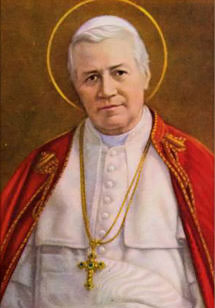
HOJE É A FESTA DE S. PIO X


Image Item Title Ascending Era
A Small Photo of Him Signed as Cardinal
This is a very rare item. It is a small photo of him signed as Cardinal. It is the only one Father Kunst has seen autographed by him prior to his papacy. He is standing in his cardinal garb with his hand on the throne and his... read more »
1903-1914
Biscuit Tin
This very colorful tin held a biscuit mix at the turn of the century when Pope Leo XIII died and Pope St. Pius X was elected. The tin has both their images and the additional images of St. Peter’s Square and a view of ... read more »
1903-1914
Vatican Medals From St.Pius X, Pius XI, Venerable Pius XII, Blessed John XXIII, Paul VI and a Cardinal
The Vatican medals displayed here are from the pontificates of St. Pius X, Pius XI, Venerable Pius XII, Blessed John XXIII and Paul VI, and Cardinal Merry del Val. The are in small cases with their coats of arms. These medals... read more »
1914-1978
Pro Eclesia Honors
These are medals with ribbons on them. They are papal honors given to people who have been nominated by their local bishops because they have been extremely helpful to their local church. These are in their original cases. On... read more »
1903-1958
Papal Blessing
A blessing signed by St. Pius X May 13, 1909 including a couple of lines in his own hand It is signed for the anniversary of Father John Trobec, the nephew of an early Bishop from the St. Cloud diocese. This was given to Fath... read more »
1903-1914
Business Card as Bishop of Mantua
Giuseppe Sarto was the bishop of Mantua, Italy. This is a business card from that time. It is undated and unsigned. It contains several lines in his own hand and is untranslated. The content refers to potential marriages in h... read more »
1903-1914
St. Pius X: A Commemorative First Edition of the Catholic Encyclopedia Signed by Him in 1917
A signed, commemorative first edition of the Catholic Encyclopedia. It is dated 1917 and is in its original slipcase. The cover is vellum, that is, lambskin and is stamped and hand-painted. This volume is the letter C. On the... read more »
1903-1914
St. Pius X: A Complete Series of Annual Medals in a Presentation Case from the Pontificate of St. Pius X
Every year the Vatican creates an annual medal with the image of the pope. This artifact is a complete set of medals from the pontificate of St. Pius X in a presentation case. It may have been presented as a gift, possibly gi... read more »
1903-1914
Relic of St. Pius X
This is a unique item, a second class relic (meaning it is a piece of clothing from the saint).His coat of arms is on the right-hand side in wax. It appears that the notation on the reverse side refers to the relic as a piece... read more »
1903-1914
Hand-Carved Ivory Bust of St. Pius X
A hand-carved ivory bust of St. Pius X dating from his pontificate. read more »
1903-1914

1 | 2 | 3 | 4 | next >last »


St. Pius X – September 3

St. Pius X – September 3

Prof. Plinio Corrêa de Oliveira


The life of St. Pius X speaks to us in so many ways that it is difficult to choose the one with a more formative character. But we can begin by stressing a curious facet of his life that also signifies an aspect of the life of the Church.

The times of Pius IX and Leo XIII

We know that Pius IX, the predecessor of St. Pius X, was a prototype of a counter-revolutionary Pope. He proclaimed the dogmas of Papal Infallibility and the Immaculate Conception; he fought on every front of combat and was attacked on all of them by the Revolution. His pontificate closed at the apex of his confrontation with the Revolution, with the troops of Garibaldi and Victor Emmanuel taking Rome as well as the Pontifical Territories from the Pope.

Pius X

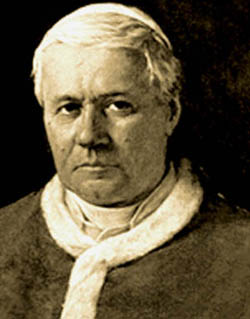
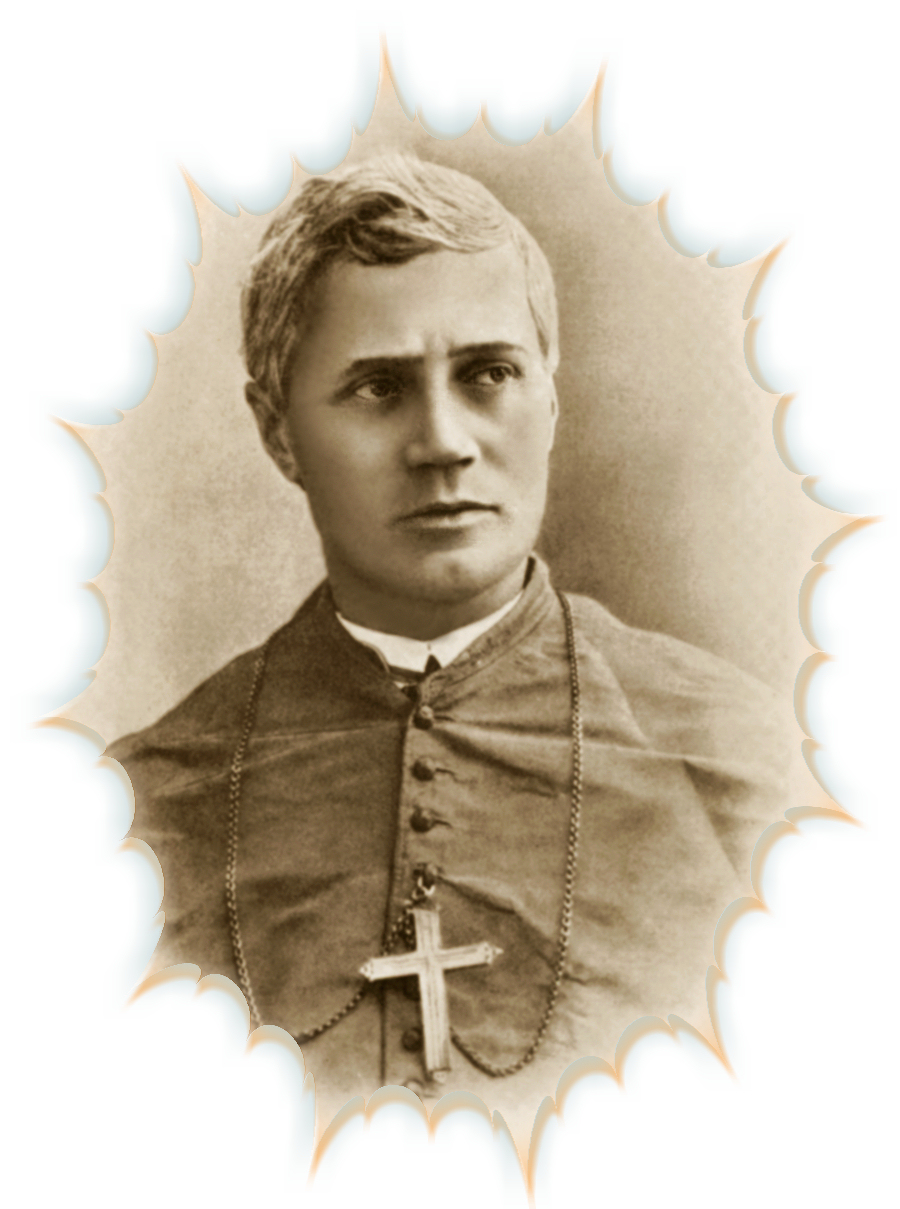
Giuseppe Melchiorre Sarto, St. Pius X
After Pius IX, whose process of canonization is ongoing, came Leo XIII. I have never heard anyone propose a process of canonization for him. There is no record that even his greatest enthusiasts ever considered this possibility. Recently (these comments were made in 1966), an ensemble of letters by Leo XIII to his family was published by a German scholar, who, with that delightful naiveté of many Germans, presented them exactly as they were written. I believe that those letters destroyed any possibility of the canonization of Leo XIII.

From a small perspective – because those letters reflect only a very small part of his life – Leo XIII revealed in them his great concern about the glory of the Pecci family, that is, his own family. He had been Count Pecci. So, there are letters to his sister, his mother, and other members of the family remarking how he did this and that as Pope, and that his actions would bring great glory for the Pecci family. The lackluster name of the Pecci family, he noted, would now be immortal! The publication of these candid letters found an icy reception from the Italian press, and given its inconvenience, the book was more or less set aside and forgotten.

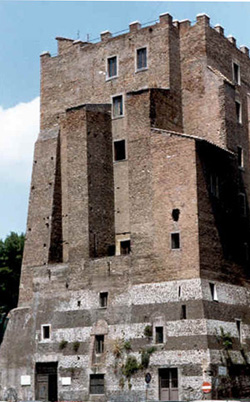
To show how such an attitude is unbefitting the role of a Pope, let me remind you of an episode that took place in the Middle Ages. Pope Innocent III was reigning. His pontificate was praiseworthy in many aspects. But he had the weakness to construct a tower in honor of his family, the Conti family. He built the Torre dei Conti over a site where Roman Emperors used to erect historical monuments for their personal glory. Perhaps Innocent III was trying to compare himself to them. The tower is still there, near the Coliseum.

Torre dei Conti

Innocent III commanded that the Tower of the Conti, above, be built to glorify his own family
A holy religious woman, whose name I don’t recall at this moment, had a vision that she communicated to the Pope about this tower. In the revelation Our Lord ordered her to tell Innocent III that because he made that tower to glorify his family, he would remain in Purgatory until the last day of the world. Here is a criterion to understand what Leo XIII’s vainglory regarding his family probably represented in the eyes of God.

Leo XIII was a Pope whose pontificate could be symbolized by the ralliement [in French, re-uniting], the policy of uniting Catholic social-political views with the Masonic ideals of the French Revolution, until then strongly condemned by the Church. That is, a policy diametrically opposed to that of Pius IX.

St. Pius X was the counter-revolutionary Pope who condemned the Sillon, condemned Modernism, and re-established the Catholic position in France that had been shaken by the ralliement. He was also the one who instituted the policy of permitting First Communion for children at the age of reason, among many other splendid things he did.

Leo XIII had a very long pontificate, so long that he saw the deaths of all the Cardinals who had elected him. When the last of these Cardinals died, he had a medal stamped saying to the body of Cardinals he had created: “It was not you who chose me, but I who chose you.” It was another manifestation of vainglory. It was this body of Cardinals created by Leo XIII that, after he died, elected Pope St. Pius X.

A mysterious inner force that restores the Church

The fact of his election illustrates something of a mystery that exists in the life of the Church. Given her intrinsic sanctity, everything follows in accord with the plans of God when the hour of Divine Providence arrives. At the hour when God wants to intervene, even in the darkest, more incomprehensible, and almost hopeless situation, a force acts in the Church and it moves the action of men and the reaction of the Catholic grassroots in the most unexpected and inconceivable ways.

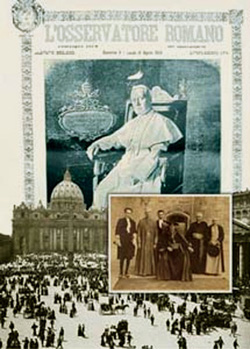
Election of Giuseppe Sarto

The surprise election of Giuseppe Sarto announced in the Observatorre Romano the next day
The election of St. Pius X was like this, and it shows us that we should always consider the possibility that this institutional force will intervene and do something that we could not imagine. This force comes from the presence of Our Lord in the Church. More than in any other domain of creation, in the Church a word from Him has a decisive weight and can change everything. When things go awry in the Church, it is because God chooses not to intervene. Our Lord sleeps in the bark of the Church, like He slept in the boat with the Apostles. Our Lord was sleeping as the storm reached its apex. The Apostles became fearful and awakened Him. Then He ordered the storm to stop, and there was a great calm. How many times in the History of the Church has Our Lord seemed to be sleeping! Perhaps if we would pray more for Him to awaken, things would be different.

With the election of St. Pius X, this happened. Cardinal Sarto made no effort to be elected. On the contrary, he made a resistance to his own election, perhaps because he perceived the overwhelming weight that he would have to carry on his shoulders. Finally he accepted, but he lacked some of the many capacities necessary to exercise the pontifical function. He was not an accomplished diplomat, for example, and was unfamiliar with the great political questions of the time. He needed someone to help him govern with regard to these important matters.

Then he became acquainted with Cardinal Merry del Val. When St. Pius X accepted the Papacy, he had no idea how he would be able to deal with those questions, but God put the necessary man near him. This is just one highlight of his glorious pontificate.

Fulmination of Modernism

When St. Pius X rose to the Pontifical Throne, a large part of the good Catholic press was so discouraged and defeated that it was near death. Almost all the elements of the Counter-Revolution were in an analogous state. I read a report of a Catholic French ultramontane of that time in which he described how his movement was so devastated that they did not even realize during the first years of St. Pius X’s pontificate that he was their champion. The nightmare they had endured under Leo XIII had lasted so long that it took some time for them to awaken from that dark night, and begin to marvel at the true dawn St. Pius X represented for the good cause.

It is good for us to consider what his condemnation of Modernism represented. A conspiracy had been established inside the Church, like a conspiracy inside a country, in order to usurp the supreme power. It intended to submit the Church to a series of reforms in order to adapt her to the errors of the Revolution. It wanted to establish democracy throughout the Church; it wanted the Church to support and collaborate with all the political leftist parties and movements; it prepared a false ecumenism to be made with all false religions in order to spread religious indifferentism everywhere so that no one would have certainty about the one true Faith. For Modernism the faith inside of each person was sufficient. In brief, it wanted the Catholic Church to stop being herself.

St. Pius X discovered this conspiracy, and fulminated against it with his documents. This is the first great characteristic of his pontificate, which would be enough to immortalize him. Imagine if he had failed to do so. Today, any reaction against Communism and Progressivism would be impossible. We are still in this fight because he smashed Modernism at the beginning of the 20th century. We are here now, because of the fierce energy of St. Pius X.

He inherited from his predecessor a notable work, the restoration of Scholasticism. However, as soon as Leo XIII died, Scholasticism began to be distorted in order to accommodate Modernism. St. Pius X elaborated a summary of the fundamental thesis of Thomism – a kind of appendix to the Encyclical Aeterni Patris – which he obliged all teachers and professors of theology and philosophy to accept under oath. With this he preserved the great edifice of Scholasticism from corruption.

Against the ideals of the French Revolution

At that time, France was the most influential nation in the world. The political and social life of France, the pro and con positions of anti-clericalism, the confrontation between Revolution and Counter-Revolution were followed and imitated by almost the whole world. Years before, the Prince of Metternich, a famous Austrian minister, expressed this well in a very picturesque way, saying, “When France has a cold, all Europe sneezes.” This influence continued into the time of St. Pius X.

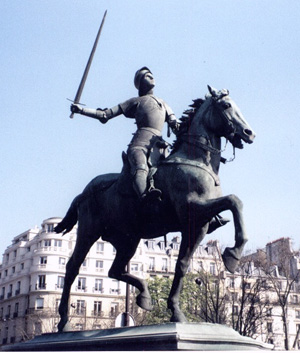
Jeanne d'Arc Paris

The beatification of St. Joan of Arc recalled the Catholic support for the monarchy in France
In the France of those days, there was a strong tendency, even among the Bishops, to accept the separation between the Church and the State, along with other principles of the French Revolution. St. Pius X prepared a bomb to destroy this position. It was his Encyclical Vehementer Nos, in which he laid to rest all the hopes of Laicism in France, the compromises being proposed by the French government and the Liberal clergy, and initiated a true ideological war against the revolutionary French regime. This bomb stopped or slowed down the march of Revolution in its ensemble for a long time in France.

He gave another important blow against the ideals of the French Revolution when he announced the the beatification of St. Joan of Arc, an action that strongly displeased the Revolution, because St. Joan of Arc represented Catholic France holding a sword for the restoration of the legitimate monarchy. She also fought to maintain the integrity of the French borders. The announcement of her beatification caused a tremendous joy among the French people, and it considerably strengthened the Catholic ultramontane cause.

The importance of early Communion for children

Another great thing that St. Pius X did was to allow Communion for children at age 7 and encourage daily Communion. I sustain that this measure, besides having all the spiritual advantages we know, created an enormous difficulty for the Devil and his cohorts to have power over many souls.

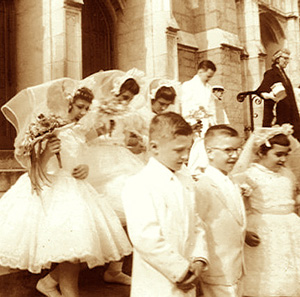
First Communion

Permitting early First Communion for children struck a strong blow to the Revolution
Let me explain this point. Before this measure of St. Pius X, Catholics would make their First Communion only in their late childhood or adolescence, after many mortal sins would have already been committed, giving the Devil a special power over them. For this reason, many souls abandoned the Catholic Faith even before they received First Communion, making them an easy prey for the Devil and Secret Societies.

On the contrary, in a child who receives his First Communion in the state of his first innocence and has the possibility of making frequent Communions, Our Lord establishes Himself with a special power over the soul and, consequently, diminishes the power of the Devil. This also diminishes the power of Masonry and other Secret Societies over those Catholics who become members of such organizations. Their power over those members will never be as great as it would have been had they not received First Communion as children.

I consider this measure of St. Pius X as a fundamental cause for the loss of influence and dominion of Masonry over its members. I am not talking about its control over world events, where Masonry became more powerful, but rather its control over the interior of souls, where it became weaker.

A Prophet who was rejected

St. Pius X was not only a good Pope; he was a saint and a counter-revolutionary. In a certain way he was also a prophet. He made a last appeal for the people of his era to persevere and prevent the chastisements that could come. If the world would not listen to his appeal, then World War I would come as a chastisement. Cardinal Merry del Val reported in his memoirs that St. Pius X predicted the war as the end of an era. One can see that there is a link between St. Pius X and Fátima. Since his pontificate was not well accepted, the war came, and this was a principle cause for the rise of Communism in Russia, and afterward, the dissemination of its errors all over the world. One thing is linked to the other.

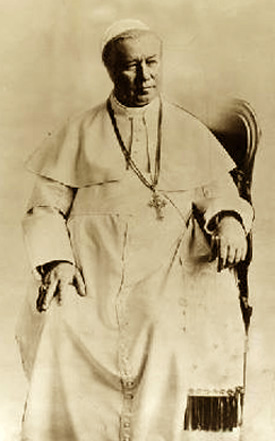
Pius X Portrait

Pope St. Pius X
The magazine La Critique du Liberalisme [The Critique of Liberalism] published an article about the death of St Pius X. The author sustains the thesis that St. Pius X was murdered on the order of Masonry. He affirms that St. Pius X caught a simple cold, but suddenly and inexplicably that cold would cause his death. One morning when he awakened, he could no longer speak, which was not proportional to that cold; he tried to write in order to communicate something, but also found himself unable to write. Soon afterward he died.

The author also tells about a young, brilliant naval officer in Prussia who became a Jesuit. After being ordained, he became a nurse and was named to take care of the Pope during that cold. On that final night of the life of St. Pius X, he was closely attending the Pope. After the Pope died, the Jesuit returned to Prussia, left the Order, and returned to a brilliant career as a naval officer. During the war he became a submarine commander. The author affirms that St. Pius X was killed on the order of the German Masonry, and therefore, would be a martyr. I repeat the thesis of this article without having formed my own opinion on it.

In his memoirs Cardinal Merry del Val confirms that St. Pius X could not speak or write, and he adds: “No one will ever know what happened that night.” It is a mysterious phrase.

In 1950, I followed the funeral ceremonies for Marc Sangnier in the French press. Sangnier had been the leader of the Sillon movement, which was condemned by St. Pius X in the Encyclical Notre charge apostolique. The burial of Sangnier was a veritable apotheosis. His body was exposed for public viewing in the Cathedral of Notre Dame, the burial cortege was followed by members of the French government, Senate, House of Representatives, diplomatic body, and numerous ecclesiastics. All this was done in a spirit of protest against the condemnation St. Pius X made of Modernism.

One year later, St. Pius X was beatified. There were no celebrations in France, at least nothing that came close to those for Sangnier. This shows how St. Pius X was rejected.

Even with this hatred, Divine Providence made the memory of St. Pius X shine above the firmament of the Church to illuminate the dark days that would come after him. He is an astral body, like a moon, that prolongs the glimmer of the Papacy amid the darkness that fell over the Church after his death.

What should we ask of St. Pius X? There are so many things to ask that the best advice is to ask for everything: the unexpected victories, perseverance, the gift of raising the fury of the enemies, astuteness, and the courage to walk even to a martyr’s death if necessary.


Tradition in Action


j000 SD Dr. Plinio.gif - 9040 Bytes
Prof. Plinio Corrêa de Oliveira
source
The Saint of the Day features highlights from the lives of saints based on comments made by the late Prof. Plinio Corrêa de Oliveira. Following the example of St. John Bosco who used to make similar talks for the boys of his College, each evening it was Prof. Plinio’s custom to make a short commentary on the lives of the next day’s saint in a meeting for youth in order to encourage them in the practice of virtue and love for the Catholic Church.

Feast of Pope St. Pius X

S. Pio X nutrì il gregge con la vera dottrina

http://chiesaepostconcilio.blogspot.pt/

Pio X nutrì il gregge con la vera dottrina

Oggi ricorre la festa di San Pio X e mi piace ricordarlo, come ha fatto Rorate Caeli, con la citazione dell'Allocuzione Si Diligis rivolta da Pio XII a Cardinali, Arcivescovi e Vescovi dopo la canonizzazione del grande Pontefice, il 31 Maggio 1954. Ho messo il link all'unico testo (in latino) presente sul sito della Santa Sede.

E così mi sono accorta di quanto la traduzione inglese impoverisca il contenuto mirabile del testo e di quanta importanza esso abbia nei copiosi riferimenti al Magistero ed al munus docendi.

Nella ricorrenza odierna riporto, come memoriale, il significativo incipit e mi riprometto, con calma, di continuare a tradurre direttamente dal testo latino anche le altre parti che hanno costituito per me una sorpresa e ci saranno di grande utilità. A meno che qualche lettore non possa ricavare dalle raccolte il testo italiano e gentilmente me lo invii; gliene sarei molto grata.
« Se ami... pasci ». Quale sia il significato del lavoro apostolico, la sua virtù esaltata, la fonte e l'origine dei suoi meriti lo insegna il comando del nostro divin Salvatore all'apostolo Pietro, col quale ha inizio la Messa in onore di uno o più Sommi Pontefici.
Gesù Cristo, sommo ed eterno Sacerdote e Pastore delle anime, per noi ha insegnato cose grandi, ha fatto cose mirabili, ha sopportato cose molto dure. Pio X, il vescovo di Roma, che è stata nostra grande gioia iscrivere nella lista dei santi, seguendo da vicino le orme del suo Divino Maestro, ha preso il comando dalle labbra di Cristo e strenuamente, lo ha svolto: pascendo amò e amando nutrì. Amava Cristo e nutrì il suo gregge : dai tesori celesti che il misericordioso Redentore ha portato sulla terra, bevve con parsimonia quel che ha distribuito largamente al gregge : il nutrimento della verità, i misteri celesti, la suprema grazia del sacrificio e sacramento eucaristico, la dolcezza della carità, la serietà nel governo, la fortezza in difesa; ha dato tutto se stesso e quelle cose che l'Autore e Datore di ogni bene aveva elargito su di lui. [...]
 

Chi è contro la liturgia del Concilio è fuori dalla Chiesa, lo dice L'Osservatore Romano

http://chiesaepostconcilio.blogspot.pt/

Chi è contro la liturgia del Concilio è fuori dalla Chiesa, lo dice L'Osservatore Romano

Aggiornamento: spuntano come funghi gli articoli de L'Osservatore Romano del 1° settembre che -scopro ora- ha pubblicato stralci di tre relazioni presentate alla quarantesima settimana di studio dell'associazione professori e cultori di liturgia svoltasi a Rocca di Papa dal 27 al 31 agosto, presso il centro di spiritualità Mondo migliore. Tema di quest'anno «Il concilio Vaticano II e la liturgia: memoria e futuro». Qui c'è quello di Agostino Marchetto. E qui quello di Gilles Routhier. Occorrerà farne un dossier e riprendere i vari punti. Varrà la pena perché ci appare la Summa della vulgata conciliarista. Avremo occasione di riparlarne presto. Nel frattempo si impone una riflessione: manca completamente il confronto. Le due parti in causa, tradizionali e conciliari - che poi essere tradizionali non significa rinnegare tutto il Vaticano II - non si incontrano mai allo stesso tavolo, ma procedono su binari e convegni paralleli... Manca totalmente il confronto. L'esperienza mi fa dire che confronto non può esserci. Non resta che lo scontro... Staremo a vedere che aspetti prenderà nei giorni e nei mesi che verranno.

Un assaggio indigesto ripreso in rete dall'Agenzia Asca:
(ASCA) - Città del Vaticano, 31 agosto - La riforma liturgica del Concilio Vaticano II, "come tutto il grande movimento di rinnovamento del concilio, è un dato di fatto, un criterio acquisito, fa parte della storia della Chiesa, è Tradizione allo stato puro. Tutto ciò che vi si oppone è semplicemente fuori dall'orizzonte che la Chiesa si è data, non può quindi nutrirsi ad alcuna fonte certa": è quanto si legge oggi sull'Osservatore Romano, il quotidiano della Santa Sede, in un articolo di Pierangelo Chiaramello, dello Studio teologico di Fossano, dal titolo "Quella riforma pienamente montiniana", che ricostruisce il pensiero di papa Paolo VI sulla riforma liturgica. L'articolo esce mentre in Vaticano si attende ancora una risposta da parte dei tradizionalisti lefebvriani, legati alla liturgia tridentina in latino.

[...] Il periodo tralasciato è nell'articolo successivo
Infatti c'è un ulteriore affondo de L'Osservatore Romano del 1° settembre, dal titolo Il Vaticano II e la liturgia. Lo pubblico integralmente, turandomi il naso, perché è l'esatta puntuale e completa espressione della vulgata dei nuovi "conservatori conciliari", che ha lo scopo evidente di mettere a tacere nuovamente qualunque voce Tradizionista osi levarsi nei confronti delle derive della Riforma montiniana, che si discosta dalla Costituzione conciliare sulla Liturgia, anche se in essa se ne trovano i prodromi e le fessure divenute voragini...

L'articolo usa il linguaggio fluido conciliare: molte enfatiche parole che apoditticamente affermano, ma non dimostrano nulla e dietro le quali c'è il vuoto spinto, che purtroppo viene riempito da false e arbitrarie applicazioni pastorali... Cosa presagisce e cosa ci stanno preparando, in vista dell'Anno della Fede e dei peana monocordi celebrativi degli anniversari del Vaticano II?

È un grande inganno dal quale noi non resteremo sopraffatti; ma la nostra voce è flebile, mentre la grancassa mediatica e pastorale nonché i poteri lobbystici penetrati nella Curia sono più forti che mai...

Settimana di studio a Rocca di Papa
Il concilio Vaticano II e la liturgia

Mai come nel concilio Vaticano II una riforma liturgica ha beneficiato della grande autorità di un concilio ecumenico. Tutto il movimento di riforma della Chiesa trovò il suo inizio con la liturgia, e, fatto non marginale, a promulgare la Costituzione conciliare Sacrosanctum concilium, insieme ai vescovi, fu Giovanni Battista Montini. Montini si trovò così ad attuare come Papa, ciò che desiderava come arcivescovo.

Il rinnovamento liturgico promosso dal Vaticano II ha certamente trovato in Paolo VI un autentico promotore e interprete. Egli ha voluto dare l’avvio alla riforma liturgica, precisarne i criteri, mantenerne l’impulso, farne studiare a fondo le questioni, definirne il progetto, spiegarla al popolo di Dio, difenderla da attacchi ingiustificati, cogliendone ogni volta i punti chiave, e soprattutto la rilevanza per la vita della Chiesa, sollecitando il popolo di Dio, in molteplici occasioni, ad accoglierne il principio fondamentale: la partecipazione attiva [Ritornello sviante di cui abbiamo parlato qui, ma ne parlo più diffusamente nel mio libro]. Per Giovanni Battista Montini il binomio liturgia-Chiesa è indissolubile, come luogo eminente di esperienza cristiana viva. Il rinnovamento liturgico configura un volto sempre più autentico della liturgia, per dare un volto sempre più autentico alla Chiesa.
[Che il binomio liturgia-Chiesa sia indissolubile non è vero solo per Giovanni Battista Montini, ma è un fatto incontrovertibile, perché si tratta della funzione primaria della Chiesa di garantire lo ius divinum al culto; il resto è conseguenza. Resta da stabilire se il cosiddetto e tanto arbitrariamente quanto apoditticamente dichiarato "volto sempre più autentico della liturgia" sia effettivamente quel che dice di essere e di conseguenza "volto sempre più autentico della Chiesa". Quanto esso sia purtroppo sfigurato, è sotto gli occhi di tutti.]

Oggi la letteratura sulla liturgia, tanto quella di natura scientifica quanto quella di natura militante e polemica, è sovrabbondante. Disponiamo però di ben pochi studi ermeneutici della Costituzione sulla liturgia. Tutta l’attenzione ha finito per concentrarsi sulla riforma liturgica, in particolare sul nuovo Ordo missae, e l’attenzione alla Costituzione sulla liturgia in sé, sulla scia di questo atteggiamento «negazionista», è stata eclissata dalla focalizzazione del dibattito sui libri liturgici.

La distinzione tra la Costituzione e la riforma in sé è legittima. È anche necessaria, perché non possiamo confonderle. Tuttavia, la loro distinzione non deve portare alla dissociazione e ancor meno a relegare nell’ombra la Costituzione, perché questo porta a un diniego del concilio o a farne una grandezza astratta, situata nella sua solitudine e maestà Olimpica, che non sarebbe consegnata alla storia.

Oggi il discorso della Chiesa cattolica in materia liturgica rischia di venire paralizzato dall’adozione dello stesso metodo del concilio di Trento, e la sua riflessione su questa materia rischia di lasciarsi intrappolare nella risposta che vuole dare ai contestatori, oggi gli integralisti, e agli abusi, adoperandosi per stabilirne una nuova lista. È giunto il tempo di far rivivere la singolarità e l'originalità del Vaticano II, che ha offerto una esposizione organica e serena sulla liturgia attuando un processo di discernimento, cercando di promuovere ciò che nella sua esperienza recente e illuminato dalla lunga tradizione può contribuire alla vita della Chiesa.
1 settembre 2012


ST. PIUS X AND THE PRIEST

POPE ST. PIUS X: SEPIA
BAR
The Priesthood 2-1
BAR
RECIPE FOR HOLINESS
ST. PIUS X AND THE PRIEST

Nihil Obstat: Joannes McCormack, Cens. Dep. die 2 Maii 1959
Imprimatur: + Joannes Kyne Epus. Miden. die 2 Maii 1959
CONTENTS: PREFACE
INTRODUCTION
HOLINESS OF LIFE
MEANS TO HOLINESS
PIETY AND PRAYER
SACRIFICE
CHARITY
ZEAL
DIGNITY AND PROPRIETY
PREACHING
SOCIAL APOSTOLATE

Preface St. Pius X, as a model of sanctity, is so near to most of us in time and simplicity of background that to try to imitate him does not discourage us.
This presentation is a synthesis of his recipe for holiness culled from his own words.
The table of contents shows the various points of the spiritual life that Saint Pius wished to stress as means towards holiness.
Priests especially will derive benefit from these excerpts-----the laity too can read it with profit for the words of the holy Pope are as simple and sincere as his own character. The Compiler deserves credit for this labor of love.
+ John Kyne Bishop of Meath
12th March, 1959
CHI RHO Introduction
From the time he was the humble and hard-working curate of Tombolo [1858-1867] Pius X always had the qualities of a true priest and one worthy of Christ: the sacred person who brings God to men and men to God.
Even if there were no other testimonies, the evidence of his learned and prudent Parish Priest, Father Anthony Costantini, would be enough. Father Costantini wrote as follows on May 2nd, 1867:

"I certify in all truth that the Reverend Father Joseph Sarto, who has been a curate in this Parish for about nine years, was always exemplary in his conduct and his life as a priest was worthy of the highest praise. He was exact in observing ecclesiastical discipline, led a spotless life and was zealous and indefatigable in the interests of souls. He studied assiduously, carried out his priestly duties carefully and on every occasion justified by his practical conduct the well-founded hopes of seeing him become a true Minister of God and of the Church. A just and well-merited proof of this fact-----and one which is more valuable than any private testimony-----is his public fame and good repute among those who had occasion to know and appreciate his true virtues."

Hence we can easily understand and need not be surprised to find that the holy Pontiff was an unmatched molder of priestly souls and one worthy to be compared with a Chrysostom and a St. Charles Borromeo. In the period from 1875 to 1884 when he was spiritual director of the Seminary of Treviso, he was able to educate in virtue and in holiness of life a group of young priests who became the ornament of the diocese and the glory of three Bishops.
As Bishop of Mantua and Patriarch of Venice, nothing was dearer to him than that his clergy should wed sound and substantial learning to a true and authentic "sense of Christ."
After becoming Pope, and aware that the religious welfare of peoples depends largely on the priesthood, the constant object of his preoccupations, his anxieties and his cares was the sanctification and instruction of the clergy for the work of saving souls.
Without considering many other such documents, we find an unequivocal expression of his state of mind in that remarkable Exhortation to Catholic Clergy which he wrote as a souvenir of the Golden Jubilee of his Ordination. It is a document which will ever remain as an unmistakable revelation of his holiness and as the classic code of priestly duties, or-----as his faithful Cardinal Secretary of State put it-----"a precise and complete program of priestly holiness." In this work he indicates those means which all the experts on Christian ascetics agree are necessary in order to reach a stable balance between the needs of the sacred ministry and the duty of one's own sanctification, avoiding the extremes of exterior activity to the detriment of interior virtues, and of living only for oneself, closed in a false quietism and forgetting that a thirst for souls must be the anxiety and the passion of the priest who is called to bear the burden of the day and the heats in the mystic field of Christ.
One of the most distinguished members of the French Academy thus expressed his mind on the subject: "When we have finished reading this Exhortation, the thought strikes us that Pius X, in listing the signs by which men may recognize in the priest the true Minister of God, has inadvertently outlined the features of his own sanctity, of a devout man, one dedicated to prayer, who is absolutely upright and who observes exactly every point of both law and counsel. He was also intrepid. Just as from his youth he had no fear of any duty, so also he was afraid of no man. Neither the powerful ones, nor their plots,. nor their Press, nor his own intimate sufferings when he had to strike a member of his faithful or one of his own nation, frightened the son of Margaret Sanson and of the Riese postman. Those very people who live far from the Catholic Church, those who ignore it and combat it, cannot, if they be in good faith, refuse their admiration and more than their admiration, their veneration for this Priest who is so meek and humble of heart, so enlightened, so terrible for the powers of darkness and who resembles his Master in the measure in which the human can resemble the Divine."
In his first allocution to the Sacred College, November 9th, 1903, we have this expression of his which has few to equal it and which shows an infinite charity:

"Ours is a sublime mission because it is a mission which goes beyond these transitory worldly goods and extends to eternity, which is unfettered by local limitations and embraces all the nations of the earth; which includes the defense of the Gospel in every field and excites Our care for all men for whom Christ died."

And now we come to his teachings. They have the remarkable freshness of living things which are never sufficiently understood nor meditated. In them exhortations and counsels, full of a long and wise experience, are given abundantly in simple, clear words, humble, fatherly and sometimes moving, giving to the figure and mission of the priest that proper relief which raises him to transcendent powers and transforms him into a father and master, an apostle and shepherd, a friend in whom one can confide, a pitying servant who, as long as he can take souls and bring them to Christ, adapts himself to the needs of all, to all times, to all ambients and to all social classes in order to give souls who are weary and sorrowful a profoundly Christian way of thinking, feeling and acting and the sense of hope and life to the insensible and hostile world surrounding them.

CHI RHOHoliness of Life 1
Who is the priest? He is the man of God who brings to souls enlightening truth, conquering love, edifying sanctity. He must show forth in himself the beauty of the God-Man Whom he represents.
His mere duty is not sufficient for a true priest. He needs something higher: sanctity. Jesus Christ requires a simple Christian life of the faithful but of the priest He asks a life of heroism. And, therefore, if Christian perfection is an ornament, a glory and a halo for any member of the faithful, for the priest it must be his normal way of life: a life of faith which helps him to discern the dark arms of the enemy, a life of hope which sustains and strengthens him in his daily struggles, a life of burning and inflaming charity, a life of angelic purity, of sacrifice, of a spirit of poverty, of meekness and of a patience which remains unmoved and unperturbed under the blows of the most atrocious injuries. It must be all this because the priest, raised aloft, must by the light of his example enlighten God's people and warm them with his fervor.
2
Of what use is knowledge if one's behavior is not what it should be? For this reason, young levites, venerable priests, tread sure-footedly on the path of ecclesiastical perfection, ordering your life and behavior in such a way that in your bearing, your gestures, your walk, your conversation and in all other things you show forth nothing that is not holy and which does not waft the odor of sanctity.
3
The priestly ministry which is not corroborated by authority and by a holy life is a complete failure.
4
The priests are the representatives of Jesus Christ. But in order to represent Jesus Christ one must have His sentiments in oneself and have-----as might be said-----His very words on one's lips. As the stars are visible after the sun has gone down so priests must be so many stars to illuminate the firmament of the world in the absence of the Sun of Justice, Jesus Christ.
Those who have had the priesthood conferred on them should know that they have the same mission in the midst of their people as St. Paul acknowledged that he had received and which he expressed with those tender words: "My little children with whom I am in labor again, until Christ is formed in you!" [Gal. 4, 19]. Now how can they carry out a duty like this if they themselves have not previously put on Christ and put Him on in a way which entitles them to say with the Apostle: "It is now no longer I that live but Christ lives in me." [Gal. 2, 20]? Hence, though the exhortation to "attain to perfect manhood" [Eph. 4, 13] is addressed to all, it is addressed first of all to those who exercise the priestly ministry, and who are called another Christ not only because they have received Divine powers but still more because they imitate the works of Christ and on account of these must bear in themselves His likeness.
6
The priest must be a man of such irreproachable habits that the world may believe him to be a "Divine man," a man whose virtue is superior to that of every other good Christian.
7
To make Jesus Christ reign in the world, nothing is so necessary as the holiness of the clergy, because the faithful are impressed more by the example than by the word or by the learning and-----as the old proverb says-----they will always be as their priests are: "sicut sac erdos,
sic populus."
8
As we must be the light of the world by our doctrine, so by the example of our life we must be the salt of the earth [Matt. 5, 13-14]. Only on this condition will we be loved by good people and respected even by our enemies.
9
As the priesthood is a reflection of Christ's priesthood, priests must reproduce His virtues. They must be one with Jesus in affection, in feeling and in thought.
10
Priests are Christ's friends, the ambassadors and ministers of God. But how can they be so if they have not holiness of life? If we desire to be Jesus Christ's friends, we must have His Will. If we wish to be ambassadors of God, we must have not only His word but the sense and the love of Him Who sends us. If we want to be ministers of God, we must show forth in ourselves His holiness.
11
In his every action the priest must show himself a man of God, as the Apostle desires [Tim. 6, 11], and remember that on his example depends the destiny of his people. Jesus Christ Himself compares him to light and salt, to indicate [Matt. 5, 13-14] where his actions must lead him. But if he fail to confirm by the example of his life what he teaches by word of mouth, his ministry is useless.
Jesus Christ, Who made Himself the model of priests, first taught by deed and only later by word. For this reason, if the priest neglects holiness of life he cannot be the light of the world nor the salt of the earth, because where holiness is lacking there we find corruption.
12
There must be as big a gap between the life of the priest and the life of an average honest Christian, as there is between Heaven and earth. Hence the priest must avoid not only serious sins but even the slightest sin, in conformity with the viewpoint of the venerable Fathers of the Holy Council of Trent [Twenty-second: De Reform., C.I. Session] who warn clerics and priests to avoid even slight faults because in them such faults would be serious-----not serious in themselves but taking into consideration the priests and clerics who commit them, who are holy in an even more strict sense than the holy temples:
" Domum tuam decet sanctitudo" [Psalm 92, 5].
13
If the priest is lacking in Christly knowledge which is summed up in holiness of life and purity of habits, he is lacking in everything. Even learning and practical ability, although they may be advantageous to the Church and to others, are very often the cause of harm to the priests. On the other hand a priest who is rich in sanctity can-----even though he have the lowest place-----work wonders for the salvation of God's people, as examples in every age prove to us and in an especially striking manner in recent times John Baptist Vianney [Beatified by Pius X on September 8th, 1904], a pastor of souls whom we should imitate. Only holiness makes the priest what he should be according to his Divine vocation: a man crucified to the world, living the newness of life directed towards heavenly things in order to lead Christian people to them.
14
As the priest is called alter Christus, and is so because he shares in the Divine powers which he has had conferred on him, he must be so also in imitating the life of Jesus Christ.
15
May unblemished living habits, which are the greatest glory of Christ's priesthood and the ornament which makes it honored in the eyes of the world, thrive and shine forth among the clergy.
16
If you are holy you will have all the qualities necessary for the good of your soul and of those souls entrusted to your care. God will be the consolation of your Archbishop and will have the most sweet rewards. Be holy, and convince yourselves that it is impossible to be good priests if you do not desire to be holy.
17
Ignorance or poverty of doctrine is something unworthy of a priest who must instruct the people in the law of God, but it is still more unworthy that a priest should exercise his ministry without having a care for holiness of life.
18
Everybody knows from experience that good living habits in the people. are a consequence of holiness of life in the priests.
19
If the priest has at all times need of a decorous store of virtues and of virtues of a high order, in our times very much more is required because unfortunately the corruption of good habits has increased and become widespread out of all proportion. For this reason it is proper that a singular preeminence of virtue and strength should shine forth in the priest. Actually priests cannot live in solitude but, because of the very offices of their ministry, must come into contact with the people and this in the centers of the city where every passion is not only permitted but licentiously borne in triumph. And from this it is clear that in our day a priest's virtue must be so strong that he can defend himself courageously and emerge unharmed just as much from alluring enticements as from the danger of bad example.
20
The terrible times in which we live require in the clergy as never before not merely ordinary virtue but a full and willing one prepared to work and to carry out and suffer great things for the love of Christ.
CHI RHOMeans to Holiness 1
The priest must set apart every day a certain time for meditating eternal truth because, as he is in the midst of the world's seductions, he must be wary lest the snares of the infernal enemy be hidden even in the exercise of his ministry.
He must meditate so that with renewed vigor his mind and heart may resist the enticements of evil and draw from eternal truth those lights which are necessary in the exercise of his extremely difficult ministry in the care of souls.
2
The priest must follow up his meditation by reading books of devotion and above all the Divinely-inspired Books of Holy Scripture which are necessary if he is to preach the word of God in a worthy manner.
Nowadays many go astray because, instead of works of piety and the Divine Books, they prefer very different writings and papers which are sometimes full of poison because they contain hidden errors even though these may not be of a very serious nature.
3
Besides Mental Prayer and Spiritual Reading, the Examination of Conscience so much counseled by masters of the spiritual life is of considerable help in acquiring Christian virtues. For this reason every priest at the end of his day should recollect himself and ask judgment of his conscience. He should be a diligent self-examiner in order to know himself and see how and in what manner he has carried out his duties. He should present himself before his conscience as he would before a tribunal and weep over his sins.
4
We can preach it without fear of being contradicted, that the good priests of a Diocese, the priests who are exemplary and zealous in their duties, are those who withdraw from time to time in Spiritual Exercises in order to dedicate themselves to their sanctification and nourish themselves with words of life.
5
For us priests there is always the danger that, being in the world for the purpose of reminding it of its depravation, we may become corrupted by its poison while we are trying to heal its wounds.
There is the risk that the spiritual infirmities which we see in others may diminish our idea of our own, and weaken the view which faith gives us of their enormity. There is the danger that we may compare ourselves with men of the world and think we are holy because we are less guilty, or perfect because we have less defects. We must listen, however, to the exhortation of the Apostle: "Rogamus vos, fratres, ut abundetis magis et operam detis ut quieti sitis et ut vestrum negotium agatis et honeste ambuletis ad eos qui foris sunt."
[1 Thes. IV, 10-11]
From this follows the necessity of recollection, a necessity which is all the more pressing the more external the work we do. In the midst of so many distractions fervor must inevitably grow cold, the zest for piety must as a matter of course be diminished, the consequent languor must of necessity penetrate the soul a little at a time like a slow fever and destroy every principle of priestly life. To avoid all these disorders we have a powerful help in recollection and retreat: "magnum in secessu subsidium." [1 Cor. III, 7]
Finally, we very often grumble about the unfruitfulness of the field which has been given us to cultivate, and complain of our fruitless labors and the religious indifferentism which spreads out and surrounds us. But are we instruments of God worthy of meriting the helps of grace? "Neque qui plantat est aliquid, neque qui rigat, sed qui incrementum dat Deus est." [1 Cor. III, 7] Hence just as the Baptist withdrew into a desert place in order to carry out his mission, just as Jesus remained for forty days in the desert and the Apostles gathered for ten days in the Supper Room, just as the Church herself withdraws in prayer to invoke help from on high before assembling in Councilor Synod, so we must be recollected "quoadusque induamur virtute ex alto." [Luke XXIV, 49] This is all the more true considering that recollection and retreat are the only means of getting away from the miseries of life and making us grow in those virtues which must form the ecclesiastic's patrimony.
6
Even if we feel no need of freeing ourselves of the imperfections acquired while living in the midst of the dangers of the world, the holy and pure life which is required in a priest is a sufficient proof of the need of a spiritual retreat. The retreat is absolutely necessary for progress in perfection, for renewing in us the flame of zeal for God's service and the good of souls, and for developing in ourselves more and more what is called in ascetic language illuminative and unitive life.
7
Man is so naturally fickle-----as alas we know by experience-----that even the best intentioned person little by little grows cold in virtue and, after a period of weakness, falls into vice if he is not stimulated in the right way.
Now as even priests are not exempted from this, they must have recourse to those means which will enable them to restore their spiritual strength spent by work in the ministry and thus regain their early fervor. They must therefore withdraw for some days into some place of retreat for the purpose of giving a tranquil glance at their lives and thus following the invitation of Jesus Christ to His disciples when they had come back from the labors endured in preaching the Gospel through the villages of Juda and Galilee: "Venite seorsum in desertum locum et requiescite pusillum." [Mark VI, 31]
In fact, though the ornament of those virtues proper to a priest is the study of sacred things, we must also admit that such a study-----due to that inconstancy to which we have already referred-----in many cases wanes with the passing of time and in not a few dies out altogether. The very habit of dealing each day with the same situations is the reason why the priest little by little becomes lukewarm and forgets his duties.
To this must be added the various serious dangers to which he is often exposed during the exercise of his ministry in the midst of worldly allurements.
It is clear, therefore, that if we wish to reinforce our spirit, correcting in us what must be corrected, and to form firmer resolutions for good, we must leave aside every earthly care and cut ourselves off for a time from the clamor of our usual life, withdrawing into solitude in order to give docile ear to that intimate voice which warns us of our duties, reproves us in the interests of our salvation and exhorts and urges us to higher things: "Ducam eam in solitudinem et loquar ad cor eius" [Osee II, 14]
We are unable to understand how a priest, living in the midst of so many difficulties, distractions and not a few dangers, would not feel from time to time the need of that defense which is called Spiritual Exercises.
What merchant really interested in his business does not every year take a diligent stock of what he has gained, spent and lost? Will the priest who administers God's business, and who will one day have to render Him a very strict account of his administration, be the only one not to worry about reflecting severely on his duties and actions or about asking himself what is proper to his vocation and what is not?
May the Divine mercy convince all priests and clerics of the necessity of attending Spiritual Exercises at least every three years [Acta Ap. Sedis, I, p. 228] considering them the defense which offers many helps to make themselves worthy ministers and dispensers of God's mysteries [Cfr. I Cor., IV, 1] and thus cooperators by their personal example in that restoration of all things in Christ to which We have dedicated Our work in order to have an answer to the needs of the times.
8
Spiritual Exercises----as experience teaches-----are wonderfully effective in reawakening one's conscience and exciting one's mind to those virtues which should be the ornament of a minister of God, because the divine fire is enkindled while we meditate on Heavenly things and in recollection and solitude the Lord makes His voice heard.
CHI RHOPiety and Prayer 1
Priests, if you do not wish to be deceived and if you wish to keep an integral faith and doctrine, you must cultivate piety. The devout man keeps his passions under control, does not boast, does not become proud, and cultivates all the virtues which are the sources and masters of doctrine because, besides knowing that he cannot convince anyone with his teaching if this latter is not confirmed by the authority and innocence of his life, he receives the Divine word with such reverence that he considers even the slightest alteration of it a horrible crime. We should be able to say of every priest what St. Gregory of Nazianzen said of his father: "Although second in learning, in piety he was the leader of the learned."
[Grat. XVIII]
2
Everyone knows that holiness is the fruit of our will. But it is equally true that our will needs to be strengthened by God's grace, and only by prayer can this grace be obtained. "Arbitror cunctis esse manifestum"-----John Chrysostom observes-----"quod simpliciter impossibile sit absque precationis praesidia cum virtute degere" [De Predicatione: Orat. I], and Saint Augustine acutely notes: "vere novit recte vivere, qui recte novit orare."
[Horn. IV, ex. 50]
3
The person who is not accustomed to speaking with God in the intimacy of prayer will never be able to speak efficaciously of the things which have to do with eternal life. No matter how learned and eloquent his words may be, if they lack the breath of prayer they cannot have the power of convincing and persuading. The word of God is dead on the lips of such a person because the sense of Christ is lacking in him.
4
When we are perplexed by certain situations and do not know what to do, we must raise our eyes to God from Whom alone we can hope for enlightenment, inspiration and help: "Cum ignoramus quid agere debeamus, hoc solum habemus residue, ut oculos nostros dirigamus ad Dominum". [2 Par. XX, 12]
5
Hence, let all priests pray with that confident perseverance which the Book of Tobias teaches, because no matter what power God gives to men, it will never have the upper hand over His decrees and counsels, and everybody can be sure that if God is trying us with tribulations and punishments He is doing so in order to bring us to mercy and allow us to enjoy calm after the storm, to give us joy after sorrow and happiness after our weeping.
CHI RHOSacrifice 1
The priest's life is one of sacrifice. We are living in times in which it is the priest's lot to be despised, hated and persecuted. But a comforting thought is that from the spirit of sacrifice derives a virtue which frightens those who do not know the secret of it and strikes even ourselves with amazement.
2
We did not enter the priesthood to have an easy life. We must work: that is our first duty.
To put it more clearly: to be priests is the same as to be men obliged to labor. The Apostles taught it by their examples: all priests full of the spirit of God have taught it: the Church teaches it and, according to her spirit, the Fourth Provincial Council of Milan celebrated by St. Charles Borromeo in 1576 thus declares: "Unusquisque clericus saepe repetat se non ad inertiam neque ignaviam, sed ad spiritualis et ecclesiasticae militae laborem vocatum esse."
[Monsignor A. Ratti, Acta Ecclesiae Mediolanensis, V, II, Col. 429, Mediolani 1892]
Do you know what an Apostle replied when they told him that he would fall ill from excessive work? He said: "Quorsum mihi valetudo nisi ut laborem?"
We may suppose that in order to procure the salvation of souls we run the risk of losing our health and shortening our life. But is it not a glory to die of labor or while we are laboring when Jesus Christ with so much suffering died for us on the Cross?
3
Some think that the glory of a priest should be made up entirely of outward activity. Overlooking almost entirely those virutes by which man is made perfect and which We call passive, they say that all his activity and study would contribute to the growth and exercise of the active virtues. It is really amazing how much falsehood and ruin this doctrine contains.
Our Predecessor of venerable memory, Leo XIII, in keeping with his wisdom, spoke of it when he wrote as follows:
"That Christian virtues should be accommodated to the times is the desire only of the person who does not recall the words of the Apostle: 'Quos praescivit et praedestinavit conformes fieri imaginis Filii sui' [Romans VIII, 29]. Christ is the master and type of all holiness and all those who wish to enter the kingdom of God must adapt themselves to His rule. Christ does not change as centuries pass but is always the same: 'Heri et hodie: ipse et in saecula' [Hebrews XIII, 8]. Thus that phrase: 'Discite a me, quia mitis sum et humilis corde' [Matt. XI, 29] can be applied to men at all times and Christ always shows Himself 'factus obediens usque ad mortem' [Philip. II, 8]. In every age the Apostle's remark is true: 'Qui sunt Christi carnem crucifixerunt cum uitiis et concupiscentiis' [Galat. V, 24]."
If these texts have in some cases an application to the faithful, in a particular manner they refer to priests who, more than any others, must take as said to themselves what Our Predecessor with Apostolic ardor added:
"Would to God that many more present-day people practiced these virtues as the holiest people of past ages practiced them, people who in humility of soul, in obedience and mortification, were powerful in word and work and of the greatest assistance not only to religious but to civil and public society". [Pope Leo XIII, Letter of Jan. 22nd 1899 to Card. Gibbons, Archbishop of Baltimore]
It will not be out of place to consider that the exceptionally prudent Pontiff with good reason made mention of mortification which, in the words of the Gospel, we call denial of self, because in this maxim is contained the fortitude, the virtue and all the fruit of priestly ministry; whereas if this be neglected the priest's habits may offend the eyes and minds of the faithful. For, if the priest strive for illegal gains, if he become involved in worldly affairs, if he give rein to flesh and blood, if he try to please men and trust in the persuasive ways of human wisdom, all this is the fruit of neglecting Christ's commandments and of refusing to accept the conditions laid down by Him: "Si quis vult post me venire, abneget semetipsum" [Matt. XVI, 24].
CHI RHOCharity 1
Vain is our hope of attracting souls to God by unwise zeal. Rough correction of vices often does more harm than good. Charity is called for: a patient and benign charity which will have to reach out, too, to those who are against us or are our persecutors. Perhaps they seem worse than they really are. Living with others, prejudice, bad example, counsel from others and an ill-advised shame have dragged them on the side of the wicked, but their will is not depraved as they themselves try to make us believe.
Why should we not hope that the flame of Christian charity will drive away the darkness from their minds and bring to them the light and peace of God? Sometimes the fruit of our labors may well be slow in coming, but charity never tires of waiting, remembering that God has prepared His reward not according to the results of our exertions but according to our good intentions.
But, even though we have to enter into the fight for truth, we should embrace the enemies and adversaries of truth lovingly, feel a great compassion for them and recommend them to the Divine mercy because, although it is a most holy law to approve and defend what is true, just and right, and to detest what is false unjust and evil, it is none the less a duty to abound in mercy and pardon towards the depraved, in imitation of Jesus Christ Who prayed for His transgressors.
3
In all his duties the priest must never lack the charity of Christ, raising up the fallen one, consoling those who weep, helping all those who ask his help. Our own affairs must always give way before this charity, and our personal interests and comforts take second place where it is concerned. It must make us "all things to all men" [1 Cor. IX, 22] in order to win all to Christ and should bring us to give up even our life in imitation of Christ Who imposes on the Pastors of His Church the duty of laying down their lives for their sheep. [John X, 11]
4
Priests, let that charity which seeks only the increase of God's glory, shine forth always in you.
A multitude of miserable and unhappy ones together with legions of adolescents-----dearest hope of the Church and of the country-----surrounded by evil on all sides await the gift of your charity. Continue industriously not only to teach Catechism, which We wish once again to recommend warmly to you, but to make yourselves ever better deserving of society by word and work, comforting, healing, defending and purifying in order to win souls to Christ or bring them ever closer to Him.
As often happens, your charity will be met by hate, injury and calumny, but continue fearlessly in it remembering those numerous and meritorious legions who, following the example of the Apostles, in the midst of the roughest treatment, "ibant gaudentes et maledicti benedicebant". We are the children of the Saints whose names shine in the book of eternity and whose praises resound gloriously in Christ's Church: "Non inferamus crimen gloriae nostrae." [1 Macch. IX, 10]
CHI RHOZeal 1
The priest's life calls for work, faith and sacrifice. All the terms which are applied to the priest in Sacred Scripture show him as a man dedicated to continuous work.
For this reason, he is called now a soldier because he must combat continually in order to win souls to Christ: "Labora sicut miles Christi Jesu" [2 Timothy II, 3]; now a workman because he must bear the burden of the day and the heat in order to cultivate the field and gather the harvest: "Messis quidem multa, operarii autem pauci" [Matthew IX, 37]; now a steward who must render an account of his stewardship; now a shepherd because he must feed the sheep and go in search of the lost ones to bring them back to the fold; and now debtor as the Apostle says: "Graecis ac Barbaris, sapientibus et insipientibus debit or sum" [Romans I, 14]. Hence St. John Chrysostom warns us that we have not been called to the priesthood to look after our own affairs but to promote the glory of God: "Non ideo vocati sumus ut operemur quae ad nostrum pertinent usum, sed quae ad gloriam Dei" [Homily 34], and St. Paul speaks warningly of himself: "For even if I preach the gospel, I have therein no ground for boasting, since I am under constraint. For woe to me if I do not preach the gospel!" [1 Cor. IX, 16]
We must work continuously like the Eternal Priest, Jesus Christ Who said these memorable words: "My Father works even until now, and I work" [John V, 17], or like the omnipotent God Who is not potency but continuous act.
The priest must be like Phinees who was filled with zeal for the Divine glory on seeing the law of God violated; [Numbers XXV, 7-8] like Moses who with the sword of justice exacts reparation for the injury done to God; like Elias who in solitude prepares himself to announce the commands of Heaven; like the Baptist who preaches just as loudly and strongly in the desert as in the royal palace; like Paul who yearns to be anathema for love of his brethren, who becomes sick with the sick and spends himself for all that all may be saved.
The priest who is moved by the spirit of zeal for the glory of God and the salvation of souls is not afraid of weariness, is not fearful of danger, does not consider sacrifices, does not indulge himself in comforts, knows no rest, does not trouble about repose. Though contradicted and persecuted he does not lose heart, because he knows that the heritage of the Church Militant is the hatred of the gloomy, and the greater obstacles he encounters the more there increases in him a burning desire to show himself a true Minister of God in everything, "in tribulations, in hardships, in distresses . . . in labors, in sleepless nights . . . in honor and dishonor, in evil report and good report . . ." [2 Cor. VI, 4-8].
Our times require courage and call for sacrifice and work. Be strong in the war against the eternal enemy of good and let us all imitate not by word but by example the leader of the Israelites who, while his people continued to prevaricate, never ceased to cry out: "Whoever is for the Lord, let him come to me!" [Exodus XXXIII, 26]
2
What is the duty of those who have been placed by God to rule His Church? What is the obligation of all those who have received from Heaven and accepted the sublime mission of saving souls? If in time of war every citizen is a soldier, while the fray is at its most desperate, will the captains remain inert and slothful?
If God has commanded everyone to have care of the eternal salvation of his brethren how much more He has commanded us priests.
The priests must announce truth. Hence those priests who think they are rendering a service to the Church and who with human prudence allow large concessions to false science under the fatal illusion of being able the more easily to win over erring ones, are making a serious mistake.
Such people run the risk of losing their souls. Truth is one and indivisible, lasts for all eternity and is not subject to the vicissitudes of time. Jesus Christ is the same, yesterday today and down the centuries [Hebrews XIII, 8].
If there was a time in which human prudence seemed the only way of obtaining anything in a world which was unprepared to receive the doctrine of Jesus Christ, so repugnant to human passions and so opposed to the flourishing Roman and Greek civilization, that time was most certainly that in which the first preaching of the Christian faith took place.
The Apostles scorned that prudence because they knew the designs of God Whom "it pleased to save, by the foolishness of our preaching, those who believed" [1 Cor. I, 21]. As always, so also today this foolishness is the virtue of God. The scandal of the Cross has furnished and always will furnish the most powerful and unconquerable weapon and, as has already happened, by this scandal and by this foolishness we shall gain the victory.
CHI RHODignity and Propriety 1
In order never to be guilty of any disedifying act, the priest must regulate his actions, his movements and his habits in harmony with the sublimity of his vocation. He who on the altar almost ceases to be mortal and takes on a Divine form, remains always the same even when he
comes down from the holy hill and leaves the temple of the Lord. Wherever he is,
wherever he goes, he never ceases to be a priest and the serious reasons which compel him always to be grave and becoming accompany him with his dignity everywhere.
Hence he must have that gravity which will ensure that his words, his bearing and his way of working arouse love, win authority and excite reverence, because the very reasons which oblige him to be holy make it a duty for him to show it by his outward acts in order to edify all those with whom he is obliged to come into contact. A composed and dignified exterior is a sort of powerful eloquence which wins souls in a much more efficacious manner than persuasive sermons. Nothing inspires greater confidence than an ecclesiastic who, never forgetting the dignity of his state, demonstrates in every situation that gravity which attracts and wins universal homage. If on the contrary he forgets, the holiness of the sacred character which he bears indelibly impressed and engraved on his soul, and if he fail to show in his outward conduct a gravity superior to that of certain men of the world, he causes his ministry and religion itself to be despised, because when gravity is wanting in the leaders the people lose respect and veneration for them.
If the faithless modern world has stripped the priest of that halo of veneration with which he was formerly crowned, it is more than necessary that in our times he should by his bearing win once again the people's respect for his high dignity and propriety. The more so because experience teaches us that the world, always unjust and full of malice, is shocked not only by the slightest failings it discerns in ecclesiastics but even by their most innocent actions whenever these do not bear the seal of that gravity which it has a right to expect of them.
Priests, do not, therefore, give ear to worldly innovations whose profane maxims influence minds with arguments at variance with the teaching of the Church, and lead some boldly to accuse of ignorance those Fathers and Teachers whose sound and well-founded wisdom can never be replaced by the presumptuous pedantry of certain modern minds.
We recommend to you priestly gravity which condemns fickleness of thought, that fickleness by which certain persons are led to refuse contemptuously to listen to the teaching and experience of wise men, and are induced to allow themselves to be guided by foolish arguments, and the school of modern teachings which bring them to ruin. With St. Ambrose I say to you: "Nihil in sacerdote commune cum multitudine." [VI Epist. ad Irenaeum]
We recommend to you that gravity which makes you love the yoke of discipline: that yoke whose dispositions are censured by some who yearn after an unlimited liberty free from subjection, who refuse to realize that discipline is the only means of avoiding the evil of rebellion against authority, and who thus deceive themselves because they have not a firm and resolute love of good.
Priests, do not forget that priestly gravity and propriety must characterize your ministry, whereas everything which tends towards secular habits, shows up the priest as vain and flighty in the eyes of the world which is perfectly able to discern the more respectable priests even from their outward bearing.
If these are the facts, will it ever be lawful-----We ask you-----for clerics and priests to take from worldly people the example of certain habits which lead them to abandon their dignity and propriety?
2
Great is the priestly dignity, but great also is his ruin if he is not faithful to his duties, because unfortunately it is true that the corruption of the very good is a frightful thing. "Optimorum corruptio, teterrimum".
CHI RHOPreaching 1
The preacher must have as his mainstay the spirit of piety and the study of his subject: "Without piety," notes the Angelic Doctor, "even if the doctrine is good it becomes an occasion of offense against the word of God" [Comm. on Matthew 5], because it is clear-----and experience confirms this-----that we cannot expect wise, moderate and useful teaching from those who are not rich in devotion and knowledge and above all in sacred knowledge, and who, trusting in their natural eloquence, go rashly to the pulpit with scarcely any preparation. Such people beat the air, expose the word of God to contempt and merit the condemnation: "Because thou has rejected knowledge, I will reject thee, that thou shalt not do the office of priesthood to Me" [Osee 4, 5].
If the preachers of Catholic doctrine do not possess true piety towards God and love for Jesus Christ Our Lord, no matter what great oratorical talents they may have, they will not be any more efficacious than sounding brass or tinkling cymbal [1 Cor. XIII, 1] and they will lack that power which renders the preaching of the Gospel powerful and efficacious: zeal for the glory of God and the salvation of souls.
This devotion which is especially necessary for sacred preachers must shine forth equally in their outward conduct. The Divine Commandments and the Christian rules which they praise in their preaching must not be contradicted by their life if they wish to avoid destroying by their actions what they have built up with their words.
Hence the preacher must flee that unapostolic, unholy, profane eloquence suitable to the law court which deprives the word of God of every sacred character and every supernatural efficacy and from which the faithful derive no profit because, even though they fill the church, their souls remain empty. They applaud but do not weep and leave the temple just as they entered it. "Mirabantur sed non convertebantur" as St. Augustine would put it.
[Treat. 29 on John]
2
The subject of our preaching should be that indicated by the Divine Redeemer when He said: "Praedicate Evangelium, docentes eos servare omnia quaecumque mandavi vobis" [Mark XVI, 15; Matthew XXVIII, 19], or as the Council of Trent comments: "Annunciantes illis vitia, quae declinare et virtutes quas sectare oportet ut poenam aeternam evadere et coelestem gloriam consequi valeant" [V Sess. c. 2, De Reform.]. Hence discussions which are more suitable for the journalists' forum and for the academy hall than for the Church should be excluded absolutely from the pulpit. The preaching of morals should take precedence over conferences which are, to say the least of them, unfruitful. We must speak: "non in persuasibilibus humanae sapientiae sed in ostensione spiritus et virtutis'" [1 Cor. II, 4].
For this reason the principal source of our preaching must be Sacred Scripture, not interpreted, however, according to the private judgment of minds which in most cases are clouded by passion, but according to Church tradition and to the interpretation of the Fathers and Councils.
The Creed, the Ten Commandments, the Precepts of the Church, the Sacraments, the virtues and vices, man's last end, the duties proper to each state and condition, should be the matters to which the preacher devotes his special attention.
Some preachers praise the benefits which the Christian religion procures for Society, but are silent about the duties to which men are bound. They praise only the charity of Our Lord and say nothing about His justice. Thus it happens that worldly people hear this sort of preaching and become convinced that, without changing anything in their lives, they can be Christians merely by saying: "I believe in Jesus Christ!"
Such preachers do not seek the salvation of souls but rather what does not offend the ears of their listeners, and as long as the churches are full they are little concerned about the spiritual void in souls. Their only worry is to say what pleases and their eloquence is not sacred and apostolic but redolent of the law courts. What they seek is applause. Against such as they St. Jerome has these words:
"When you teach in church you must not seek for the applause of the crowd but that they should weep: the tears of your listeners should be your praise."
The faithful are much better catered for by a simple homily and by the Parish Priest's explanation of the Catechism than by sermons which are not penetrated by the spirit of Christ.
3
The success of our preaching of God's word is linked to the eloquence and example of our lives.
4
Listeners are not fond of long descriptions or flowery rhetoric such as were used occasionally in past times, but wish to be reminded of their duties and to meditate on the truths of faith. You need a good argument with a logical connection, not to long, well-ordered and suitably phrased.
5
The faithful should not be fed with wind but nourished by living food dispensed by priests who are commendable before God and men for the manifestation of truth.
Their minds must be enlightened by the continuous preaching of truth, contradicting errors efficaciously with true and sound theological and philosophical principles and in addition with all those means which are furnished by true progress in historical research. It is still more necessary to inculcate in their minds the moral teachings of Jesus Christ so that each one may learn to restrain his passions, to repress pride, to live in subjection to authority, to love justice, to exercise charity towards all, to lessen bitter social inequalities by Christian love, to detach his heart from worldly goods, to live happily in the circumstances arranged by Providence [even though he seek to improve these circumstances by carrying out his duties] and, by reorganizing his life according to the laws of Christianity, to aspire to a future life in the hope of eternal reward.
CHI RHOSocial Apostolate 1
The true apostle must become all things to all men in order to save all and, like his Divine Redeemer, must feel his heart moved to pity on seeing the wandering crowds, like sheep without a shepherd. By efficacious written propaganda, by the exhortation of the spoken word, by helping directly, he should dedicate himself to bettering the economic condition of his people within the limits of justice and truth. He should favor and promote those institutions which tend to this end, especially those which have the scope of properly disciplining the people against the encroaching predominance of Socialism and which save them simultaneously from economic ruin and from moral and religious disaster. Seen in this light, the co-operation of the clergy in Catholic Action has a highly religious purpose and will never become an obstacle to his spiritual ministry but rather a help, widening its field and multiplying its fruits.
We cannot, however, conceal the danger to which the clergy on account of modern conditions is today exposed: the attributing of excessive importance to the material interests of the people, neglecting the far more serious interests of his sacred calling.
The priest, raised above other men in order to carry out the mission which he holds from God, must equally maintain himself above all human interests, above all conflicts, above all social classes. The field proper to him is the Church where, as God's ambassador, he preaches truth and, by respecting the rights of God, inculcates respect for the rights of all creatures.
Working in this fashion he is not subject to any opposition, does not appear as a party man, supporter of one group and adversary of another. He does not put himself in danger of dissimulating truth or of being silent about it in order to avoid hurting certain tendencies and irritating embittered minds, and hence avoids the risk of failing in his duty in both cases and, seeing that he has often to deal with material things, of finding himself a partner in obligations damaging to his person and to the dignity of his ministry. He will not, therefore, take part in this type of association except after mature consideration and in agreement with his Bishop and only in those cases in which his help is immune from every danger and is evidently profitable.
2
The priest must keep himself aloof from every lay association even the most useful ones and even if he is moved by the best of intentions.
3
We very much desire that the clergy, whose duty it is to form the people's conscience, should take an interest in social problems and charitable works but without losing themselves in the maze of varying viewpoints or letting themselves be deceived by the mirage of a false democracy and avoiding completely the emphatic rhetoric of the worst enemies of the Church and the people whose speeches are full of promises as impracticable as they are alluring.
<> They should know how to adapt the Christian spirit to the new needs created by the material evolution of contemporary society, but should remember that the Church has never betrayed the interests of the people with compromising alliances, that the true friends of the people are neither revolutionists nor innovators but traditionalists and that Jesus Christ never tolerated mistaken convictions in those who were misled no matter how sincere they seemed. [Emphasis added.] Never has He inspired the humble with rebellious sentiments, never enticed the suffering with the vision of an illusory equality nor ever promised a kingdom in which suffering would be banished. He came into this world so that all men, united to Him in charity, might have peace and happiness in time and eternity but on condition that they accepted His teaching, practiced virtue and listened to the teachings of His Church.
SOURCE

domingo, 2 de setembro de 2012

San Gregorio Magno, papa e dottore della Chiesa (m) 3 settembre

UNA PUNTUALE BIOGRAFIA DI DON DIVO BARSOTTI

UNA PUNTUALE BIOGRAFIA DI DON DIVO BARSOTTI


ldd

La carità, per debellare il buonismo e frenare la selvaggia passione novista

di Piero Vassallo


La carità deve camminare sul filo di un rasoio affilato dalla lucida e intransigente ortodossia.
Avvolti e trascinati dall'incendiario dono di Dio, i veri mistici sono obbligati (lo rammentava il cardinale Siri, in anni segnati dall'emergenza pseudo carismatica) a sottoporre la loro eccezionale e smisurata esperienza alle ordinarie misure stabilite dal magistero cattolico.
L'indisciplina dei sedicenti carismatici e dei profeti paroliberieri ha causato ingenti danni alla Chiesa cattolica.
Al magistero hanno invece obbedito i grandi mistici del passato, da San Francesco a San Giovanni della Croce e i mistici del secolo sterminato.
Irriducibile alla ubbidienza dei veri mistici è soltanto il delirio teologico degli epigoni scorrazzanti nelle praterie della falsa libertà.

La sottomissione all'autorità romana, peraltro, distingue la misericordia dall'impellenza incontrollata del buonismo.
L'umiltà sottomessa separa la profezia dalla ciancia visionaria, la santità dalla finzione commediante, la mistica dall'abbaglio, la speranza teologale dalla sterile cupidigia di novità scintillanti.
Scritta per fiorire sotto gli autorevoli torchi della casa editrice San Paolo, la biografia di don Divo Barsotti (Palaia 1914 - Settignano 2006) proposta da padre Serafino Tognetti, storico intelligente, scrupoloso e veridico, costituisce l'esemplare compendio di un'esistenza straordinaria, in cammino intrepido e sicuro nella selva delle inquietudini, degli errori, dei vagheggiamenti e delle fantasticherie che hanno agitato l'incubazione del Vaticano II, prima di scatenare l'imprevista e rovinosa tempesta postconciliare.
Il cardinale Carlo Caffarra, autore della prefazione al testo di padre ognetti, confessa di essere conquistato dall'opera profetica di don Barsotti, "dalla sua unità interiore, da una logica intrinseca che tiene insieme un'impressionante ricchezza temi".
La cifra di don Barsotti è la carità che non transige sui princìpi. In un secolo avvelenato dall'errore modernista e dalle sue velenose immersioni nella nuova teologia e nel generico progressismo, don Barsotti seppe rimanere nelle posizioni di avanguardia senza mai cedere agli incombenti errori.
Riprodotti da padre Tognetti, alcuni fotogramma scattati negli anni Cinquanta ritraggono don Divo insieme con alcuni protagonisti dell'incubante fracasso preconciliare, Jean Danielou,, Giuseppe Dossetti, Ernesto Balducci, David Maria Turoldo, Nazareno Fabretti.
Sono immagini bugiarde, se interpretate quali testimonianze dell'inclinazione a condividere stati d'animo e suggestioni eterodosse. Don Divo, infatti, fu amico sincero degli erranti ma persecutore implacabile dei loro errori e delle loro debolezze.
A don Giuseppe Dossetti rimproverò l'amicizia con Giuseppe Alberigo e la condivisione della sua velenosa tesi sul Vaticano II "nuovo inizio della Chiesa" e presunto incentivo alla rottura con la Tradizione.
A von Balthasar contestò la bizzarra tesi sull'inferno vuoto dichiarando "se non ci fosse l'inferno non potrei accettare il paradiso".
Osò rimproverare a Paolo VI la rinuncia a condannare l'errore e a Giovanni Paolo II l'infelice decisione di promuovere l'incontro interreligioso di Assisi del 1986.
Don Barsotti diede testimonianza della sua fermezza nel marzo del 1971, quando fu ricevuto da Paolo VI al quale aveva predicato gli Esercizi spirituali.
In quel tempo il papa, tormentato dalla dissidenza e angosciato dalla diserzione dei sacerdoti, tentava il loro recupero.
L'incontro fu rievocato da don Divo: "non ebbi nessun impedimento a parlargli [a Paolo VI]dicendo quello che pensavo, anche se non era conforme a quello che lui diceva: mi disse che avrei fatto bene a cercare don Rosadoni e don Mazzi [due sacerdoti fiorentini dissidenti] per riportarli all'obbedienza. Gli risposi che non mi sembrava opportuno: avevano ferito gravemente la Chiesa: dovevano mostrare almeno un minimo senso di rispetto e di pentimento per quanto avevano compiuto. Il Papa mi rispose: A Mazzi ho scritto. Osai: E quale è stata la risposta? - Mah, forse non è tutto negativo... - Se lo dice vostra Santità... ma sinceramente non mi sento".
La lettura della biografia di don Barsotti si raccomanda pertanto ai cattolici che sono all'affannosa ricerca del difficile equilibrio tra la fedeltà alla tradizione e l'obbedienza alla gerarchia, un'armonia che si trova nel punto in cui la tollerantissima carità incontra la verità intollerantissima. Un approdo magico raggiungibile solamente dai fedeli che seguono l'esempio dei santi.