http://4.bp.blogspot.com/_14vrv7ni7HM/TLYyK0PS85I/AAAAAAAABU8/h4xBT0R8kQU/s1600/20101013225550_D0064009.jpg

sexta-feira, 3 de setembro de 2010

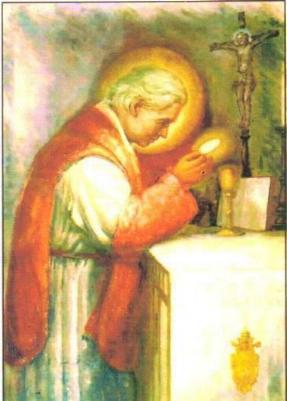
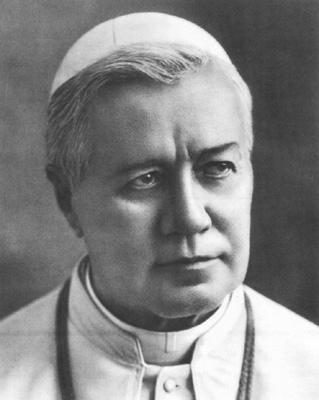
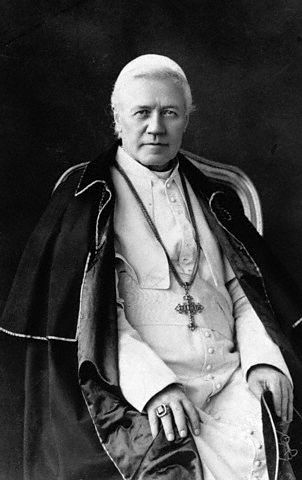
September 3rd: Pope St. Pius X was a pastoral pope, with a father's concern for the spiritual lives of his flock throughout the world, but he was also a militant pope, fighting early and long against the seeds of theological error sprouting in his day. He foresaw the dangers of our day, and defended the Church against the evils of modernism, and its twin progeny, indifferentism and relativism. He codified Catholic doctrine, promoted the teachings of St. Thomas Aquinas as the basis for all Catholic education, and developed the idea of a universally used Catechism for the Faithful.

https://blogger.googleusercontent.com/img/b/R29vZ2xl/AVvXsEiNdJqFhGkxVvNLYQ3Opht-gyiqQAMr2NJjQNWMb6qZbmBymvFevOrHDH1w_riWjRid5lrB-e8Cf-DOtYMwx9Rmm39TOweKJFTgwkUqYbsx09fGrSz88CqSYjxfp-S1fW155hDfXgY8R_w/s1600/Pope+St.+Pius+X+(10).jpg

One of the shining beacons of modern times, Pope St. Pius X, left a legacy and a warning particularly important for the modern world. Born Giuseppe Sarto, the second of ten children in Riese, Italy in 1835,

A practical man, this first new pope of the twentieth century, kept a keen watch over the theological and political interests of the Church, but he was also a pious Catholic of the highest order. He had a tender devotion to the Blessed Mother and his favorite ambition, "to restore all things in Christ," he directed through the hands of the Mother of God. Pope St. Pius X also had a particular dedication to the Sacrament of the Holy Eucharist and is in fact known by the title: Pope of the Blessed Sacrament. It was through his intervention that children were permitted to receive Holy Communion at the age of reason, instead of waiting until the customary age of thirteen or fourteen. He also encouraged the reception of frequent Communion, a practice discouraged in former times, saying, "Holy Communion is the shortest and safest way to Heaven." Also known for his charity, Pope St. Pius X permitted the Vatican to be crowded with the poor that he fed, yet he lived in the greatest humility, himself. He said, "I was born poor, I have lived poor, and I wish to die poor."


Before he died of a heart attack on August 20th, 1914, Pope St. Pius X had beatified ten holy souls and canonized four. He also left with us sixteen encyclicals, among which were:


Pascendi Dominici Gregism, On the Doctrine of the Modernists, September 8, 1907


Preaestantia Scripturae, the Biblical argument against modernism, November 18th, 1907


Tra le Sollecitudini, on sacred music, November 22, 1903


Acerbi Nimis, on teaching Christian doctrine, April 15, 1905


E Supremi, on the "restoration of all things in Christ," October 4, 1903


Une Fois Encore, on the separation of Church and state, January 6, 1907


The Oath Against Modernism, an encyclical given to the Church on September 1, 1910, was to be sworn by "all clergy, pastors, confessors, preachers, religious superiors, and professors in philosophical-theological seminaries" and was a mandatory requirement of Pope St. Pius X. This oath continued to be required by all popes until, 1967, when it was rescinded by the Congregation for the Doctrine of the Faith.


Pope St. Pius X is the patron of:

First Communicants;
Pilgrims;
Archdiocese of Atlanta, Georgia;
Diocese of Des Moines, Iowa;
Diocese of Great Falls-Billings, Montana;
Archdiocese of Kottayam, India;
Santa Luċija, Malta;
Diocese of Springfield-Cape Girardeau, Missouri;
Achdiocese of Zamboanga, Philippines
Teacher's Helps:
For the feast day, you can find a wonderful coloring page here.
Ideas for celebrating the day gastronomically, can be found at Catholic Cuisine, under their First Holy Communion recipes and dinner plans, since Pope St. Pius X is the Pope of the Blessed Sacrament.
The children might enjoy drawing the coat of arms of this saint of the day, shown here (click to enlarge, and copy).
Topics to discuss -- Older students: 1) What is modernism? How did Pope St. Pius X try to stem the tide of modernism? Was he successful? 2) Why was the Blessed Sacrament so important to Pope St. Pius X, and what did he do to increase devotion to it? 3)Research and discuss the origins and history of the formalized Catechism of the Church, and Pope St. Pius X's role in it.
Younger students: 1) At what age do children usually receive Holy Communion today? 3) Before the time of Pope St. Pius X, children had to wait until they were teenagers to receive Holy Communion. How would it make you feel if you had to wait that long? 4) Why do you think Pope St. Pius lowered the age? 5) Do you think this was a good idea? 6) Make sure to say a prayer today to thank Pope St. Pius for allowing young children to approach Our Lord at the altar.
Litany of Pope Saint Pius X
For private use only.
Lord, have mercy on us.
Christ, have mercy on us.
Lord, have mercy on us.
Christ, hear us.
Christ, graciously hear us.
God the Father of Heaven, Have mercy on us.
God the Son, Redeemer of the world, Have mercy on us.
God the Holy Spirit, Have mercy on us.
Holy Trinity, One God, Have mercy on us.
Holy Mary, Mother of God, Pray for us.
Saint Joseph, Patron of the Universal Church, Pray for us.
Saint Pius X, model for priests, etc.
Saint Pius X, wise bishop,
Saint Pius X, humble cardinal and patriarch,
Saint Pius X, zealous Pope for his flock,
Saint Pius X, pious teacher,
Saint Pius X, devoted to the poor,
Saint Pius X, consoler of the sick,
Saint Pius X, lover of poverty,
Saint Pius X, humble of heart,
Saint Pius X, faithful to duty,
Saint Pius X, heroic in the practice of all virtues,
Saint Pius X, filled with the spirit of self-sacrifice,
Saint Pius X, who didst aim to restore all things in Christ,
Saint Pius X, who didst bring little children to the the Altar rail,
Saint Pius X, who didst counsel daily and frequent Communion for all,
Saint Pius X, who didst urge us to know and to love the Holy Mass,
Saint Pius X, who didst seek everywhere the diffusion of Christian teaching,
Saint Pius X, who didst withstand and reprove all heresies,
Saint Pius X, who didst teach us righteous Catholic Action,
Saint Pius X, who didst consecrate the faithful to the lay apostolate,
Saint Pius X, who didst wish to be known as a poor pastor of souls,
Saint Pius X, who answereth the prayers of those who cry to thee,
Lamb of God, Who takest away the sins of the world, Spare us, O Lord.
Lamb of God, Who takest away the sins of the world, Graciously hear us, O Lord.
Lamb of God, Who takest away the sins of the world, Have mercy on us.
V. Pray for us, Saint Pius X,
R. That we may be made worthy of the promises of Christ.
Let Us Pray.
O God, who didst fill the soul of Saint Pius X with a burning charity andcalled him to be the Vicar of Christ, grant that through his intercessionwe may follow in the footsteps of Jesus, Our Divine Master; and mayour prayers to this saintly Pope be fruitful for life both here and hereafter,through the same Christ Our Lord.

fonte:http://allsaints-lisa.blogspot.com/
R. Amen.

"Counsels of Priestly Perfection" on Haerent animo, the apostolic exhortation of Pope St. Pius X of 1908.

http://www.mountangelabbey.org/monastery/images/StPiusX-Mass-700px.jpg


Here we continue with the second post on Haerent animo, the apostolic exhortation of Pope St. Pius X of 1908.


"COUNSELS OF PRIESTLY PERFECTION.

When the spirit of the grace of the priesthood has been restored and strengthened in the ranks of the clergy, our other proposals for reform, of whatever kind they may be, will with God's help prove much more successful.

For this reason we have thought it well to supplement what we have already said by some points of practical advice which will give you timely aid to preserve and nourish the grace of your priesthood.

First, there is the pious retreat during which the soul devotes itself to spiritual exercises, as they are called. These exercises are known and approved by all, though not everyone puts them into practice; there should, if possible, be a yearly retreat, performed either alone or, preferably, in common with others, the second method being usually more productive of good results, without prejudice to episcopal regulations. We ourselves have already spoken in praise of the advantages to be derived from a retreat, on the occasion when we issued certain decrees on this subject bearing on the discipline of the clergy of Rome.

It will be no less profitable for souls, if a similar retreat lasting a few hours is performed each month either privately or with others. We are happy to note that in many places a custom of this kind has already been introduced, with the encouragement of the bishops who sometimes preside over the group assembled for retreat."

Comment:
We all know of the yearly requirement of the retreat and most of us have the weekly practice of the day off, but how many of us take advantage of the above practice? It would certainly be easy to avoid on the grounds of saying that it is not customary or that the local bishop does not encourage it, but it certainly can be done, at elast privately. I do not hold myself up as example, but I like to do this on days when I do church tours, making a few holy hours in a few places. 


Counsels of Priestly Perfection  


Here is the second piece of sage advice from Pope St. Pius X.

Another suggestion which we warmly recommend is that priests, as befits brothers, should form a closer union among themselves, with the approval and under the direction of the bishop. It is strongly to be recommended that they should form an association in order to help one another in adversity, to defend the honor of their name and office against attack, and for other similar objects. But it is even more important that they should form an association with a view to the cultivation of sacred learning, particularly in order to apply themselves with greater solicitude to the object of their vocation and to promote the welfare of souls by concerting their ideas and their efforts. The annals of the Church show that at times when priests generally lived in a form of common life, this association produced many good results. Why might not one re-establish in our own day something of the kind, with due attention to differences of country and priestly duties? Might not one justifiably hope, and the Church would rejoice at it, that such an institution would yield the same good results as formerly?
There are, indeed, associations of this kind which enjoy episcopal approval; and the advantages they confer are all the greater if one becomes a member early in life, in the very first years of the priesthood. We ourselves have had practical experience of the worth of one such association and fostered it during our episcopate; even still we continue to show special consideration to it and others.
Beloved sons, it is your duty to value highly and to apply these aids to priestly grace and such other means as the watchful prudence of your bishops may suggest from time to time; thus with each passing day you will walk more worthily of the vocation in which you are called, honoring your ministry and accomplishing in yourselves the will of God, that is, your sanctification.
Comment:
How many of us set out goals for ourselves, even with the knowledge of our directors, yet in the end, cave on account of a lack of accountability. Remember, the light only shines in the dark and if we cannot be accountable to others, we will fail almost to a man. Of course, the obligation is that the groups with which we associate are holy groups that serve to build up the presbyterate. Pretty basic, yes, but we all know priests who have no accountability and no fraternity; they cannot help but suffer the darkness of this kind of solitude.
fonte:http://clericalreform.blogspot.com/2008_10_01_archive.html

In Saint Pius X, we have an ardent supporter and leader in devotion to the Christ Lord known to us in the adoration of the Blessed Sacrament. Today, take the opportunity to spend some time, even if it is 5 minutes, in front of the Blessed Sacrament saying nothing to the Lord; just being there in friendship and humble adoration is enough. And ask Saint Pius X to beg the Holy Spirit once again to place in our hearts a fervent love for the Lord in the Eucharist and the grace to live in communio with the Trinity and our neighbor.

Pius X.jpg
  Pope Saint Pius X  

Saint Pius wrote of the place Eucharistic worship in our Catholic lives:

Wherefore, works of this kind which have been already set on foot must be ever more zealously promoted; old undertakings must be revived wherever perchance they may have fallen into decay; for instance, Confraternities of the holy Eucharist, intercessory prayers before the blessed Sacrament exposed for the veneration of the faithful, solemn processions, devout visits to God's tabernacle, and other holy and salutary practices of some kind; nothing must be omitted which a prudent piety may suggest as suitable. But the chief aim of our efforts must be that the frequent reception of the Eucharist may be everywhere revived among Catholic peoples. For this is the lesson which is taught us by the example, already referred to, of the primitive Church, by the decrees of Councils, by the authority of the Fathers and of the holy men in all ages. For the soul, like the body, needs frequent nourishment; and the holy Eucharist provides that food which is best adapted to the support of its life. Accordingly all hostile prejudices, those vain fears to which so many yield, and their specious excuses from abstaining from the Eucharist, must be resolutely put aside; for there is question here of a gift than which none other can be more serviceable to the faithful people, either for the redeeming of time from the tyranny of anxious cares concerning perishable things, or for the renewal of the Christian spirit and perseverance therein. To this end the exhortations and example of all those who occupy a prominent position will powerfully contribute, but most especially the resourceful and diligent zeal of the clergy.

Pope Saint Pius X, Mirae Caritatis (1902)

FONTE:http://communio.stblogs.org/adoration-of-the-blessed-sacra/

St Pius X ,Feast Day: September 3


St Pius X


Also known as
Giuseppe Sarto; Joseph Sarto; Pope of the Blessed Sacrament
Profile
Impoverished childhood as one of eight children of a village cobbler. Felt a calling to the priesthood from his youth. Studied at Padua, and was known as an exceptional student. Parish priest, ordained by Blessed Giovanni Antonio Farina on 18 September 1858. Bishop of Mantua. Patriarch of Venice. Cardinal. Pope.

Issued decrees on early (age 7 instead of 12 or 14 as previously) and frequent communion. Destroyed the last vestiges of Jansenism by advocating frequent and even daily communion. Reformed the liturgy, promoted clear and simple homilies, and brought Gregorian chant back to services. Revised the Breviary, and teaching of the Catechism. Fought Modernism, which he denounced as "the summation of all heresies". Reorganized the Roman curia, the administrative elements of the Church. Worked against the modern antagonism of the state against the Church. Initiated the codification of canon law. Promoting Bible reading by all the faithful. Supported foreign missions. His will read: "I was born poor; I lived poor; I wish to die poor."
Born
1835 as Giuseppe Sarto at Riese, Treviso, Venice, Austria (now Italy)
Papal Ascension
http://www.catholic-forum.com/saints/saintp06.jpg
Papal Canonizations
Died
20 August 1914; natural causes aggravated by worries over the beginning of World War I
Canonized
Patronage
Prayers
http://www.catholic-forum.com/saints/stp06001.jpg
Images
Gallery of images of Pope Pius X [15 images, 189 kb]
Writings
·  E Supremi: On the Restoration of All Things in Christ, 4 October 1903
·  Ad Diem Illum Laetissiumum: On the Immaculate Conception, 2 February 1904
·  Acerbo Nimis: On Teaching Christian Doctine, 15 April 1905
·  Il Fermo Proposito: On Catholic Action in Italy, 11 June 1905
·  Vehementer Nos: On the French Law of Separation, 11 February 1906
·  Tribus Circiter: On the Mariavites or Mystic Priests of Poland, 5 April 1906
·  Pieni L'Animo: On the Clergy in Italy, 28 July 1906
·  Gravissimo Officii Munere: On French Associations of Worship, 10 August 1906
·  Une Fois Encore: On the Separation of Church and State, 6 January 1907
·  Pascendi Dominici Gregis: On the Doctrine of the Modernists, 8 September 1907
·  Communium Rerum: On Saint Anselm of Aosta, 21 April 1909
·  Iamdudum: On the Law of Separation in Portugal, 24 May 1911
·  Lacrimabili Statu: On the Indians of South America, 7 June 1912
·  Singulari Quadam: On Labor Organizations, 24 September 1912
·  Haerent animo
·  Lamentabili sine exitu
·  Sacra tridentina Synodus
·  Tra le sollecitudini
http://www.catholic-forum.com/saints/stp06014.jpg
Readings
Truly we are passing through disastrous times, when we may well make our own the lamentation of the Prophet: "There is no truth, and there is no mercy, and there is no knowledge of God in the land" (Hosea 4:1). Yet in the midst of this tide of evil, the Virgin Most Merciful rises before our eyes like a rainbow, as the arbiter of peace between God and man.

Pope Saint Pius X

http://www.catholic-forum.com/saints/stp06009.jpg
God could have given us the Redeemer of the human race, and the Founder of the Faiths in another way than through the Virgin, but since Divine Providence has been pleased that we should have the Man-God through Mary, who conceived Him by the Holy Spirit and bore Him in her womb, it only remains for us to receive Christ from the hands of Mary.

Pope Saint Pius X

http://www.catholic-forum.com/saints/stp06010.jpg
My hope is in Christ, who strengthens the weakest by His Divine help. I can do all in Him who strengthens me. His Power is infinite, and if I lean on him, it will be mine. His Wisdom is infinite, and if I look to Him for counsel, I shall not be deceived. His Goodness is infinite, and if my trust is stayed in Him, I shall not be abandoned.

Pope Saint Pius X

http://www.catholic-forum.com/saints/stp06012.jpg
Let the storm rage and the sky darken - not for that shall we be dismayed. If we trust as we should in Mary, we shall recognize in her, the Virgin Most Powerful "who with virginal foot did crush the head of the serpent."

Pope Saint Pius X

Holy Communion is the shortest and safest way to Heaven.

Pope Saint Pius X

http://www.catholic-forum.com/saints/stp06007.jpg
The collection of psalms found in Scripture, composed as it was under divine inspiration, has, from the very beginnings of the Church, shown a wonderful power of fostering devotion among Christians as they offer "to God a continuous sacrifice of praise, the harvest of lips blessing his name." Following a custom already established in the Old Law, the psalms have played a conspicuous part in the sacred liturgy itself, and in the divine office. Augustine expresses this well when he says: "God praised himself so that man might give him fitting praise; because God chose to praise himself man found the way in which to bless God."

The psalms have also a wonderful power to awaken in our hearts the desire for every virtue. Athanasius says: "The psalms seem to me to be like a mirror, in which the person using them can see himself, and the stirrings of his own heart; he can recite them against the background of his own emotions." Augustine says in his Confessions: "How I wept when I heard you hymns and canticles, being deeply moved by the sweet singing of your Church. Those voices flowed into my earts, truth filtered into my heart, and from my heart surged waves of devotion."

Indeed, who could fail to be moved by those many passages in the psalms which set forth so profoundly the infinite majesty of God, his omnipotence, his justice and goodness and clemency, too deep for words, and all the other infinite qualities of his that deserve our praise? Who could fail to be roused to the same emotions by the prayers of thanksgiving to God for blessings received by the petitions, so humble and confident, for blessings still awaited, by the cries of a soul in sorrow for sin committed? Who would not be fired wiht love as he looks on the likeness of Christ, the redeemer, here so lovingly foretold? His was "the voice" Augustine heard in every psalm, the voice of praise, of suffering, of joyful expectation, of present distress."

from the apostolic consititution of Pope Saint Pius X on Sacred Scripture


http://www.kcylbangalore.com/StPiusX.jpg

Pope St. Pius X, pray for us! In these times, when the meager attempts by Pope Benedict to make reforms are met with outright hostility in many places of the world, it is worth recalling the great Saint the Church celebrates today, the first Pope to be canonized since St. Pius V.


St. Pius X was from a small farm and a poor family, and yet by his holiness and God's design was made Pope. Realizing the depth of the modernist crisis from having been on the front lines as a parish priest, this Holy Pope had drafted, and promulgated the great encyclical Pascendi dealing with the errors and dangers of our times.

Of course the Popes warnings were ultimately set aside, and sure enough the modernists triumphed, getting into every sphere, even into Vatican congregations. The Liturgical movement, though it had some remarkable and notably good people in it, was actually started by modernists and supported by them, for they realized that while they could no longer after Pascendi put their doctrines in the open, they could put them into liturgical action.

Therefore it is good to recall some of the great Pontiff's teachings in Pascendi:

And thus, Venerable Brethren, the road is open for us to study the Modernists in the theological arena - a difficult task, yet one that may be disposed of briefly. The end to be attained is the conciliation of faith with science, always, however, saving the primacy of science over faith. In this branch the Modernist theologian avails himself of exactly the same principles which we have seen employed by the Modernist philosopher, and applies them to the believer: the principles of immanence and symbolism. The process is an extremely simple one. The philosopher has declared: The principle of faith is immanent; the believer has added: This principle is God; and the theologian draws the conclusion: God is immanent in man. Thus we have theological immanence. [i.e. truth starts in the individual] So too, the philosopher regards as certain that the representations of the object of faith are merely symbolical; the believer has affirmed that the object of faith is God in Himself; and the theologian proceeds to affirm that: The representations of the divine reality are symbolical. And thus we have theological symbolism. Truly enormous errors both, the pernicious character of which will be seen clearly from an examination of their consequences. For, to begin with symbolism, since symbols are but symbols in regard to their objects and only instruments in regard to the believer, it is necessary first of all, according to the teachings of the Modernists, that the believer do not lay too much stress on the formula, but avail himself of it only with the scope of uniting himself to the absolute truth which the formula at once reveals and conceals, that is to say, endeavours to express but without succeeding in doing so. They would also have the believer avail himself of the formulas only in as far as they are useful to him, for they are given to be a help and not a hindrance; with proper regard, however, for the social respect due to formulas which the public magisterium has deemed suitable for expressing the common consciousness until such time as the same magisterium provide otherwise. Concerning immanence it is not easy to determine what Modernists mean by it, for their own opinions on the subject vary. Some understand it in the sense that God working in man is more intimately present in him than man is in even himself, and this conception, if properly understood, is free from reproach. Others hold that the divine action is one with the action of nature, as the action of the first cause is one with the action of the secondary cause, and this would destroy the supernatural order. Others, finally, explain it in a way which savours of pantheism and this, in truth, is the sense which tallies best with the rest of their doctrines.
With this principle of immanence is connected another which may be called the principle of divine permanence. It differs from the first in much the same way as the private experience differs from the experience transmitted by tradition. An example will illustrate what is meant, and this example is offered by the Church and the Sacraments. The Church and the Sacraments, they say, are not to be regarded as having been instituted by Christ Himself. This is forbidden by agnosticism, which sees in Christ nothing more than a man whose religious consciousness has been, like that of all men, formed by degrees; it is also forbidden by the law of immanence which rejects what they call external application; it is further forbidden by the law of evolution which requires for the development of the germs a certain time and a certain series of circumstances; it is, finally, forbidden by history, which shows that such in fact has been the course of things. Still it is to be held that both Church and Sacraments have been founded mediately by Christ. But how? In this way: All Christian consciences were, they affirm, in a manner virtually included in the conscience of Christ as the plant is included in the seed. But as the shoots live the life of the seed, so, too, all Christians are to be said to live the life of Christ. But the life of Christ is according to faith, and so, too, is the life of Christians. And since this life produced, in the courses of ages, both the Church and the Sacraments, it is quite right to say that their origin is from Christ and is divine. In the same way they prove that the Scriptures and the dogmas are divine. And thus the Modernistic theology may be said to be complete. No great thing, in truth, but more than enough for the theologian who professes that the conclusions of science must always, and in all things, be respected. The application of these theories to the other points We shall proceed to expound, anybody may easily make for himself.
Dogma and the Sacraments
Thus far We have spoken of the origin and nature of faith. But as faith has many shoots, and chief among them the Church, dogma, worship, the Books which we call "Sacred," of these also we must know what is taught by the Modernists. To begin with dogma, we have already indicated its origin and nature. Dogma is born of the species of impulse or necessity by virtue of which the believer is constrained to elaborate his religious thought so as to render it clearer for himself and others. This elaboration consists entirely in the process of penetrating and refining the primitive formula, not indeed in itself and according to logical development, but as required by circumstances, or vitally as the Modernists more abstrusely put it. Hence it happens that around the primitive formula secondary formulas gradually continue to be formed, and these subsequently grouped into bodies of doctrine, or into doctrinal constructions as they prefer to call them, and further sanctioned by the public magisterium as responding to the common consciousness, are called dogma. Dogma is to be carefully distinguished from the speculations of theologians which, although not alive with the life of dogma, are not without their utility as serving to harmonise religion with science and remove opposition between the two, in such a way as to throw light from without on religion, and it may be even to prepare the matter for future dogma. Concerning worship there would not be much to be said, were it not that under this head are comprised the Sacraments, concerning which the Modernists fall into the gravest errors. For them the Sacraments are the resultant of a double need - for, as we have seen, everything in their system is explained by inner impulses or necessities. In the present case, the first need is that of giving some sensible manifestation to religion; the second is that of propagating it, which could not be done without some sensible form and consecrating acts, and these are called sacraments. But for the Modernists the Sacraments are mere symbols or signs, though not devoid of a certain efficacy - an efficacy, they tell us, like that of certain phrases vulgarly described as having "caught on," inasmuch as they have become the vehicle for the diffusion of certain great ideas which strike the public mind. What the phrases are to the ideas, that the Sacraments are to the religious sentiment - that and nothing more. The Modernists would be speaking more clearly were they to affirm that the Sacraments are instituted solely to foster the faith - but this is condemned by the Council of Trent: If anyone say that these sacraments are instituted solely to foster the faith, let him be anathema.
The Holy Scriptures
We have already touched upon the nature and origin of the Sacred Books. According to the principles of the Modernists they may be rightly described as a collection of experiences, not indeed of the kind that may come to anybody, but those extraordinary and striking ones which have happened in any religion. And this is precisely what they teach about our books of the Old and New Testament. But to suit their own theories they note with remarkable ingenuity that, although experience is something belonging to the present, still it may derive its material from the past and the future alike, inasmuch as the believer by memory lives the past over again after the manner of the present, and lives the future already by anticipation. This explains how it is that the historical and apocalyptical books are included among the Sacred Writings. God does indeed speak in these books - through the medium of the believer, but only, according to Modernistic theology, by vital immanence and permanence. Do we inquire concerning inspiration? Inspiration, they reply, is distinguished only by its vehemence from that impulse which stimulates the believer to reveal the faith that is in him by words or writing. It is something like what happens in poetical inspiration, of which it has been said: There is God in us, and when he stirreth he sets us afire. And it is precisely in this sense that God is said to be the origin of the inspiration of the Sacred Books. The Modernists affirm, too, that there is nothing in these books which is not inspired. In this respect some might be disposed to consider them as more orthodox than certain other moderns who somewhat restrict inspiration, as, for instance, in what have been put forward as tacit citations. But it is all mere juggling of words. For if we take the Bible, according to the tenets of agnosticism, to be a human work, made by men for men, but allowing the theologian to proclaim that it is divine by immanence, what room is there left in it for inspiration? General inspiration in the Modernist sense it is easy to find, but of inspiration in the Catholic sense there is not a trace.
The Church
A wider field for comment is opened when you come to treat of the vagaries devised by the Modernist school concerning the Church. You must start with the supposition that the Church has its birth in a double need, the need of the individual believer, especially if he has had some original and special experience, to communicate his faith to others, and the need of the mass, when the faith has become common to many, to form itself into a society and to guard, increase, and propagate the common good. What, then, is the Church? It is the product of the collective conscience, that is to say of the society of individual consciences which by virtue of the principle of vital permanence, all depend on one first believer, who for Catholics is Christ. Now every society needs a directing authority to guide its members towards the common end, to conserve prudently the elements of cohesion which in a religious society are doctrine and worship.
Hence the triple authority in the Catholic Church, disciplinary, dogmatic, liturgical. The nature of this authority is to be gathered from its origin, and its rights and duties from its nature. In past times it was a common error that authority came to the Church from without, that is to say directly from God; and it was then rightly held to be autocratic. But his conception had now grown obsolete. For in the same way as the Church is a vital emanation of the collectivity of consciences, so too authority emanates vitally from the Church itself. Authority therefore, like the Church, has its origin in the religious conscience, and, that being so, is subject to it. Should it disown this dependence it becomes a tyranny. For we are living in an age when the sense of liberty has reached its fullest development, and when the public conscience has in the civil order introduced popular government. Now there are not two consciences in man, any more than there are two lives. It is for the ecclesiastical authority, therefore, to shape itself to democratic forms, unless it wishes to provoke and foment an intestine conflict in the consciences of mankind. The penalty of refusal is disaster. For it is madness to think that the sentiment of liberty, as it is now spread abroad, can surrender. Were it forcibly confined and held in bonds, terrible would be its outburst, sweeping away at once both Church and religion. Such is the situation for the Modernists, and their one great anxiety is, in consequence, to find a way of conciliation between the authority of the Church and the liberty of believers.
The Relations Between Church and State
But it is not with its own members alone that the Church must come to an amicable arrangement - besides its relations with those within, it has others outside. The Church does not occupy the world all by itself; there are other societies in the world, with which it must necessarily have contact and relations. The rights and duties of the Church towards civil societies must, therefore, be determined, and determined, of course, by its own nature as it has been already described. The rules to be applied in this matter are those which have been laid down for science and faith, though in the latter case the question is one of objects while here we have one of ends. In the same way, then, as faith and science are strangers to each other by reason of the diversity of their objects, Church and State are strangers by reason of the diversity of their ends, that of the Church being spiritual while that of the State is temporal. Formerly it was possible to subordinate the temporal to the spiritual and to speak of some questions as mixed, allowing to the Church the position of queen and mistress in all such, because the Church was then regarded as having been instituted immediately by God as the author of the supernatural order. But his doctrine is today repudiated alike by philosophy and history. The State must, therefore, be separated from the Church, and the Catholic from the citizen. Every Catholic, from the fact that he is also a citizen, has the right and the duty to work for the common good in the way he thinks best, without troubling himself about the authority of the Church, without paying any heed to its wishes, its counsels, its orders - nay, even in spite of its reprimands. To trace out and prescribe for the citizen any line of conduct, on any pretext whatsoever, is to be guilty of an abuse of ecclesiastical authority, against which one is bound to act with all one's might. The principles from which these doctrines spring have been solemnly condemned by our predecessor Pius VI. in his Constitution Auctorem fidei. (Pascendi, nos 19-24)

fonte:http://athanasiuscm.blogspot.com/

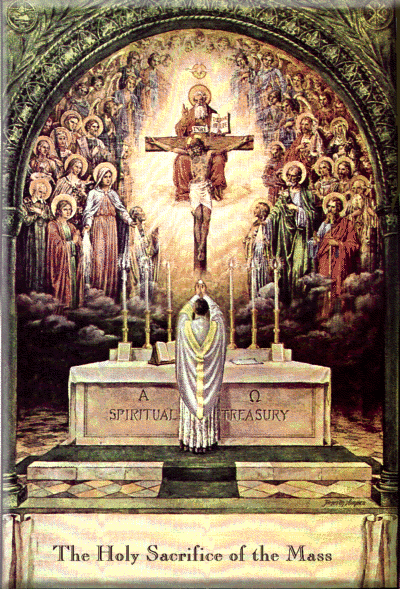
O SACRIFÍCIO DA SANTA MISSA : O Concílio de Trento (Sess. 22) diz da Santa Missa: “Devemos reconhecer que nenhum outro ato pode ser praticado pelos fiéis que seja tão santo como a celebração deste imenso mistério”. O próprio Deus todo-poderoso não pode fazer que exista uma acção mais sublime e santa do que o santo sacrifício da Missa. Este sacrifício de nossos altares sobrepassa imensamente todos os sacrifícios do Antigo Testamento, pois não são mais bois e cordeiros que são sacrificados, mas é o próprio Filho de Deus que se oferece em sacrifício.


Baseado na doutrina de Santo Afonso Maria de Ligório, doutor da Igreja, o autor, também ele já clássico, nos oferece uma exposição bastante clara e objetiva do que é a Santa Missa e das suas quatro finalidades: na Missa, os fiéis louvam a Deus, agradecem-lhe, pedem-lhe perdão pelos seu pecados e também as graças de que necessitam.

 
A GRANDEZA DO SANTO SACRIFÍCIO DA MISSA

I. É Jesus Cristo a vítima oferecida na Santa Missa
O Concílio de Trento (Sess. 22) diz da Santa Missa: “Devemos reconhecer que nenhum outro ato pode ser praticado pelos fiéis que seja tão santo como a celebração deste imenso mistério”. O próprio Deus todo-poderoso não pode fazer que exista uma acção mais sublime e santa do que o santo sacrifício da Missa. Este sacrifício de nossos altares sobrepassa imensamente todos os sacrifícios do Antigo Testamento, pois não são mais bois e cordeiros que são sacrificados, mas é o próprio Filho de Deus que se oferece em sacrifício. “O judeu tinha o animal para o sacrifício, o cristão tem Cristo”, escreve o venerável Pedro de Clugny; “seu sacrifício é, pois, tanto mais precioso, quanto mais acima de todos os sacrifícios dos judeus está Jesus Cristo”. E acrescenta que, “para os servos (isto é, para os judeus, no Antigo Testamento), não convinham outros animais senão aqueles que eram destinados ao serviço do homem; para os amigos e filhos foi Jesus Cristo reservado como cordeiro que nos livra do pecado e da morte eterna” (Ep. cont. Petrobr.). Tem, portanto, razão São Lourenço Justiniano, dizendo que não há sacrifício maior, mais portentoso e mais agradável a Deus do que o santo sacrifício da Missa (cfr. Sermo de Euch.).
S. João Crisóstomo diz que durante a Santa Missa o altar está circundado de anjos que aí se reúnem para adorar a Jesus Cristo que, nesse sacrifício sublime, é oferecido ao Pai celeste (De sac., 1, 6). Que cristão poderá duvidar, escreve S. Gregório (Dial. 4, c. 58), que os céus se abram à voz do sacerdote, durante esse Santo Sacrifício, e que coros de anjos assistam a esse sublime mistério de Jesus Cristo. S. Agostinho chega até a dizer que os anjos se colocam ao lado do sacerdote para servi-lo como ajudantes.

II. Na Santa Missa é Jesus Cristo o oferente principal
O Concílio de Trento (Sess. 22, c. 2) ensina-nos também que neste sacrifício do Corpo e Sangue de Jesus Cristo é o próprio Salvador que oferece em primeiro lugar esse sacrifício, mas que o faz pelas mãos do sacerdote que escolheu para seu ministro e representante. Já antes dissera São Cipriano: “O sacerdote exerce realmente o ofício de Jesus Cristo” (Ep. 62). Por isso o sacerdote diz, na elevação: Isto é o meu corpo; este é o cálice de meu sangue.
Belarmino (De Euch., 1. 6, c. 4) escreve que o santo sacrifício da missa é oferecido por Jesus Cristo, pela Igreja e pelo sacerdote; não, porém, do mesmo modo por todos: Jesus Cristo oferece como o sacerdote principal, ou como o oferente próprio, contudo, por intermédio de um homem, que é, no mesmo tempo sacerdote e ministro de Cristo; a Igreja não oferece como sacerdotisa, por meio de seu ministro, mas como povo, por intermédio do sacerdote; o sacerdote, finalmente, oferece como ministro de Jesus Cristo e como medianeiro ele todo o povo.
Jesus Cristo, contudo, é sempre o sacerdote principal na Santa Missa, onde ele se oferece continuamente e sob as espécies de pão e de vinho por intermédio dos sacerdotes, seus ministros, que representam a sua Pessoa quando celebram os santos mistérios. Por isso diz o quarto Concílio de Latrão (Cap. Firmatur, de sum. Trinit.) que Jesus Cristo é ao mesmo tempo o sacerdote e o sacrifício. De fato, convém à dignidade deste sacrifício que ele não seja oferecido, em primeiro lugar, por homens pecadores, mas por um sumo sacerdote que não esteja sujeito ao pecado, mas que seja santo, inocente, imaculado, separado dos pecadores e mais elevado que os céus (Heb 7, 26).

III. A Santa Missa é uma representação e renovação do sacrifício da cruz
Segundo São Tomás (Off. Ss. Sac., I. 4), o Salvador nos deixou o Santíssimo Sacramento para conservar viva entre nós a lembrança dos bens que nos adquiriu e do amor que nos testemunhou com sua morte. Por isso o mesmo Doutor chama a Sagrada Eucaristia “um manancial perene da paixão”.
Ao assistires, pois, à Santa Missa, alma cristã, pondera que a hóstia que o sacerdote oferece é o próprio Salvador que por ti sacrificou o seu sangue e a sua vida. Entretanto, a Santa Missa não é somente uma representação do sacrifício da cruz, mas também uma renovação do mesmo, porque em ambos é o mesmo sacerdote e a mesma vítima, a saber, o Filho de Deus Humanado. Só no modo de oferecer há uma diferença: o sacrifício da cruz foi oferecido com derramamento de sangue; o sacrifício da missa é incruento; na cruz, Jesus morreu realmente; aqui, morre só misticamente (Conc. Trid., Sess. 22, c. 2).
Imagina, durante a Santa Missa, que estás no monte Calvário, para ofereceres a Deus o sangue e a vida de seu adorável Filho, e, ao receberes a Santa Comunhão, imagina beberes seu precioso sangue das chagas do Salvador. Pondera também que em cada Missa se renova a obra da Redenção, de maneira que, se Jesus Cristo não tivesse morrido na cruz, o mundo receberia, com a celebração de uma só Missa, os mesmos benefícios que a morte do Salvador lhe trouxe. Cada Missa celebrada encerra em si todos os grandes bens que a morte na cruz nos trouxe, diz São Tomás (In Jo 6, lect. 6). Pelo sacrifício do altar nos é aplicado o sacrifício da cruz. A paixão de Jesus Cristo nos habilitou à Redenção; a Santa Missa nos faz entrar na posse dela e comunica-nos os merecimentos de Jesus Cristo.

IV. A Santa Missa é o maior presente de Deus
Na Santa Missa, o próprio Jesus Cristo dá-se a nós. É uma verdade de fé que o Verbo Encarnado se obrigou a obedecer ao sacerdote, quando este pronuncia as palavras da consagração e a vir às suas mãos sob as espécies do pão e do vinho. Fica-se estupefato por Deus ter obedecido outrora a Josué e mandado ao sol que parasse, quando ele disse: Sol, não te movas de Gabaon, e tu, ó lira, do vale de Ajalon (Jos 10, 12). Entretanto, muito mais admirável é que Deus mesmo desce ao altar ou a qualquer outro lugar a que o Padre o chama com umas poucas palavras, e isso tantas vezes quantas é chamado pelo sacerdote, mesmo que este seja seu inimigo. E, tendo vindo, se põe o Senhor à inteira disposição do sacerdote; este o leva, à vontade, de um lugar para o outro, coloca-o sobre o altar, fecha-o no tabernáculo, tira-o da igreja, toma-o na Santa Comunhão, e o dá em alimento a outros. São Boaventura diz que o Senhor, em cada Missa, faz ao mundo um benefício igual àquele que lhe fez outrora pela encarnação (cfr. De inst. Novit., p. 1, c. 11). Se Jesus Cristo não tivesse vindo ao mundo, o sacerdote, pronunciando as palavras da consagração, o introduziria nele. “Ó dignidade sublime a do sacerdote”, exclama por isso Santo Agostinho (Mol. lnstr. Sach., t. 1, c. 5), “em cujas mãos o Filho de Deus se reveste de carne, como no seio da Virgem Mãe”.
Numa palavra, a Santa Missa, conforme a predição do profeta (Zac 9, 17), é a coisa mais preciosa e bela que possui a Igreja. São Boaventura (De inst. Nov., 1. c.) diz que a Santa Missa nos põe diante dos olhos todo o amor que Deus nos dedicou e que é, de certo modo, um compêndio de todos os benefícios que ele nos fez.

OS QUATRO FINS DO SANTO SACRIFÍCIO DA MISSA

I. A Santa Missa é um sacrifício latrêutico
No Antigo Testamento os homens procuravam honrar a Deus por toda a espécie de sacrifícios, no Novo Testamento, porém, presta-se maior honra a Deus com um só sacrifício da Missa do que com todos os sacrifícios do Antigo Testamento, que eram só figuras e sombras da Sagrada Eucaristia. Pela Santa Missa se presta a Deus a honra que lhe é devida, porque, por meio dela, Ele recebe a mesma honra infinita que Jesus Cristo lhe prestara sacrificando-se na cruz. Uma só Missa presta a Deus maior honra que todas as orações e penitências dos santos, todos os trabalhos dos apóstolos, todos os sofrimentos dos mártires, todo o amor dos serafins e mesmo da Mãe de Deus, porque todas as honras dos homens são de natureza finita, enquanto a honra que Deus recebe pela Missa é infinita, pois lhe é prestada por uma pessoa divina, o seu Filho.
Devemos por isso reconhecer, com o santo Concílio de Trento, que a Santa Missa é a mais santa e divina de todas as obras (Sess. 22). Nosso Senhor morreu especialmente para esse fim, para poder criar sacerdotes do Novo Testamento. Não era necessário que o Salvador morresse para remir o mundo; uma só gota do seu sangue, uma lágrima, uma só oração teria bastado para operar a salvação de todos, porque, sendo essa oração de valor infinito, seria suficiente para remir não só um mundo, mas também mil mundos. Para criar, porém, um sacerdote devia Jesus Cristo morrer, pois, do contrário, donde se tiraria esse sacrifício que agora oferecem a Deus os sacerdotes do Novo Testamento, esse santo e imaculado sacrifício que, por si só, basta para dar a Deus a honra que lhe é devida? Ainda que se sacrificasse a vida de todos os anjos e santos, mesmo assim, esse sacrifício não prestaria a Deus essa honra infinita, que lhe dá uma única Santa Missa.

II. A Santa Missa é um sacrifício propiciatório
Pode-se deduzir já da instituição da Sagrada Eucaristia que a Santa Missa é verdadeiramente um sacrifício propiciatório, ou seja, que inclina Deus a nos perdoar a pena e a culpa dos pecados, que foi feita especialmente para a remissão dos pecados: Este é o meu, sangue, que será derramado por muitos, para remissão dos pecados, disse Jesus Cristo (Mt 26, 28). A Santa Missa perdoa até os maiores pecados, não imediatamente, mas só mediatamente, como afirmam os teólogos, isto é, Deus, em consideração ao sacrifício do altar, concede a graça que leva o homem a detestar seus pecados e a purificar-se deles no sacramento da Penitência. Quanto às penas temporais, que devem ser expiadas depois da destruição da culpa, são elas perdoadas por virtude da Santa Missa, ao menos parcialmente, quando não de todo. Numa palavra, a Santa Missa abre os tesouros da divina misericórdia em favor dos pecadores.
Desgraçados de nós se não houvesse esse grande sacrifício, que impede à justiça divina de nos enviar os castigos que merecemos por nossos pecados. É certo que todos os sacrifícios do Antigo Testamento não podiam aplacar a ira de Deus contra os pecadores. Se se sacrificasse a vida de todos os homens e anjos, a justiça divina não seria satisfeita devidamente nem sequer por uma única falta que a criatura tivesse cometido contra seu Criador. Só Jesus Cristo podia satisfazer por nossos pecados: Ele é a propiciação pelos nossos pecados (1 Jo 2, 2). Por isso o Padre Eterno enviou o seu Filho ao mundo, para que se fizesse homem mortal e, pelo sacrifício de sua vida, o reconciliasse com os pecadores. Esse sacrifício é renovado em cada Missa. Não há dúvida: o sangue inocente do Redentor clama muito mais fortemente por misericórdia em nosso favor, que o sangue de Abel por vingança contra Caim.
Este sacrifício pode ser oferecido também pelos defuntos. Por isso o sacerdote, na Santa Missa, pede ao Senhor que se recorde de seus servos que partiram para a outra vida e que lhes conceda, pelos merecimentos de Jesus Cristo, o lugar de repouso, da luz e da paz. Se o amor de Deus que possuem as almas ao saírem desta vida não basta para purificá-las, essa falta será reparada pelo fogo do Purgatório; muito melhor, porém, a repara o amor de Jesus Cristo por meio do sacrifício eucarístico, que traz às almas grande alívio e, muitas vezes, até a libertação completa dos seus sofrimentos. O Concílio de Trento declara que as almas que sofrem no Purgatório podem ser muito auxiliadas pela intercessão dos fiéis, mas em especial pelo santo sacrifício da Missa. E acrescenta (Sess. 22, c. 2) que isso é uma tradição apostólica. Santo Agostinho exorta-nos a oferecer o sacrifício da Santa Missa por todos os defuntos, caso que não possa aproveitar às almas pelas quais pedimos.
III. A Santa Missa é um sacrifício eucarístico
É justo e razoável que agradeçamos a Deus pelos benefícios que nos fez em sua infinita bondade. Mas que digno agradecimento podemos dar-lhe nós, miseráveis? Se Deus nos tivesse dado uma única vez um sinal de sua afeição, estaríamos obrigados a um agradecimento infinito, porque esse sinal de amor seria o favor e dom de um Deus infinito. Mas eis que o Senhor nos deu esse meio de cumprir com nossa obrigação e de agradecer-lhe dignamente. E como? Tornando-nos possível oferecer-lhe na Santa Missa a Jesus Cristo. Dessa maneira dá-se a Deus o mais perfeito agradecimento e satisfação; pois, quando o sacerdote celebra a Santa Missa, dá-lhe um digno agradecimento por todas as graças, mesmo por aquelas que foram concedidas aos santos no céu; uma tal ação de graças, porém, não podem prestar a Deus todos os santos juntos, de maneira que também nesse respeito a dignidade sacerdotal sobrepuja todas as dignidades, não excetuadas as do céu.
Na Santa Missa, a vítima que é oferecida ao Eterno Pai é seu próprio Filho, em quem pôs toda a sua complacência. Por isso dirigia Davi suas vistas a este sacrifício, quando pensava num meio de agradecer a Nosso Senhor pelas graças recebidas: Que darei ao Senhor por tudo que ele me tem feito? pergunta ele, e responde: Tomarei o cálice da salvação e invocarei o nome do Senhor (S1 115, 12). O próprio Jesus Cristo agradeceu a seu Pai celeste todos os benefícios que tinha feito aos homens, por meio deste sacrifício: E, tomando o cálice, deu graças e disse: Tomai-o e distribuí-o entre vós (Lc 22, 17).

IV. A Santa Missa é um sacrifício impetratório
Se já temos a segura promessa de alcançar tudo que pedimos a Deus em nome de Jesus Cristo (cfr. Jo 16, 23), muito maior deve ser a nossa confiança se oferecemos a Deus seu próprio Filho. Este Salvador que nos ama roga por nós sem cessar lá no céu (cfr. Rom 8, 31), mas, de modo todo especial, durante a Santa Missa, em que se sacrifica a seu Eterno Pai, pelas mãos do sacerdote, para nos alcançar suas graças. Se soubéssemos que todos os santos e a Santíssima Virgem estão rezando por nós, com que confiança não esperaríamos de Deus os maiores favores e graças. Está, porém, fora de dúvida que um só rogo de Jesus Cristo pode infinitamente mais que todas as suplicas dos santos.
No Antigo Testamento era permitido unicamente ao sumo sacerdote, e isso uma só vez no ano, entrar no santo dos santos; hoje, porém, todos os sacerdotes podem sacrificar todos os dias ao Eterno Pai o cordeiro divino, para alcançar de Deus graças para si e para todo o povo.
O sacerdote sobe ao altar para ser o intercessor de todos os pecadores. “Ele exerce o ofício de um medianeiro”, diz São Lourenço Justiniano (Sermo de Euchar.), “e por isso deve ser um intercessor para todos que pecam”. Dessa maneira“, diz São João Crisóstomo, “está o Padre no altar, no meio, entre Deus e o homem; oferece a Deus as súplicas dos homens e alcança-lhes as graças de que precisam” (Hom. 5 in Jo.). Deus distribui as suas graças sempre que é rogado em nome de Jesus Cristo, mas as distribui com mais largueza durante a Santa Missa, atendendo às suplicas do sacerdote, diz São João Crisóstomo; pois essas súplicas são então acompanhadas e secundadas pela oração de Jesus Cristo, que é o sacerdote principal, visto que é ele mesmo que se oferece neste sacrifício para nos alcançar graças de seu Eterno Pai.
Segundo o Concílio de Trento (Sess. 22, c. 2), é especialmente durante a Santa Missa que o Senhor está sentado naquele trono de graças ao qual devemos nos chegar, diz o Apóstolo, para alcançarmos misericórdia e encontrarmos graças no momento oportuno (Heb 4, 16). Até os anjos esperam o tempo da Santa Missa, diz São João Crisóstomo (Hom 13. De incomp. Dei nat.), para pedirem com mais resultado por nós, acrescentando que dificilmente se alcançará aquilo que não se consegue durante a Santa Missa.
A Santíssima Virgem, depondo uma vez o Menino Jesus nos braços de Santa Francisca Farnese, disse-lhe: “Eis aqui o meu Filho; aprende a torná-lo favorável a ti, oferecendo-o muitas vezes a Deus. Dize, por isso, a Deus, quando vires presente no altar o divino Cordeiro: Ó Pai Eterno, ofereço-vos hoje todas as virtudes, todos os atos e todos os afetos de vosso mui amado Filho. Recebei-os por mim, e por seus merecimentos, que ele mos deu e, por isso, são meus, dai-me as graças que Jesus Cristo pedir por ruim. Ofereço-vos esses merecimentos para vos agradecer por todas as misericórdias que tendes usado comigo e para satisfazer por meus pecados. Pelos merecimentos de Jesus Cristo espero alcançar de vós todas as graças, o perdão, a perseverança, o céu, mas especialmente o mais precioso de todos os dons, o vosso puro e santo amor”.

Edward Saint-Omer
    Fonte: LIGÓRIO, Santo Afonso Maria. Escola da Perfeição Cristã. Org: Pe. Saint-Omer.

Tradução: Quadrante
quinta-feira, 2 de setembro de 2010

VENERABLE PIO XII : El deber fundamental del hombre es, indudablemente, el de orientarse hacia Dios a sí mismo y a su propia vida. «A El, en efecto, debemos principalmente unirnos como indefectible principio al que debe orientarse constantemente nuestra elección como a último fin, que por negligencia perdemos pecando y que debemos reconquistar por la fe y creyendo en El».Ahora bien, el hombre se vuelve ordenadamente a Dios cuando reconoce su suprema majestad y su supremo magisterio, cuando acepta con sumisión las verdades divinamente reveladas, cuando observa religiosamente sus leyes, cuando hace converger en El todas sus actividades, cuando -para decirlo brevemente- presta mediante la virtud de la religión el debido culto al único y verdadero Dios.

A) RENOVACIÓN LITÚRGICA
7. Bien sabéis, Venerables Hermanos, que hacia finales del siglo pasado y comienzos del actual se despertó un singular entusiasmo por los estudios litúrgicos, bien por el esfuerzo de algunos particulares, bien, sobre todo, por la celosa y asidua diligencia de varios monasterios de la ínclita Orden benedictina; y así, no sólo en muchas regiones de Europa, sino también al otro lado del mar, se desarrolló un apostolado útil, digno de toda alabanza. Las saludables consecuencias de este intenso apostolado fueron visibles tanto en el terreno de las ciencias sagradas, donde los ritos litúrgicos de la Iglesia occidental y oriental fueron más amplia y profundamente estudiados y conocidos, como en la vida espiritual y privada de muchos cristianos.
8. Las augustas ceremonias del Sacrificio del Altar fueron mejor conocidas, comprendidas y estimadas; la participación en los Sacramentos, mayor y más frecuente; las plegarias litúrgicas, más suavemente gustadas; y el culto de la Sagrada Eucaristía considerado -como es en realidad- fuente y centro de la verdadera piedad cristiana. También ha llegado a entenderse más y más cómo todos los fieles constituyen un único y compacto cuerpo, cuya Cabeza es Cristo, así como el deber del pueblo cristiano de participar debidamente en los ritos litúrgicos.
B) ACTITUD DE LA SANTA SEDE FRENTE A LOS PROBLEMAS LITÚRGICOS
9. Sin duda conocéis muy bien cómo esta Sede Apostólica ha cuidado en todo tiempo diligentemente de que el pueblo a ella confiado se educase en un sentido litúrgico verdadero y práctico; y que con no menos celo ha procurado que los sagrados ritos resplandezcan también al exterior con la debida dignidad. Nos mismo, por esta razón, al dirigirnos, según costumbre, a los predicadores cuaresmales de esta Nuestra ciudad en el afeo 1943, les habíamos exhortado calurosamente a recomendar a sus oyentes que participasen -con creciente fervor en el Sacrificio eucarístico; y así recientemente hemos hecho traducir de nuevo al latín, del texto original, el libro de los Salmos, que tanta parte ocupa en las preces litúrgicas de la Iglesia Católica, a fin de que estas preces fueren más exactamente comprendidas, y su verdad y suavidad más fácilmente percibidas.
10. No obstante, aunque el apostolado litúrgico Nos proporciona no poco consuelo por los saludables frutos que de él se derivan, Nuestro deber Nos obliga a seguir con atención esta renovación, a la manera en que algunos la conciben y de cuidar diligentemente que las iniciativas no sean ni excesivas ni defectuosas.
11. Ahora bien, si por una parte comprobamos con dolor que en algunas regiones el sentido, el conocimiento y el estudio de la Liturgia son escasos o casi nulos, por otra notamos, con temerosa preocupación, que algunos están demasiado ávidos de novedad y se alejan del camino de la sana doctrina y de la prudencia, mezclando a la intención y al deseo de una renovación litúrgica, algunos principios que, en teoría o en práctica, comprometen esta santísima causa y a veces también la contaminan con errores que afectan a la Fe católica y a la doctrina ascética.
12. La pureza de la Fe y de la Moral debe ser la norma característica de esta sagrada disciplina, que debe conformarse absolutamente a las sapientísimas enseñanzas de la Iglesia. Es, por tanto, Nuestro deber alabar y aprobar todo aquello que está bien hecho y contener o reprobar todo lo que se desvía del camino justo y verdadero.
13. No crean, sin embargo, los pusilánimes que tienen nuestra aprobación porque reprendamos a los que yerran y pongamos freno a los audaces; ni los imprudentes se crean alabados cuando corregimos a los negligentes y perezosos.
C) LA ENCÍCLICA
14. Aunque en esta Nuestra Carta Encíclica tratemos sobre todo de la Liturgia latina, esto no es debido a menor estimación de las venerandas Liturgias de la Iglesia Oriental, cuyos ritos, transmitidos por nobles y antiguos documentos, Nos son igualmente queridísimos; sino que depende más que nada de las condiciones de la Iglesia occidental, que son tales que requieren la intervención de Nuestra autoridad.
15. Escuchen, pues, todos los cristianos con docilidad la voz del Padre común, que desea ardientemente que todos, unidos íntimamente a El, se acerquen al Altar de Dios, profesando la misma Fe, obedeciendo a la misma Ley, participando en el mismo Sacrificio, con un solo entendimiento y una sola voluntad.
16. Lo requiere el honor debido a Dios, lo exigen las necesidades de los tiempos actuales. Ahora que una cruel y larga guerra acaba de dividir a los pueblos con sus rivalidades y estragos, los hombres de buena de la mejor manera posible en llevarlos de nuevo a la concordia.
17. Creemos, sin embargo, que ningún proyecto ni ninguna iniciativa será en este caso más eficaz que un fervoroso espíritu y celo religioso, de los que es necesario estén animados los cristianos y se guíen por ellos, de forma que aceptando con ánimo sincero las mismas verdades y obedeciendo dócilmente a los legítimos pastores en el ejercicio del culto debido a Dios, constituyan una fraternal comunidad, ya que «aunque somos muchos, formamos un solo cuerpo todos los que participamos de un mismo pan»(I Cor. 10, 7).

PRIMERA PARTE
NATURALEZA, ORIGEN Y PROGRESO DE LA LITURGIA
I. La Liturgia, culto público
A) DEBER DE RELIGIÓN EN LOS HOMBRES
18. El deber fundamental del hombre es, indudablemente, el de orientarse hacia Dios a sí mismo y a su propia vida. «A El, en efecto, debemos principalmente unirnos como indefectible principio al que debe orientarse constantemente nuestra elección como a último fin, que por negligencia perdemos pecando y que debemos reconquistar por la fe y creyendo en El» (2).
19. Ahora bien, el hombre se vuelve ordenadamente a Dios cuando reconoce su suprema majestad y su supremo magisterio, cuando acepta con sumisión las verdades divinamente reveladas, cuando observa religiosamente sus leyes, cuando hace converger en El todas sus actividades, cuando -para decirlo brevemente- presta mediante la virtud de la religión el debido culto al único y verdadero Dios.
20. Este es un deber que obliga ante todo a cada uno de los hombres en singular, pero es también un deber colectivo de toda la comunidad humana, unida entre sí con vínculos sociales, porque también ella depende de la suprema autoridad de Dios.