The Spiritual Art of Lectio Divina
Prayer is at the center of Benedictine life. Understood as “the work of God,” lectio divina and the liturgy of the hours are among the first concerns in the day of monk. As a shared calling, prayer brings the differences and various pursuits of a community together with a common role and identity as monks. Prayer is a comfort in times of distress, a resource when in need, a selfless sharing and outpouring in times of success and joy. Prayer is so fully a part of the “ins and outs” monastic life, that it establishes the pattern and rhythm of the day through the dynamic interchange of worship and work. We come together each day to pray the liturgy of the hours and celebrate the Eucharist, but lectio divina, though usually a private practice, is also fundamental to the Benedictine life of prayer, and is essential to living and growing in Benedictine identity and spirituality.

“Lectio divina” translates to “divine reading,” meaning a prayerful reading of Holy Scripture, and other spiritual texts. Though often referred to by its Latin title, striking some as distant or foreign, the practice is really very common. It may be that the practitioner does not realize they are praying in the lectio divina fashion. Active and fundamental to the whole of the 2,000 years of Christian Tradition, and inherited from the Jewish reverence of Scripture, lectio divina is an open, hopeful and faithful trust and listening to God revealed in the Old and New Testaments, as well as the Spirit-filled writings and instructions of the Church. In short, every time you take a moment from your day to read from these writings in faith, hope and love, you are practicing lectio divina.
Cultural2.jpgBeginning and returning again and again to Scripture in lectio divina is a trustworthy spiritual practice, even without extensive instruction. However, committing yourself to lectio divina can be challenging, and as a private spiritual practice, an exclusion of conversation and guidance within the Church community can lead to misunderstandings. As a 2,000 year-old form of Christian prayer, many words of advice and methods have been developed and inherited throughout the Church Tradition for the purpose of helping establish this practice as a perpetual and reliable part of Christian life and spirituality.
An excellent introduction we favor and recommend is Accepting the Embrace of God:The Ancient Art of Lectio Divina by Fr. Luke Dysinger, O.S.B., from Saint Andrew's Abbey in Valyermo, California.
Accepting the Embrace of God: The Ancient Art of Lectio Divina
by Fr. Luke Dysinger, O.S.B.
1. THE PROCESS of LECTIO DIVINA

A VERY ANCIENT art, practiced at one time by all Christians, is the technique known as lectio divina - a slow, contemplative praying of the Scriptures which enables the Bible, the Word of God, to become a means of union with God. This ancient practice has been kept alive in the Christian monastic tradition, and is one of the precious treasures of Benedictine monastics and oblates. Together with the Liturgy and daily manual labor, time set aside in a special way for lectio divina enables us to discover in our daily life an underlying spiritual rhythm. Within this rhythm we discover an increasing ability to offer more of ourselves and our relationships to the Father, and to accept the embrace that God is continuously extending to us in the person of his Son Jesus Christ.
Lectio - reading/listening

THE ART of lectio divina begins with cultivating the ability to listen deeply, to hear “with the ear of our hearts” as St. Benedict encourages us in the Prologue to the Rule. When we read the Scriptures we should try to imitate the prophet Elijah. We should allow ourselves to become women and men who are able to listen for the still, small voice of God (I Kings 19:12); the “faint murmuring sound” which is God's word for us, God's voice touching our hearts. This gentle listening is an “atunement” to the presence of God in that special part of God's creation which is the Scriptures.
THE CRY of the prophets to ancient Israel was the joy-filled command to “Listen!” “Sh'ma Israel: Hear, O Israel!” In lectio divina we, too, heed that command and turn to the Scriptures, knowing that we must “hear” - listen - to the voice of God, which often speaks very softly. In order to hear someone speaking softly we must learn to be silent. We must learn to love silence. If we are constantly speaking or if we are surrounded with noise, we cannot hear gentle sounds. The practice of lectio divina, therefore, requires that we first quiet down in order to hear God's word to us. This is the first step of lectio divina, appropriately called lectio - reading.
THE READING or listening which is the first step in lectio divina is very different from the speed reading which modern Christians apply to newspapers, books and even to the Bible. Lectio is reverential listening; listening both in a spirit of silence and of awe. We are listening for the still, small voice of God that will speak to us personally - not loudly, but intimately. In lectio we read slowly, attentively, gently listening to hear a word or phrase that is God's word for us this day.
Meditatio - meditation
ONCE WE have found a word or a passage in the Scriptures that speaks to us in a personal way, we must take it in and “ruminate” on it. The image of the ruminant animal quietly chewing its cud was used in antiquity as a symbol of the Christian pondering the Word of God. Christians have always seen a scriptural invitation to lectio divina in the example of the Virgin Mary “pondering in her heart” what she saw and heard of Christ (Luke 2:19). For us today these images are a reminder that we must take in the word - that is, memorize it - and while gently repeating it to ourselves, allow it to interact with our thoughts, our hopes, our memories, our desires. This is the second step or stage in lectio divina - meditatio. Through meditatio we allow God's word to become His word for us, a word that touches us and affects us at our deepest levels.
Oratio - prayer
 THE THIRD step in lectio divina is oratio - prayer: prayer understood both as dialogue with God, that is, as loving conversation with the One who has invited us into His embrace; and as consecration, prayer as the priestly offering to God of parts of ourselves that we have not previously believed God wants. In this consecration-prayer we allow the word that we have taken in and on which we are pondering to touch and change our deepest selves. Just as a priest consecrates the elements of bread and wine at the Eucharist, God invites us in lectio divina to hold up our most difficult and pain-filled experiences to Him, and to gently recite over them the healing word or phrase He has given us in our lectio and meditatio. In this oratio, this consecration-prayer, we allow our real selves to be touched and changed by the word of God.
Contemplatio - contemplation
FINALLY, WE simply rest in the presence of the One who has used His word as a means of inviting us to accept His transforming embrace. No one who has ever been in love needs to be reminded that there are moments in loving relationships when words are unnecessary. It is the same in our relationship with God. Wordless, quiet rest in the presence of the One Who loves us has a name in the Christian tradition - contemplatio, contemplation. Once again we practice silence, letting go of our own words; this time simply enjoying the experience of being in the presence of God.
2. THE UNDERLYING RHYTHM of LECTIO DIVINA

IF WE are to practice lectio divina effectively, we must travel back in time to an understanding that today is in danger of being almost completely lost. In the Christian past the words action (or practice, from the Greek praktikos) and contemplation did not describe different kinds of Christians engaging (or not engaging) in different forms of prayer and apostolates. Practice and contemplation were understood as the two poles of our underlying, ongoing spiritual rhythm: a gentle oscillation back and forth between spiritual “activity” with regard to God and “receptivity.”
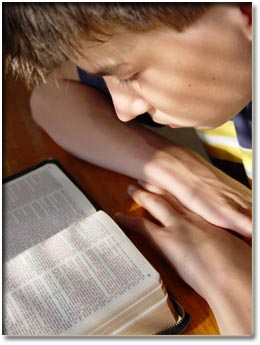
PRACTICE - spiritual “activity” - referred in ancient times to our active cooperation with God's grace in rooting out vices and allowing the virtues to flourish. The direction of spiritual activity was not outward in the sense of an apostolate, but inward - down into the depths of the soul where the Spirit of God is constantly transforming us, refashioning us in God's image. The active life is thus coming to see who we truly are and allowing ourselves to be remade into what God intends us to become.

IN THE early monastic tradition contemplation was understood in two ways. First was theoria physike, the contemplation of God in creation - God in “the many.” Second was theologia, the contemplation of God in Himself without images or words - God as “The One.” From this perspective lectio divina serves as a training-ground for the contemplation of God in His creation.

IN CONTEMPLATION we cease from interior spiritual doing and learn simply to be, that is to rest in the presence of our loving Father. Just as we constantly move back and forth in our exterior lives between speaking and listening, between questioning and reflecting, so in our spiritual lives we must learn to enjoy the refreshment of simply being in God's presence, an experience that naturally alternates (if we let it!) with our spiritual practice.
IN ANCIENT times contemplation was not regarded as a goal to be achieved through some method of prayer, but was simply accepted with gratitude as God's recurring gift. At intervals the Lord invites us to cease from speaking so that we can simply rest in his embrace. This is the pole of our inner spiritual rhythm called contemplation.
HOW DIFFERENT this ancient understanding is from our modern approach! Instead of recognizing that we all gently oscillate back and forth between spiritual activity and receptivity, between practice and contemplation, we today tend to set contemplation before ourselves as a goal - something we imagine we can achieve through some spiritual technique. We must be willing to sacrifice our “goal-oriented” approach if we are to practice lectio divina, because lectio divina has no other goal than spending time with God through the medium of His word. The amount of time we spend in any aspect of lectio divina, whether it be rumination, consecration or contemplation depends on God's Spirit, not on us. Lectio divina teaches us to savor and delight in all the different flavors of God's presence, whether they be active or receptive modes of experiencing Him.
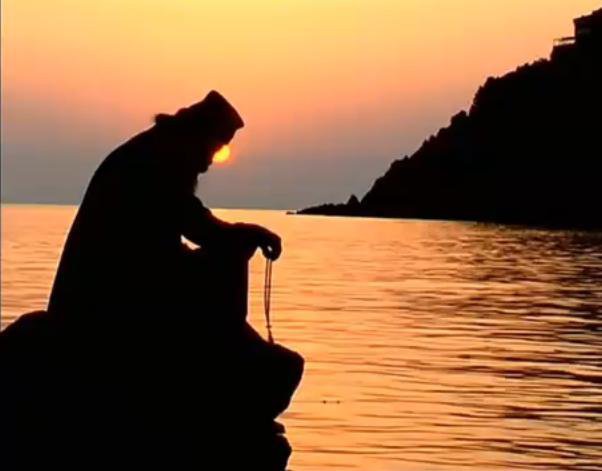
IN lectio divina we offer ourselves to God; and we are people in motion. In ancient times this inner spiritual motion was described as a helix - an ascending spiral. Viewed in only two dimensions it appears as a circular motion back and forth; seen with the added dimension of time it becomes a helix, an ascending spiral by means of which we are drawn ever closer to God. The whole of our spiritual lives were viewed in this way, as a gentle oscillation between spiritual activity and receptivity by means of which God unites us ever closer to Himself. In just the same way the steps or stages of lectio divina represent an oscillation back and forth between these spiritual poles. In lectio divina we recognize our underlying spiritual rhythm and discover many different ways of experiencing God's presence - many different ways of praying.


