- ▼ 10/23 - 10/30 ( 50) Romano Amerio: La Reforma Litúrgica . Iota Unum on...
- Réginald Garrigou-Lagrange, O.P. : O valor infinit...
- * Cristo, Rei dos reis.QUAS PRIMAS DEL SUMO PONTÍF...
- Cristo, Rei dos reis.QUAS PRIMAS DEL SUMO PONTÍFIC...
- La Realeza de Cristo
- Entrevista al Prefecto de la Congregación para el ...
- Violence never again, war never again , terrorism ...
- वाटिकन सिटीः 200 सदस्यों वाले प्रतिनिधिमण्डल के सा...
- Benedict al XVI-lea la întâlnirea de la Assisi „Pe...
- Ansprache von Papst Benedikt XVI. zum Friedenstref...
- La Iglesia católica no cejará en la lucha contra l...
- Premier discours de Benoît XVI à Assise, ce 27 oct...
- Discurso do Santo Padre em Assis No Dia de Reflex...
- Intervento del Santo Padre Benedetto XVI (Basilica...
- Eurodeputado ex-muçulmano chama a insistente polít...
- Brother Nicholas Edmonds-Smith was ordained priest...
- Assisi 2011, Pope Benedict : that peace reign in t...
- वाटिकन सिटीः अर्थव्यवस्था के सुधार हेतु वाटिकन ने ...
- Papa, în ajunul întâlnirii de la Assisi: creştinii...
- Il Papa alla vigilia dell’incontro di Assisi: il r...
- Les chrétiens ne doivent pas être des loups parmi ...
- Papst blickt voraus auf Assisi: Gebetsaufruf für d...
- "Enviados como cordeiros, não como lobos entre lob...
- Preciosa contribución a la paz: “La Oración”. Este...
- In preghiera per il S. Padre, pellegrino per la Ve...
- APÓSTOLOS DA MISSA GREGORIANA: CARD.CASTRILLÓN , C...
- Pontificale di chiusura del Convegno che Sua Emine...
- # INTERVIEW WITH CARDINAL DOMENICO BARTOLUCCI: Loo...
- INTERVIEW WITH CARDINAL DOMENICO BARTOLUCCI: Look...
- Exposición de los principales artículos en...
- AN INTERVIEW WITH PAUL AUGUSTIN CARDINAL MAYER, O....
- DIFUSÃO DA SANTA MISSA GREGORIANA NO MUNDO.
- APÓSTOLOS DA MISSA GREGORIANA: CARD.CASTRILLÓN , C...
- # Mons. Nicola Bux : Nuestra acción máxima es la d...
- Mons. Nicola Bux : Nuestra acción máxima es la de ...
- La spiritualité de la Messe : * Avec Jésus, vers l...
- ROMA 1962-1963: El Clima litúrgico conciliar Por D...
- A Sua Santidade o Papa Bento XVI a nossa filial ho...
- Cardeal Dario Castrillon : Trata-se de uma oferta ...
- Cardeal Dário Castrillon Hoyos : Com o Motu própri...
- Photos on the occasion of the clerical tonsure of ...
- Festa de S. António Maria Claret
- Pope Benedict canonizes three saints
- Papst: „Gottesliebe ist oberstes Gebot“
- नीदरलैंड के राजदूत संत पापा से मिले
- Benedict al XVI-lea a proclamat trei noi Sfinţi, d...
- Benoît XVI canonise trois "disciples exemplaires d...
- Benedetto XVI proclama Santi mons. Conforti, don G...
- el Sucesor de Pedro proclamó a 3 nuevos Santos: Gu...
- Bento XVI proclama três novos santos: Guido Confor...
domingo, 30 de outubro de 2011
Iota Unum: O Resultado Paradoxal do Concílio e o Sínodo Romano . .Romano Amerio: La Reforma Litúrgica . Iota Unum on... La Messa di san Pio V e la Messa di Paolo VI alla luce dell’Æsthetica trinitaria. * Réginald Garrigou-Lagrange, O.P. : O valor infinit... * * Cristo, Rei dos reis.QUAS PRIMAS DEL SUMO PONTÍF... * Cristo, Rei dos reis.QUAS PRIMAS DEL SUMO PONTÍFIC... * La Realeza de Cristo * Entrevista al Prefecto de la Congregación para el ...
Iota Unum: O Resultado Paradoxal do Concílio e o Sínodo Romano . Romano Amerio: La Reforma Litúrgica . Iota Unum online Several chapters of Romano Amerio's opus magnum . Iota unum: étude des variations de l'Église catholique au XXe siècle . La Messa di san Pio V e la Messa di Paolo VI alla luce dell’Æsthetica trinitaria.
Iota Unum: O Resultado Paradoxal do Concílio e o Sínodo Romano – Capítulo III do Tomo I da Obra Iota Unum. Estudos Sobre as Transformações da Igreja no Século XX.


A apresentação da obra de Romano feita pelo Bispo de Imperia, Dom Mario Oliveri, pode ser lida aqui.
O Resultado Paradoxal do Concílio e o Sínodo Romano – Capítulo III do Tomo I da Obra Iota Unum. Estudos Sobre as Transformações da Igreja no Século XX.
Por Romano Amerio
Tradução: Carlos Eduardo Maculan
O resultado paradoxal do Concílio Vaticano II a respeito de sua preparação se manifesta na comparação entre os documentos finais e os documentos iniciais (propedêuticos), e também nos três eixos principais: I – o fracasso das previsões feitas pelo Papa (João XXIII) e por quem preparou o Concílio; II – a inutilidade efetiva do Sínodo Romano sugerido por João XXIII como antecipação do Concílio e; III – a anulação, quase imediata, da Encíclica Veterum Sapientiae, que prefigurava a fisionomia cultural da Igreja Conciliar.
O Papa João, que havia idealizado o Concílio como um grande ato de renovação e de adequação funcional da Igreja, acreditava que também o havia preparado como tal, e aspirava poder concluí-lo em poucos meses, quiçá como o I Concílio de Latrão com o Papa Calixto II em 1123, quando trezentos bispos o concluíram em dezenove dias, ou como o II Concílio de Latrão com o Papa Inocêncio II em 1139, com mil bispos que o concluíram em dezessete dias.
No entanto, o Vaticano II se abriu em 11 de outubro de 1962 e se encerrou em 8 de dezembro de 1965, durando três anos de modo descontínuo. O fracasso das previsões tiveram origem em haver-se abortado um Concílio que havia sido preparado e na elaboração posterior de um Concílio distinto do primeiro, que gerou a si mesmo. (Nota do tradutor: o autor faz referência aos rumos que tomou o Vaticano II. Um é o Concílio que se idealizou pelo Sínodo Romano, outro é o Concílio que “gerou a si próprio”).
O Sínodo Romano convocado por João XXIII
O Sínodo Romano foi concebido e convocado por João XXIII como um ato solene e prévio à grande Assembléia Conciliar, o qual deveria ser a prefiguração e a realização antecipada do Concílio.
Assim declarou textualmente o Pontífice na Alocução ao Clero e aos Fiéis de Roma de 29 de junho de 1960. A todos o Papa revelou a importância do Sínodo e ainda mais anunciou que além da Diocese de Roma, o Sínodo se estendia a toda Igreja no Mundo. A importância do Sínodo foi comparável aos Sínodos Provinciais celebrados por São Carlos Borromeo antes do Concílio de Trento.
Renovava-se o antigo princípio que quer modelar toda a orbe católica sob o patronato da Igreja Romana. Na mente do Papa o Sínodo Romano estava destinado a ter um grandioso efeito exemplar que se depreendia do feito de que o Papa ordenou a tradução de todos os seus textos para todas as línguas principais do mundo. Os textos do Sínodo promulgados em 25, 26 e 27 de janeiro de 1960 manifestam um completo retorno às essências da Igreja.
O Sínodo decretava: I – restauração da vida religiosa; II – a disciplina do clero se estabelece no modelo tradicional, amadurecido no Concílio de Trento e fundado em princípios sempre professados e sempre praticados. O primeiro princípio é da peculiaridade da pessoa consagrada e habilitada sobrenaturalmente para exercer as operações de Cristo e, por conseguinte, separada dos leigos sem confusão alguma. O segundo princípio era a educação ascética e a vida sacrificada, que caracteriza o clero, embora os leigos possam levar uma vida ascese.
Deste modo o Sínodo prescrevia aos clérigos todo um estilo de conduta retamente diferenciado das maneiras seculares. Tal estilo exige I - o hábito eclesiástico (batina e hábitos regulares), II - a sobriedade nos alimentos, a abstinência de espetáculos públicos e a negação das coisas profanas. Reafirmava-se, igualmente, a originalidade da formação cultural do clero e se desenhava o sistema sancionado de forma soleníssima pelo Papa João XXIII no ano seguinte ao Sínodo através da Encíclica Veterum Sapentiae. O Papa ordenou, inclusive, que se reeditasse o Catecismo do Concílio de Trento, porém a ordem foi desobedecida. Somente em 1981, e por iniciativa totalmente privada, se publicou na Itália sua tradução, conforme consta do L’Osservatore Romano de 5 de julho de 1982.
O Resultado Paradoxal do Concílio e o Sínodo Romano – Capítulo III do Tomo I da Obra Iota Unum. Estudos Sobre as Transformações da Igreja no Século XX.
Por Romano Amerio
Tradução: Carlos Eduardo Maculan
O resultado paradoxal do Concílio Vaticano II a respeito de sua preparação se manifesta na comparação entre os documentos finais e os documentos iniciais (propedêuticos), e também nos três eixos principais: I – o fracasso das previsões feitas pelo Papa (João XXIII) e por quem preparou o Concílio; II – a inutilidade efetiva do Sínodo Romano sugerido por João XXIII como antecipação do Concílio e; III – a anulação, quase imediata, da Encíclica Veterum Sapientiae, que prefigurava a fisionomia cultural da Igreja Conciliar.
O Papa João, que havia idealizado o Concílio como um grande ato de renovação e de adequação funcional da Igreja, acreditava que também o havia preparado como tal, e aspirava poder concluí-lo em poucos meses, quiçá como o I Concílio de Latrão com o Papa Calixto II em 1123, quando trezentos bispos o concluíram em dezenove dias, ou como o II Concílio de Latrão com o Papa Inocêncio II em 1139, com mil bispos que o concluíram em dezessete dias.
No entanto, o Vaticano II se abriu em 11 de outubro de 1962 e se encerrou em 8 de dezembro de 1965, durando três anos de modo descontínuo. O fracasso das previsões tiveram origem em haver-se abortado um Concílio que havia sido preparado e na elaboração posterior de um Concílio distinto do primeiro, que gerou a si mesmo. (Nota do tradutor: o autor faz referência aos rumos que tomou o Vaticano II. Um é o Concílio que se idealizou pelo Sínodo Romano, outro é o Concílio que “gerou a si próprio”).
O Sínodo Romano convocado por João XXIII
O Sínodo Romano foi concebido e convocado por João XXIII como um ato solene e prévio à grande Assembléia Conciliar, o qual deveria ser a prefiguração e a realização antecipada do Concílio.
Assim declarou textualmente o Pontífice na Alocução ao Clero e aos Fiéis de Roma de 29 de junho de 1960. A todos o Papa revelou a importância do Sínodo e ainda mais anunciou que além da Diocese de Roma, o Sínodo se estendia a toda Igreja no Mundo. A importância do Sínodo foi comparável aos Sínodos Provinciais celebrados por São Carlos Borromeo antes do Concílio de Trento.
Renovava-se o antigo princípio que quer modelar toda a orbe católica sob o patronato da Igreja Romana. Na mente do Papa o Sínodo Romano estava destinado a ter um grandioso efeito exemplar que se depreendia do feito de que o Papa ordenou a tradução de todos os seus textos para todas as línguas principais do mundo. Os textos do Sínodo promulgados em 25, 26 e 27 de janeiro de 1960 manifestam um completo retorno às essências da Igreja.
O Sínodo decretava: I – restauração da vida religiosa; II – a disciplina do clero se estabelece no modelo tradicional, amadurecido no Concílio de Trento e fundado em princípios sempre professados e sempre praticados. O primeiro princípio é da peculiaridade da pessoa consagrada e habilitada sobrenaturalmente para exercer as operações de Cristo e, por conseguinte, separada dos leigos sem confusão alguma. O segundo princípio era a educação ascética e a vida sacrificada, que caracteriza o clero, embora os leigos possam levar uma vida ascese.
Deste modo o Sínodo prescrevia aos clérigos todo um estilo de conduta retamente diferenciado das maneiras seculares. Tal estilo exige I - o hábito eclesiástico (batina e hábitos regulares), II - a sobriedade nos alimentos, a abstinência de espetáculos públicos e a negação das coisas profanas. Reafirmava-se, igualmente, a originalidade da formação cultural do clero e se desenhava o sistema sancionado de forma soleníssima pelo Papa João XXIII no ano seguinte ao Sínodo através da Encíclica Veterum Sapentiae. O Papa ordenou, inclusive, que se reeditasse o Catecismo do Concílio de Trento, porém a ordem foi desobedecida. Somente em 1981, e por iniciativa totalmente privada, se publicou na Itália sua tradução, conforme consta do L’Osservatore Romano de 5 de julho de 1982.
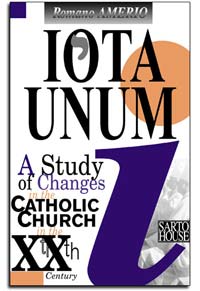
Romano Amerio: La Reforma Litúrgica


- Methodological and linguistic definitions.
- Denial of the crisis.
- The error of secondary Christianity.
- The crisis as failure to adapt.
- Adapting the Church's contradiction of the world.
- Further denial of the crisis.
- The Pope recognizes the loss of direction.
- Pseudo-positivity of the crisis. False philosophy of religion.
- Further admissions of a crisis.
- Positive interpretation of the crisis. False philosophy of religion.
- Further false philosophy of religion.
- The crises of the Church: Jerusalem (50 A.D.).
- The Nicene crisis (325 A.D.).
- The deviations of the Middle Ages.
- The crisis of the Lutheran secession. The breadth of the Christian ideal.
- Further breadth of the Christian ideal. Its limits.
- The denial of the Catholic principle in Lutheran doctrine.
- Luther's heresy, continued. The bull Exsurge Domine.
- The principle of independence and abuses in die Church.
- Why casuistry did not create a crisis in the Church.
- The revolution in France.
- The principle of independence. The Auctorem Fidei.
- The crisis of the Church during the French Revolution.
- The Syllabus of Pius IX.
- The spirit of the age. Alexander Manzoni.
- The modernist crisis. The second Syllabus.
- The pre-conciliar crisis and the third Syllabus.
- Humani Generis (1950).

CHAPTER III: The Preparation of The Council
- The Second Vatican Council. Its preparation.
- Paradoxical outcome of the Council.
- Paradoxical outcome of the Council, continued. The Roman Synod.
- Paradoxical outcome of the Council, continued. Veterum Sapientia.
- The aims of the First Vatican Council.
- The aims of Vatican II. Pastorality.
- Expectations concerning the Council.
- Cardinal Montini’s forecasts. His minimalism.
- Catastrophal predictions.
- The opening address. Antagonism with the world. Freedom of the Church.
- The opening speech. Ambiguities of text and meaning.
- The opening speech. A new attitude towards error.
- Rejection of the council preparations. The breaking of the council rules.
- The breaking of the Council’s legal framework, continued.
- Consequences of breaking the legal framework. Whether there was a conspiracy.
- Papal action at Vatican II. The Notapraevia.
- Further papal action at Vatican II. Interventions on mariological doctrine. On missions. On the moral law of marriage.
- Synthesis of the council in the closing speech of the fourth session. Comparison with St. Pius X. Church and world.
- Leaving the Council behind. The spirit of the Council.
- Leaving the Council behind. Ambiguous character of the conciliar texts.
- Novel hermeneutic of the Council. Semantic change. The word “dialogue.”
- Novel hermeneutic of the Council, continued. “Circiterisms.” Use of the conjunction “but.” Deepening understanding.
- Features of the post-conciliar period. The universality of the change.
- The post-conciliar period, continued. The New Man. Gaudium et Spes 30. Depth of the change.
- Impossibility of radical change in the Church.
- The impossibility of radical newness, continued.
- The denigration of the historical Church.
- Critique of the denigration of the Church.
- False view of the early Church.
- The opening address. Antagonism with the world. Freedom of the Church.
- The opening speech. Ambiguities of text and meaning.
- The opening speech. A new attitude towards error.
- Rejection of the council preparations. The breaking of the council rules.
- The breaking of the Council’s legal framework, continued.
- Consequences of breaking the legal framework. Whether there was a conspiracy.
- Papal action at Vatican II. The Notapraevia.
- Further papal action at Vatican II. Interventions on mariological doctrine. On missions. On the moral law of marriage.
- Synthesis of the council in the closing speech of the fourth session. Comparison with St. Pius X. Church and world.
- Leaving the Council behind. The spirit of the Council.
- Leaving the Council behind. Ambiguous character of the conciliar texts.
- Novel hermeneutic of the Council. Semantic change. The word “dialogue.”
- Novel hermeneutic of the Council, continued. “Circiterisms.” Use of the conjunction “but.” Deepening understanding.
- Features of the post-conciliar period. The universality of the change.
- The post-conciliar period, continued. The New Man. Gaudium et Spes 30. Depth of the change.
- Impossibility of radical change in the Church.
- The impossibility of radical newness, continued.
- The denigration of the historical Church.
- Critique of the denigration of the Church.
- False view of the early Church.
- Sanctity of the Church. An apologetical principle.
- The catholicity of the Church. Objection. The Church as a principle of division. Paul VI.
- The unity of the post-conciliar Church.
- The Church disunited in the hierarchy.
- The Church disunited over Humanae Vitae.
- The Church disunited concerning the encyclical, continued.
- The Dutch schism.
- The renunciation of authority. A confidence of Paul VI.
- An historic parallel. Paul VI and Pius DC
- Government and authority.
- The renunciation of authority, continued. The affair of the French catechism.
- Character of Paul VI. Self-portrait. Cardinal Gut.
- Yes and no in the post-conciliar Church.
- The renunciation of authority, continued. The reform of the Holy Office.
- Critique of the reform of the Holy Office.
- Change in the Roman Curia. Lack of precision.
- Change in the Roman Curia, continued. Cultural inadequacies.
- The Church’s renunciation in its relations with states.
- The revision of the concordat, continued.
- The Church of Paul VI. His speeches of September 1974.
- Paul VI’s unrealistic moments.
- The defection of priests.
- The canonical legitimation of priestly defections.
- Attempts to reform the Catholic priesthood.
- Critique of the critique of the Catholic priesthood. Don Mazzolari.
- Universal priesthood and ordained priesthood.
- Critique of the saying “a priest is a man like other men."
- Theological setting of the argument.
- Pyrrhonism in the Church. Cardinals Léger, Heenan, Alfrink and Suenens.
- The discounting of reason. Sullivan. Innovators’ rejection of certainty.
- The discounting of reason, continued. The Padua theologians. The Ariccia theologians. Manchesson.
FROM:http://www.sspxasia.com/Documents/books/Iota_Unum/chp_01.htm
Iota unum: étude des variations de l'Église catholique au XXe siècle
Contents
| 7 | |
| 9 | |
| 10 | |
| 11 | |
| 12 | |
| 13 | |
| 15 | |
| 16 | |
| 340 | |
| 404 | |
| 406 | |
| 407 | |
| 409 | |
| 410 | |
Civilisation de la nature et civilisation de la personne Civilisation du travail | 412 |
| 413 | |
| 17 | |
| 18 | |
| 21 | |
| 22 | |
| 23 | |
| 25 | |
| 27 | |
| 28 | |
| 29 | |
| 46 | |
| 89 | |
| 92 | |
| 96 | |
| 103 | |
| 110 | |
| 124 | |
| 130 | |
| 143 | |
| 161 | |
| 188 | |
| 194 | |
| 200 | |
| 207 | |
| 212 | |
| 213 | |
| 214 | |
| 224 | |
| 248 | |
| 260 | |
| 274 | |
| 276 | |
| 278 | |
| 280 | |
| 281 | |
| 283 | |
| 284 | |
| 287 | |
| 289 | |
| 291 | |
| 293 | |
| 296 | |
| 298 | |
| 300 | |
| 301 | |
| 303 | |
| 307 | |
| 308 | |
| 309 | |
| 310 | |
| 311 | |
| 314 | |
| 414 | |
Critique du christianisme secondaire Erreur théolo gique Erreur eudémonologique | 416 |
| 418 | |
| 419 | |
Le mythe du Grand Inquisiteur | 420 |
| 422 | |
| 423 | |
Examen du système démocratique La souveraineté populaire La compétence | 425 |
| 426 | |
Examen de la démocratie Une majorité dynamique Les partis | 427 |
| 428 | |
| 429 | |
| 430 | |
| 432 | |
Les Synodes et le SaintSiège | 434 |
| 435 | |
| 474 | |
| 478 | |
| 479 | |
| 480 | |
| 482 | |
| 483 | |
| 484 | |
| 485 | |
| 486 | |
| 487 | |
| 488 | |
| 490 | |
Sacerdoce et synaxe eucharistique | 492 |
| 494 | |
| 495 | |
| 497 | |
| 500 | |
| 501 | |
Les mérites du latin dans lEglise Son universalité | 503 |
| 505 | |
| 506 | |
| 508 | |
| 510 | |
Déconfiture générale du latin | 511 |
| 514 | |
| 575 | |
Discrédit du dogme et indifférentisme Les Etudes | 581 |
| 588 | |
| 594 | |
Obscurcissement de leschatologie Lœcuméné huma | 603 |
| 609 | |
| 621 | |
| 633 | |
| 645 | |
| http://books.google.com/books?id=f-LDK06724MC&dq=Emmanuelle+Du+Chalard&ie=ISO-8859-1&source=gbs_gdata |
O CONCÍLIO VATICANO II SEGUNDO A OBRA IOTA UNUM DE ROMANO AMERIO
 Dado que estaremos fora alguns dias e para não deixar os nossos amigos visitadores em jejum, tomamos a liberdade de vos sugerir de ler cada dia algum ponto dos capítulos da Obra Iota Unum de R0mano Amerio que a seguir apresentamos :boa leitura , calma, e até breve.
41. RECHAZO DEL CONCILIO PREPARADO. LA RUPTURA DE LA LEGALIDAD CONCILIAR
Como ya hemos dicho, es característico del Vaticano II su resultado paradó-jico, según el cual todo el trabajo preparatorio (que suele conducir los debates, dar impronta a las orientaciones y prefigurar los resultados de un Concilio) resultó nulo y fue rechazado desde la primera sesión, sustituyéndose una inspiración por otra y una tendencia por otra .
Ahora bien, tal desviación de la concepción original no tuvo lugar por una resolución interna del mismo Concilio en el desenvolvimiento de su regularidad le-gal, sino por una ruptura de la legalidad conciliar poco citada en las narraciones de los hechos, pero conocida hoy en su rasgos más evidentes.
Estando en discusión en la XXIII congregación el esquema de fontibus Re-velationis preparado por la comisión preparatoria y ya cribado por muchas consul-tas de obispos y de peritos, la doctrina expuesta suscitó una viva polémica. Los Pa-dres más aferrados a la fórmula del Concilio de Trento, según la cual la Revelación se contiene in abris scriptis et sine scripto traditionibus (sesión IV) tomadas como dos fuentes, se encontraron en desacuerdo con los más partidarios de exponer la doc-trina católica en términos menos hostiles a los hermanos separados, que rechazan la Tradición.
La vivísima contienda entre las dos partes condujo a la propuesta avanzada el 21 de noviembre de truncar la discusión y rehacer totalmente el esquema . Una vez recogidos los votos, se encontró que la propuesta de suspensión no disponía de la mayoría cualificada de dos tercios exigida por el Reglamento del Concilio para todas las cuestiones de procedimiento. El secretario general hizo ver entonces: «Los resultados de la votación han sido tales que el examen de los capítulos individuales del esquema en discusión se proseguirá en los próximos días».
La Messa di san Pio V e la Messa di Paolo VI alla luce dell’Æsthetica trinitaria.Aurea Domus - Metafisica e teologia cattolicaLa prospettiva estetica, ossia di filosofia della conoscenza estetica, discendente da Imago, il secondo Nome dell’Unigenito, permette di compiere un confronto rigoroso tra tre immagini: primo, l’immagine data dalla Liturgia dell’actus essendi della ss. Trinità; secondo, l’immagine data dalla Messa sistematizzata da Papa s. Pio V; terzo, l’immagine data dalla Messa riformata da Papa Paolo VI...la bellezza liturgica risplende in tutto il suo splendore, in tutta la sua nobiltà e in tutta la sua più univoca chiarezza e integrità quando l’imago emerge da un concetto in continuità con la ss. Trinità, come è quello presente nella Messa detta di san Pio V, o Rito Tridentino, o Gregoriano, che è poi la Messa Apostolica; e che la bellezza liturgica non risplende pienamente e sempre in tutte e tre queste dimensioni, per non dire che non risplende affatto, se è presentata da un concetto inficiato da altre, pericolose e seconde intenzioni, come ad alcuni – dall’arcivescovo Annibale Bugnini che ne fu il principale artefice al cardinale Joseph Ratzinger che ne fu il più autorevole e forte critico – pare sia la Messa del Novus Ordo Missæ ostinatamente voluto da Papa Paolo VI.


Enrico Maria Radaelli *
SACRO AL CALOR BIANCO.La Messa di san Pio V e la Messa di Paolo VI
alla luce dell’Æsthetica trinitaria.
Pars Prima. La Teorica.
Per richiedere il libro rivolgersi all’Autore con una e-mail. 
· indice ragionato ·

La copertina
 La prospettiva estetica, ossia di filosofia della conoscenza estetica, discendente da Imago, il secondo Nome dell’Unigenito, permette di compiere un confronto rigoroso tra tre immagini: primo, l’immagine data dalla Liturgia dell’actus essendi della ss. Trinità; secondo, l’immagine data dalla Messa sistematizzata da Papa s. Pio V; terzo, l’immagine data dalla Messa riformata da Papa Paolo VI.
Queste tre imagines debbono avere tra loro una somiglianza profonda, debbono cioè somigliarsi essenzialmente e pienamente (se pure, le due seconde con la prima, analogamente).
Se non si somigliano essenzialmente, o se si somigliano solo in una certa misura, “un po’ qui e un po’ là”, è perché non si somigliano nemmeno i concetti (i verba) rappresentati da ciascuna di esse, e specialmente le intenzioni che hanno condotto a quei concetti.
Si dimostra così – con le analogie e il raffronto compiuti utilizzando lo strumento principe offerto da Imago, Specchio, Species, Volto, ossia dal secondo sacro Nome del Figlio di Dio oltre Verbum, Logos, Pensiero, Parola – che la bellezza liturgica risplende in tutto il suo splendore, in tutta la sua nobiltà e in tutta la sua più univoca chiarezza e integrità quando l’imago emerge da un concetto in continuità con la ss. Trinità, come è quello presente nella Messa detta di san Pio V, o Rito Tridentino, o Gregoriano, che è poi la Messa Apostolica; e che la bellezza liturgica non risplende pienamente e sempre in tutte e tre queste dimensioni, per non dire che non risplende affatto, se è presentata da un concetto inficiato da altre, pericolose e seconde intenzioni, come ad alcuni – dall’arcivescovo Annibale Bugnini che ne fu il principale artefice al cardinale Joseph Ratzinger che ne fu il più autorevole e forte critico – pare sia la Messa del Novus Ordo Missæ ostinatamente voluto da Papa Paolo VI.
Rilevando tutto ciò l’uomo, per mettersi qui su un ordine pratico, è messo in grado, nella celebrazione e partecipazione alle ss. Messe, di poter salire – proprio attraverso la bellezza della verità liturgica – al Regno dei Cieli che lo attende, nel primo caso speditamente, o di rischiare invece, nel secondo, di salirvi con grandi e gravi difficoltà.
Nel volume, come conseguenza a tutto ciò, è anche riproposta – e completata con vasta illustrazione di argomenti – la soluzione suggerita a suo tempo da Romano Amerio in Iota unum (v. iota unum) sul rilevante problema costituito dall’autorità del Papa e del suo magistero, allorché il Papa dovesse cadere in insegnamenti che a qualcuno potrebbero sembrare, con grave sgomento e scandalo, insegnamenti in qualche misura eretici o anche solo prossimi all’eresia, come p. es. sarebbe avvenuto (secondo l’opinione espressa a suo tempo dai cardinali Antonio Bacci e Alfredo Ottaviani nel loro Breve esame critico del Novus Ordo Missæ), con la promulgazione della Messa rivisitata appunto dal Novus Ordo di Papa Paolo VI, oppure con la manifestazione di altri insegnamenti o atti del Trono più alto, quali quelli suggeriti dal bacio del libro sacro ai Maomettani, o dalla preghiera davanti al Muro del pianto a Jerusalem, e via dicendo.
* * ** Enrico Maria Radaelli, docente di Filosofia dell’estetica, e direttore del Dipartimento di Estetica della Associazione Internazionale “Sensus Communis” (Roma), collabora alla cattedra di Filosofia della conoscenza (sezione Conoscenza estetica) della Pontificia Università Lateranense.
Si riporta qui di seguito il catalogo di tutte le sue pubblicazioni, di cui si danno tutti i ragguagli nelle pagine apposite di CONVIVIUM:
HOMEPAGE · CONVIVIUM · ACÙLEUS · HORTUS · GYMNASIUM
ROMANO AMERIO · EIKÒNA · THESAURUS · CALENDARIUM · E-MAIL
DE:http://www.enricomariaradaelli.it/aureadomus/romanoamerio
La Messa di san Pio V e la Messa di Paolo VI alla luce dell’Æsthetica trinitaria.Aurea Domus - Metafisica e teologia cattolicaLa prospettiva estetica, ossia di filosofia della conoscenza estetica, discendente da Imago, il secondo Nome dell’Unigenito, permette di compiere un confronto rigoroso tra tre immagini: primo, l’immagine data dalla Liturgia dell’actus essendi della ss. Trinità; secondo, l’immagine data dalla Messa sistematizzata da Papa s. Pio V; terzo, l’immagine data dalla Messa riformata da Papa Paolo VI...la bellezza liturgica risplende in tutto il suo splendore, in tutta la sua nobiltà e in tutta la sua più univoca chiarezza e integrità quando l’imago emerge da un concetto in continuità con la ss. Trinità, come è quello presente nella Messa detta di san Pio V, o Rito Tridentino, o Gregoriano, che è poi la Messa Apostolica; e che la bellezza liturgica non risplende pienamente e sempre in tutte e tre queste dimensioni, per non dire che non risplende affatto, se è presentata da un concetto inficiato da altre, pericolose e seconde intenzioni, come ad alcuni – dall’arcivescovo Annibale Bugnini che ne fu il principale artefice al cardinale Joseph Ratzinger che ne fu il più autorevole e forte critico – pare sia la Messa del Novus Ordo Missæ ostinatamente voluto da Papa Paolo VI.
| |||||||||||||
| |||||||||||||
|
Assinar:
Postagens (Atom)